Showing posts with label Montclair. Show all posts

Thursday, June 4, 2020

Ecosystems Collapse: The Consequences of Inaction

In 2014 kelp forests off the coast of California suffered a drastic decrease in spore production due to a prolonged Pacific heat-wave that depleted their environment of vital nutrients. Since then, heat waves have become more common and more intense, and in the summer of 2019 a heat-wave allowed a disease to proliferate that destroyed the region's population of sunflower sea stars. Purple sea urchins, the sea star’s main food source, felt a population boom of 60 times their initial size. The urchins wreaked havoc on the unbalanced ecosystem, consuming nearly 90% of the bull kelp along 200 miles of California coastline. Red abalone sea snails suffered mass starvation, as the kelp was their main food source, and numerous fish species who nursed their young in the kelp suddenly were unable to foster new generations of fish. Bald eagles and harbor seals had to find new food sources and California was forced to close down abalone fisheries, worth around $44 million a year. Many commercial fisheries will not recover.

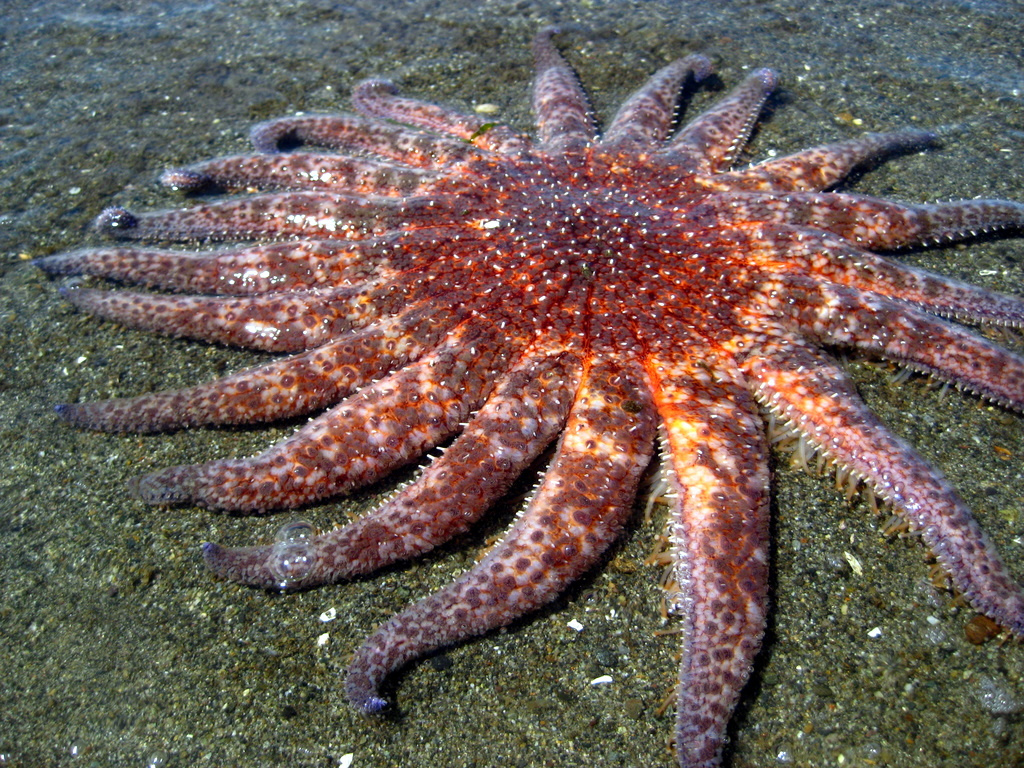
Sunflower sea star nearly wiped out by virus in BC - NEWS 1130
Sunflower sea stars looking very much like a predator, here

The sea urchin boom leading to a catastrophic loss of kelp forests, here

Now, I’m not going to waste time trying to convince you that climate change is happening. If you do not believe it’s happening, it’s human-caused, and it's reversible then you’re just wrong. But what is often ignored is just how catastrophic small changes in our environment can be for the Earth’s biodiversity and complex human society. The crisis is a snowball cascading down a hill towards a cliff, the longer we wait to stop it the faster and larger it is, and eventually it will be impossible to stop its fall if it is not dealt with immediately.

The collapse of the ecosystem above is just one of the many human-caused environmental crises that have been happening ever since we learned to walk on two legs (see hunting mammoths to extinction in the Americas). In a country like the United States at this point in history, the collapse of a food source like abalone snails or the local fish populations are just a financial hit, but thousands of communities around the world depend on the ocean as a food source and will starve if anything like this happens there. Food scarcity leads to migration leads to conflict leads to food scarcity, it's a very well documented cycle.

But, as the little anticipating potential questions man in my head might ask, “Well the collapse of these fish populations are sad but they’re not gonna cause any large societies to collapse, right?”, and to that point I agree, but these are not isolated. The Intergovernmental Platform on Biodiversity and Ecosystem Services (IPBES), a UN organization, produced a report in 2019 predicting that if warming is not kept below 1.5 degrees C (above pre-industrial averages), that we can expect to see a mass die-off of up to a quarter of species in the next 20 years. This includes 40% of amphibians, 34% of conifers, 33% of reef corals, 25% of mammals, and 14% of birds. If the collapse of one starfish population can destroy an ecosystem, imagine the scale of destruction that can be cause by those kinds of numbers. We have been seeing this since 2016 with coral bleaching of the Great Barrier reef, and these ecological scientists warn that if warming is not kept below 1.5 degrees that 70-90% of coral species would become functionally extinct, and if not kept below 2 degrees over 99%. According to the National Oceanic and Atmospheric Administration (NOAA) reports that 25% of all fish depend on coral reefs for food, shelter, and breeding grounds. Over half a billion people depend on coral reefs for food, income, and protection (from storms), and they also provide vital environments for research into new medicines. And that isn’t even the worst of it.

Some of the most at-risk populations are the ones that help plants reproduce. Due to habitat loss, agro-chemical pollutants, invasive species, and climate change, pollinator populations are dropping rapidly. It's estimated in the UK that three times the pollinator species populations are decreasing rather than increasing, and bee populations are nearly extinct. In Germany, scientists revealed a stunning 76% decline in flying insect biomass over 27 years. And globally, an invertebrate abundance index has shown a 45% decline in the global population over the last 40 years. This decline has led to a rapid decline in bird populations, as they feed on the insects. Rhetorical question man strikes again, asking, “Why do I have to care about some stupid insects dying.” Well first off, dude, they're living creatures. But second off, insects and birds are an essential part of nearly every plant ecosystem on the planet. Pollinators help plants reproduce by spreading their DNA, and birds help plants reproduce by spreading their seeds as well as keeping harmful insect populations from destroying the crops (does a swarm of locusts ring a bell to anyone? anyone? (here I was considering putting a blend of bible and Bueller but I couldn't do it convincingly)?). If these populations are collapsing, plant species will be less able to reproduce and more susceptible to pests that destroy harvests across hundreds of miles.

But anticipating questions man is not done yet, oh no, and yet for some reason we still have to listen to what he has to say (much like many television pundits!). He says, “That didn’t answer my question! I don’t care about plant populations collapsing! Why should I care?” Are you serious man? Do you like to eat? I know I like to eat. If you do not care about plant populations then you are welcome to let yourself starve. Human cultivated agriculture is incredibly prone to environmental changes because of its lack of genetic diversity, that's just the way we’ve made crops so much more profitable and easy to mass produce. So any major environmental disturbances could lead to decreased crop yield and food insecurity. While we produce enough food right now for 10 billion people, it is not distributed equally among the people (much to my disgust and dismay) because farmers and governments don’t make money that way. Food insecurity (and water insecurity by extension) is the most dangerous effect of climate changes we will see in the near future. In fact, we have already seen it.

While we humans like to see ourselves apart from the rest of the life on Earth, we also exist in ecosystems and our ecosystems are similarly susceptible to collapse. In the years leading up to the Syrian Civil War, Syria suffered one of the worst droughts in its history. As the Washington Institute puts it, “Before Syria produced war refugees, it produced climate refugees.” 85% of the livestock in Easter Syria was killed, while the size of harvests decreased by 21% in irrigated areas and 79% in rain-dependent areas. 800 thousand Syrian’s livelihoods were destroyed and tens of thousands fled the region, beginning the Syrian refugee crisis. The water scarcity combined with these huge populations of restless and homeless Syrians directly contributed to the Syrian Arab Spring revolt and Syrian civil war, which led to widespread suffering and the rise of ISIS. Water scarcity destabilized a region by turning a stable 40 year dictatorship into a divided mass of different states, militias, and terrorist organizations like ISIS in constant conflict in 3 years. The Syrian refugee crisis sent waves throughout the “west”, leading to reactionary right-wing groups taking power in many states across the continent through fear-mongering about refugees (and I’m sure it has nothing to do with the fact that they are mostly Arab). A UN report from December of 2014 states, "In Honduras and Guatemala, up to 75 per cent of maize and bean crop has been lost and thousands of cattle had died. In the coming months, food insecurity is expected to get worse as families deplete their food stocks." In the years since we have seen the worst Central American migratory crisis in American history (which created a large hysteria around Hispanic migrants and their dehumanization, which led to the rise of Donald Trump, so what I'm saying is President Trump is because of climate change).

A Syrian greenhouse heavily dependent on water for irrigation, here

A 2018 report from UNESCO highlights that at present, nearly 3.6 billion people are in areas that are potentially water scarce at least one month of the year each year. During a severe drought in Cape Town, South Africa in 2018, the city came within days of the city completely running out of water, even with extensive water rationing initiatives. This drought would be considered a “once in 300 years” event, but due to warming its likelihood has now increased 3-fold, and at 2 degrees C of warming it will have increased nearly 10-fold (1 in 33 years). The writing is on the wall, heat waves will cause droughts will cause water and food insecurity will cause migration will cause conflict will cause more food and water insecurity, and the heat-waves are only getting worse.

But oh look, it's anticipating questions woman! She’s taken some biology classes and she has a legitimate question! She says, “But I was taught that life is nearly infinitely adaptable and life will find a way to exist in the face of almost any environmental change, so why are you saying that won't happen?” You’re absolutely right! Life will adapt to this, life has survived five mass extinction events, it will do it again. But that does not mean that the life currently alive will remain alive. Billions of humans will die, along with an extremely large portion of the world's existing species. Human society is more fragile than we like to believe. While I do take comfort in life adaptability should we fail, I also like humans and the societies we have on this planet and do not want us to have to retreat underground as the surface becomes uninhabitable.

This is only the tip of the iceberg. I haven’t even brought up the dangers posed by rising sea levels and increased bouts of severe weather, nor the direct effects of increased temperature on plants ability to photosynthesize (which rapidly breaks down above 35 degrees C, or 95 degrees F), nor the dangers of ocean acidification, nor future soil degradation, nor even denitrification and plastic pollution (you can read about most of these here). The world is about to see the worst ecological crash that humans have ever experienced regardless of actions taken immediately. Billions will be displaced, this is inevitable, we must prepare for this by creating a safe place for these refugees to settle. 1.5 degrees of warming is practically inevitable at this point, as the world's leaders still preach the need for a “transitionary fuel” like natural gas, or that there are other more pressing issues to deal with, or that it's happening but it's not man-made, or it's happening but there’s nothing we can do about it, or simply that it's a Chinese hoax. Agreements like the Paris Accord might have been effective in 2000 but in 2016 it was way too little and way too late. The fight is now to keep warming under 2 degrees, or even just to prevent a total runaway greenhouse effect.

Depiction of the increases in severe weather over previous 4 decades, here

Depiction of the rates in which we could mitigate greenhouse gasses to remain below 1.5 degrees C, here

Depiction of tipping points that create a runaway greenhouse effect, here

So humanity has its very last chance to prevent a planetary environmental collapse that hasn’t been seen since the dinosaurs, and we will be just as likely to go extinct as they were (whatever a potential future equivalent of dinosaurs surviving and evolving into birds is for future humans, I'm totally here for it). The collapse will not magically stop once it reaches 5 degrees, it will progress to 8, 10, 15, and suddenly the Earth is uninhabitable (to humans) in less than 200 years (if you feel like wallowing in existential dread read this book). But there's still a chance. Not a single world leader is currently up to the task of mitigating this. We need to upend every existing power structure and dismantle the fossil fuel industry, major agribusiness, and the banks that keep them funded. Fossil fuels are some of the biggest welfare recipients in this country, their lobby’s have funded politicians that provided extensive government subsidies to keep this dying industry alive. We are addicted to fossil fuels. I am not going to ask you to drive an electric car or to go vegan or to bring reusable bags to the supermarket, all of those things are fantastic ways to decrease your individual carbon footprint but they will not fix the climate. This rhetoric is actively spread by the fossil fuel industry to deflect the blame onto individuals, best exemplified by the below tweet from British Petroleum (BP). We cannot let those be the only changes we make as a society. We cannot allow the institutions that are most responsible for intentionally ignoring this impending crisis to exist, if the problem is to be addressed they must be terminated. 

BP unveiling its carbon footprint calculator on Twitter, here

In 1978 a scientist working for Exxon Mobil named James Black wrote an internal briefing paper called "The Greenhouse Effect" (huh, wonder where I've heard that before). In the summary of the presentation, he writes “Present thinking holds that man has a time window of five to ten years before the need for hard decisions regarding changes in energy strategies might become critical.” Notes from a 1980 meeting of (then) fossil fuel giants like Exxon, Mobil (at the time 2 different companies), Amoco, Phillips, Texaco, Shell, Sunoco, Sohio and Standard Oil of California and Gulf Oil (the last two eventually merging into Chevron) shows that these companies knew the dangers of carbon emissions and that they were responsible. And yet they said nothing.

In the early 90s, anthropogenic (human-caused) Climate Change became a more mainstream idea (from politicians like Al Gore), as as such straight up silence was not protecting fossil fuel companies future profits anymore, so they had to change up their strategy. For example, fossil fuel companies funded the creation of "non-profits" like the Heartland institute, including $736,000 from Exxon Mobil from 1998-2006 and a whopping $5,875,500 from Donors Capital Fund (which is in turn funded by the fossil fuel billionaires the Koch brothers, as well as other billionaires like the DeVos') from 2014-2016. The institute has explicitly lobbied for "'providing [K-12 school] curriculum that shows that the topic of climate change is controversial and uncertain - two key points that are effective at dissuading teachers from teaching science'" and "'sponsor the NIPCC [Nongovernmental International Panel on Climate Change] to undermine the official United Nation's IPCC [International Panel on Climate Change] reports' including paying 'a team of writers $388,000 in 2011 to work on a series of editions of Climate Change Reconsidered'". In another story of brothers with catchy names who are fossil billionaires, the Wilkes Brothers (weird how that keeps happening)! They made their billions off of fracked gas and fund PragerU, a right-wing YouTube channel claiming to be a university that intentionally spreads misinformation to advocate a hyper-conservative agenda. Of course, they vehemently denies climate change. They spent millions on advertisements that guide people towards climate denial (among other things). They also helped fund the creation of the Daily Wire (of Ben Shapiro fame).

But it's not just straight up denial from conservatives. Democrats and Republican both are bought by oil money, and the only way to make real change is to tear down this established pattern of denial and delay. Both of Montclair's democratic representatives have been payed off. Donald Payne Jr. (NJ-10) receives $5k from the fossil fuel company Phillips 66 every election cycle, a company that owns (among other things) a quarter of the Dakota Access pipeline, the controversial pipeline at the center of the Standing Rock protests (Payne is a bit of a lame duck from my perspective, not a very present legislator). Mikie Sherrill (NJ-11) has received since her 2018 campaign tens of thousands of dollars from law firms with extensive fossil fuel investments (including one that backed a foreign oil company against a Latin American government), fossil fuel investing megabanks like Goldman Sachs and Chase, and fossil fuel companies like PBF Energy, who owns refinery's across the country that have been reported to process oil from the Amazon River Basin. She also took money from BP (the opensecrets page for her 2018 campaign disappeared, and the page that does have them only shows the top 20). All this has culminated in a tremendously weak environmental policy. Sherrill uses the progressive environmental rhetoric to piggyback off the popularity of environmental reform movements. She stresses the need to make the US more energy self-sufficient and a transition to a "clean" economy, which is democrat-speak for natural gas is less emitting than coal and oil so its "clean". She has vocally supported offshore wind in NJ but has never wrote any legislation for it, though she wrote a piece of legislation nicknamed the "Mitigate Methane Now Act" that provides federal subsidies to natural gas pipeline companies. She has refrained from meeting with local climate organizations and deflected their questions about campaign finance, claiming "My vote is not for sale". For a better case study of this, lets talk about this years democratic primary for Texas'  28th district. 

The primary race was between Henry Cuellar (incumbent) and Jessica Cisneros, Cuellar being dubbed "Trumps favorite democrat" by Cisneros. Over his last 5 elections, fossil fuel companies have been his number one contributors by industry, with his campaign receiving nearly $720k (and his individual top contributor those years being GEOgroup, a private prison company), and a whopping $172k just this election cycle, which is far from over. He votes with Trump 70% of the time in congress and has received funding and an A rating from the NRA. Jessica Cisneros ran on a progressive platform across the board, centering a strong Green New Deal and even being endorsed by multiple national climate activism organizations. On election day she received more votes than Cuellar, but lost the election due to mail-in ballots cast weeks before. Nancy Pelosi, democratic Speaker of the House, endorsed Cuellar, saying "I'm very, very proud of Henry's work in congress, and I'm proud to support him-", and personally campaigned for him in Texas 10 days before the primary.

If you care at all about this earth then you must demonstrate, do not support corporate democrats that are bought by fossil fuels (trust me, it's more of them than you think). Find alternative candidates in your representatives districts and make sure they support a strong Green New Deal (in NJ-10, which is Montclair south of Watchung Ave, a progressive named John Flora is running against Donald Payne; a Newark native named Larry Hamm is running against Cory Booker as well and he is a much better candidate). Support local organizations (like the Montclair Sunrise Hub perhaps, find us on insta @sunrisemontclair) and force our government to listen. Joe Biden, while undeniably better than Trump, still supports fracked gas as a transitionary fuel, and if he does not appropriately strengthen his environmental platform he will likely miss out on many environmentalist votes (among other issues and other voters). We must pressure our officials to make the necessary changes.

The most important things to keep in mind are: (1) these politicians and political machines work against action only if we allow them to, if people are more politically conscious and demonstrate that they will not tolerate inaction those officials will have to adapt or be voted out; (2) that you can influence elections even if you cannot vote via electoral organizations (join the Montclair Sunrise hub please!); (3) that while it is important for individuals to reduce their carbon footprints, it is incredibly damaging to paint that as the solution or the only thing that people can do; (4) and finally, that pessimism never got us anywhere, if we are to prevent a mass extinction that includes humans (because we are already in the midst of one) we have to believe and act like it is. Do what you can, be that talking to your families, posting on social media, reducing meat consumption or even going vegan, and organizing to make legislative changes. It's easier than you think.

Friday, June 3, 2016

The Monster in Your Garden

Most people have seen it. It surrounds brooks, rivers, streams, and houses. It will take over your land, one square inch at a time, preventing organisms from surviving. Once it comes, it almost never leaves. This demon is your worst nightmare. It will prevent you from selling your house, it will destroy your land, it is Japanese Knotweed also known as Fallopia japonica.

Japanese knotweed is native to East Asia in Japan, China, and Korea. This plant grows rapidly and spreads quickly as well with up to 2 meters in one season. Its underground root system can even stretch for 7 meters! 

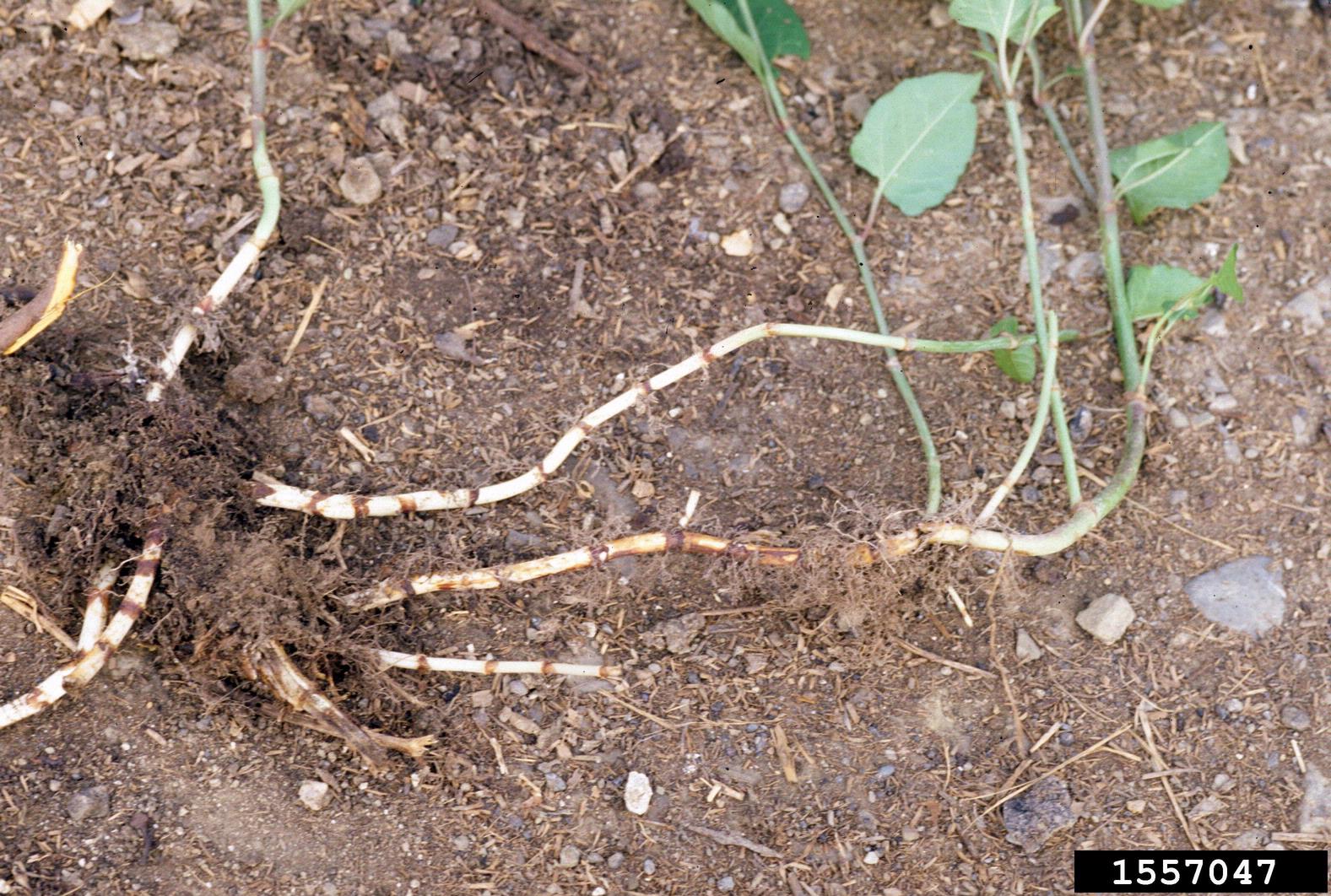
Japanese knotweed roots
It frequently grows in ecosystems where temperatures are relatively moderate, rather than extremely hot or cold. Commonly found on roadsides, waste places, and near small bodies of water, it forms thick, dense colonies that crowd out any other plant species. Today, it is considered one of the top worst invasive species in the world. Its success is thanks to its tolerance of a very wide range of soil types, pH, and salinity.

Japanese knotweed is listed by the World Conservation Union as one of the world’s most invasive species. It was first introduced to Britain by the Victorians in the 100s as an ornamental garden plant, but now England spends over 2.8 billion dollars a year attempting to fight it annually. It increased the construction of the 2012 Olympic Stadium by over 70 million dollars! Japanese knotweed has invaded countries such as New England, Australia, and Tasmania. So far, the monster has been found in 39 out of 50 states in the US and 6 Canadian provinces. Japanese knotweed was subsequently introduced to the U.S. for use in ornamental hedges and for erosion control. The Japanese knotweed spreads is entirely through the deliberate or accidental movement of rhizome fragments or cut stems. It has an extraordinary ability to spread vegetatively, a process by which new organisms arise without production of seeds or spores, from crown, stem and rhizome (underground root).

Montclair is one of the sad towns that has been attacked by the monster. Japanese knotweed is located in our very own High School Amphitheater!! Montclair's own STEM department and a professor from MSU worked together to measure rates of photosynthesis, transpiration, and how the Japanese knotweed affected fresh water levels.
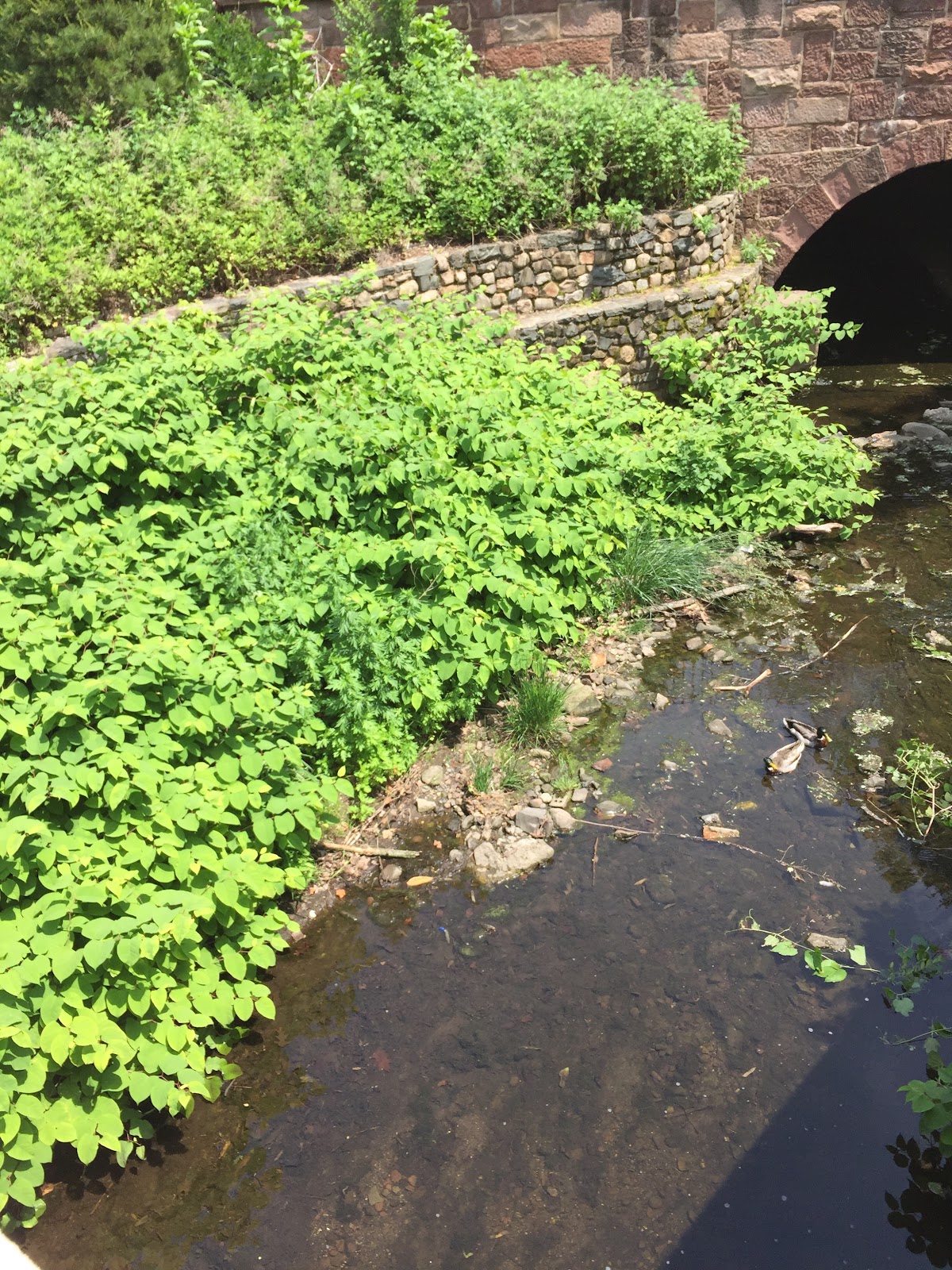
Toney's Brook in the amphitheater. The knotweed gets cut back every year for graduation but of course it grows back.
How do you know if you have the monster in your garden? Well that’s what we are here for! Japanese knotweed has hollow stems with distinct raised nodes giving the plant the appearance of bamboo, despite the plants not being closely related. The stem reaches a height of 3-4 meters each year, however smaller plants are everywhere too. The leaves are a broad oval shape with a base that is 7-14 cm long and 5-12 cm wide. The flowers are small, cream/white in color and are produced in late summer/early fall.

One of the most common ways to get rid of the monster is to eat it. A favorite recipe is Japanese Knotweed bread. This recipe was brought to us by Herbalpedia. In order to create this fabulous recipe you will need:

Materials
2 cups unbleached flour
½ cup sugar
1 ½ tsp baking powder
1 tsp salt
1 egg
2 Tbsp salad oil
¾ cup orange juice
¾ cup chopped hazelnuts
1 cup sweetened Japanese Knotweed Purée

Process
Preheat oven to 350F. Sift dry ingredients together into a large bowl. Beat the egg white with the oil and orange juice. Add along with hazelnuts and purée to dry ingredients. Do not mix until all ingredients are added, and blend only enough to moisten. Do not over mix. Spoon gently into buttered 91/2-by-5-by-3-inch loaf pan. Bake about 1 hour or until a straw or cake tester inserted in the center comes out dry. Cool by removing from pan and placing it on a rack. For muffins, spoon into buttered muffin tins and bake about 25 minutes.

By Brigie Coughlin and Samantha Chee

Thursday, June 2, 2016

MHS' Contribution to Garbage Island: Part 2-Change is Possible!

Garbage and the enormity of it is piling up throughout the world, including the small park Montclair High School is located on. Adolescents blatantly throw their trash into Rand park, instead of the trash cans located throughout the area.


The immediate solution to help reduce the garbage amount would be to educate and inform the high school students, especially the incoming freshman, on the impact trash has on the environment and on the small scale, the beauty of Rand Park. By freely littering the high school campus, it not only reflects poorly of the students, but prevents any improvement of the park from happening. Local government believe that putting in money and time into Rand Park would be pointless and ineffective because of the continuous stream of trash being dumped into the park by the MHS students. And while this is partly true, perhaps the upkeep of the park would motivate and inspire others to stop littering.


Getting students involved in the maintenance of the park is a first easy step to help the "Garbage Island" of Montclair. With countless community service clubs, students could get service hours in exchange for time spent cleaning the park. For example, Key Club, a community service club where every member must have a minimum of 50 hours of volunteer work a year, that has over 100 members could easily transform Rand Park into the beautiful breath of nature it is meant to be. After school, students could congregate and comb the area for litter, help maintain the landscape, and oversee something with meaning. Additionally, Peer Leadership, a mentor group of seniors that help freshman orient into high school life, could inform incoming students about how the responsibility they have in keeping Rand Park clean and litter-free.


After digging into this problem we brainstormed alternative solutions; of course there’s always the possibility of the town providing additional trash and recycling cans, in hopes that the majority will actually use them. But the reality is to end any problem one must go to the source, if the student body and administration would support a movement to keep campus litter free with security guards doubling as waste monitors we could eliminate much of the litter. However, one of our biggest issues facing this epidemic is out of our control, using plastic- specifically styrofoam. Food trucks are part of the natural order at Montclair High, but with their continuous usage of non-environmentally friendly products to serve their products it’s not difficult to hypothesize where the majority or trash originates from. One way this town could rewrite that construct is introducing vendors to companies creating products targeting sustainability rather than saving money.


Then we stumbled up Eco Products: "a green company who happens to operate in disposables”, the company creates kitchenware, such as utensils, targeted as "sustainable disposable products"- oxymoron much? But the company's values and goals intend to follow through on their claim, calling worker "greengeeks" as well to aid promoting this go green philosophy. The company claims every product uses materials made from renewable resources and recycled content.
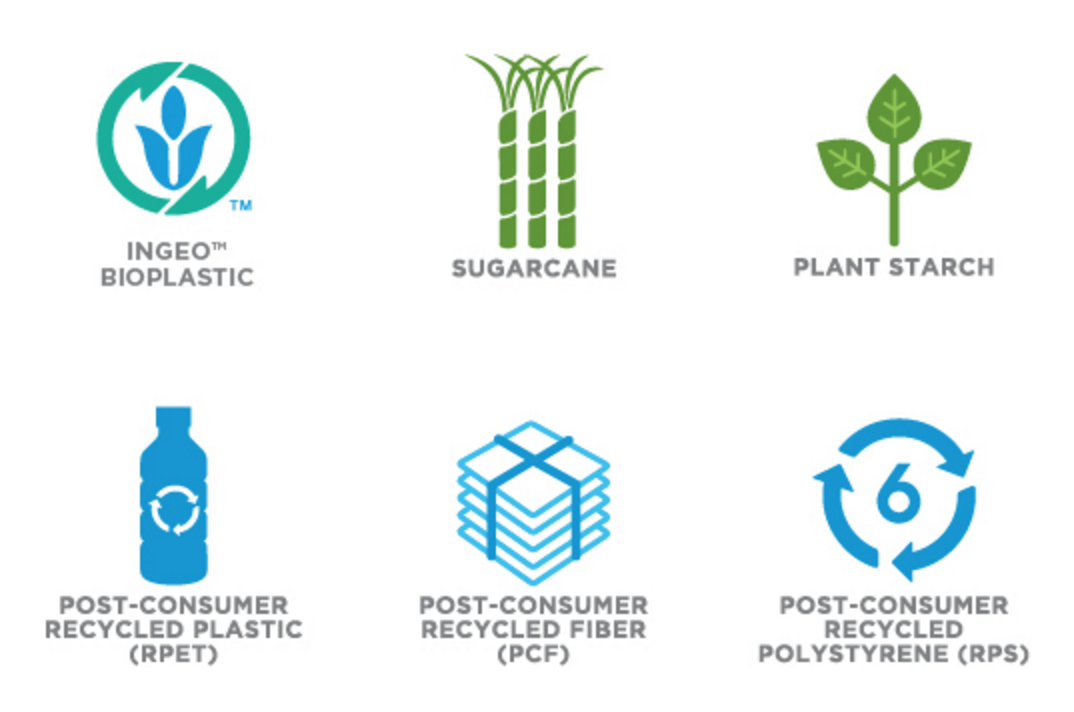
A few of Eco Products top used materials, provided by ecoproducts.com


You can check out their website here:
Or find your nearest location to buy their biodegradable products here:

Bird Brain Doesn't Have to Be an Insult


In the story “The Crow and the Pitcher,” a famous tale from Aesop’s collection of fables, the intelligence of crows is remarked upon as a thirsty crow drops pebbles into a pitcher with water at the bottom to raise the water and allow him to get a drink.


Illustration of “The Crow and the Pitcher”

Although not a very scientific anecdote, there has been tons of research done to support the supposed genius of crows. Also called Corvus brachyrhynchos, crows are members of the corvid family, which includes jays, ravens, and magpies. Crows have a brain that is about the size of a human thumb, but relative to their body size that is enormous.The brains of crows are not just different from the brains of humans in that they are smaller however. In fact, mammalian and bird brains share few structures from before their divergence over 300 million years ago. Despite these differences, the decision making cells in humans and crows are quite similar. The intelligence of crows may even point to convergent evolution between humans and crows. With the relatively large brain of crows, they have been known to be toolmakers, creating hooks by bending wires to reach inaccessible food. Additionally, multiple studies have proven that crows are able to recognize analogies, and direct their behavior according to what they have learned. One of the more interesting versions of these studies was led by John Marzluff and a team at University of Washington. The Marzluff study involved one person wearing a caveman mask on the Seattle campus of the University of Washington and taking some of the crows in the area hostage. After these visits by a caveman masked person, Marzluff and some of his researchers would show up to the same area with either no masks or unfamiliar Dick Cheney masks and there would be no response from the crows. If anyone returned to the location in a caveman mask however, the crows would go wild, attacking the person they perceived to have abducted some of their own.


The caveman mask that was used in Marzluff’s study

This experiment proved that crows are able to recognize the faces of individuals and associate them with certain events or emotions. In the same lane, there have been other experiments similar to the typical design which presents an animal with two choices, one choice leads to a reward and the other a punishment, that crows have been involved in. One such experiment presented crows with three cups turned upside down. The center cup had an image on it, and the two surrounding cups each had an image as well, one matched the center image and the other was different. The cup with the matching image had food underneath, and if the crows motioned to that cup with their beak they were rewarded with the food. The crows quickly picked up the lesson and repeatedly chose the matching cup, and they were also able to switch to picking the different image quickly if the researchers moved the food to the cup with the different image.


With this research in mind, being called a bird brain no longer has the same sting. The information may otherwise seem unrelated to our lives, but there are actually a few applications the knowledge about crows can have in Montclair. Crows have been spotted in our own Rand Park, and because they have such an acute sense of learning that is not always present in other animals it is possible that they have picked up some hints on survival from the behaviors of park goers. As some of the aforementioned studies indicate, crows are able to learn quickly from trial and error what choices will benefit them, and they have the memory to applies those lessons in the future. Among the unfortunate heaps of litter in the park, crows may have potentially discovered that if they look in certain types of containers left on the ground (or in the trash cans) there will be leftover food for them. A more solidified adaptation of birds that could affect how they interact with us while in Rand Park is their affinity to fly away from people who look directly at them, while ignoring people who walk past them with averted eyes. A habit developed from big city living, crows may prolong their stay in our park if they don’t feel threatened by any direct observation of them.


Crows often have a bad representation in the media, from their portrayal in the Hitchcock movie The Birds or even from the mention of their related corvid in Edgar Allen Poe’s poem “The Raven.” Crows may be quite mischievous in their actions, as can be shown by a raven named Canuck stealing a knife from a crime scene in Vancouver, Canada, but they can also be friendly and warm. One great example of the friendly interactions possible to have with crows is the pattern of crows bringing little trinkets to a girl in Seattle, Washington who was feeding crows with the help of her mother in her backyard. So contrary to their scary portrayals, crows are majestic and intelligent creatures that make a great addition to Rand Park. There may even be some notable relationships developing between crows and Montclair High School students in the future.

If you want to know more about Marzluff's study of crows with masks then watch this video: https://www.youtube.com/watch?v=bOkj7lJpeoc

This link also tells more about Marzluff and the trinket-leaving ravens: http://www.cbsnews.com/news/new-research-looks-into-crow-brains-intelligence/

Also, if you want to know about the raven who stole a knife from a crime scene click here: http://www.cbc.ca/news/canada/british-columbia/crow-knife-crime-scene-1.3600299


Why We Should Appreciate the Oak Trees in Rand Park

Oak tree (Quercus alba) in the amphitheater in Rand Park
While the acorns that fall on your head as you walk through Rand Park on fall mornings might be annoying, we should be grateful for the trees that they come from. The oak tree has won the prestigious title of being America’s National Tree, and not without good reason.With a rich history and sturdy wood, the oak stands tall among us, silent and humble yet vitally important. Oak trees have been our steady companion ever since the indigenous people of North America used its leaves, flowers, and bark for medicinal purposes, and its tannins for dying and tanning hides. Eventually, though, Europeans arrived, yet the oak tree is so versatile that it benefited them as well. They used it for building furniture and houses; oak wood is especially useful for this because of the uneven vessel growth that adds to its structural integrity. Not only is it strong, but it is also impressively good at burning, which is actually great for people who want fuel, and oak wood has often been used to make charcoal. Even today, the oak tree is standing by our side and making our environment a better place to live. It’s deep and extensive root system stabilizes slopes and limits erosion. This tree can also trap airborne particles to reduce air pollution, and capture noise and moderate temperature in urban areas. Clearly, the oak tree is an extraordinarily important part of our past, present, and, most likely, future.


Other than directly benefiting humans, there are certain aspects of the oak tree that are worth mentioning. In North America, the most common type of oak is the white oak, a tree with smooth, rounded leaves and rough bark, varying in colors from brown to light gray. Oaks are also characterized by their wind-pollinated flowers and fruits (acorns). Male flowers in oak trees gather a lot of pollen for wind-pollination, while female flowers wait a little longer to mature to avoid self-pollination. These trees also produce acorns, which are a valuable resource, as it provides food and shelter to many different species, such as birds, squirrels, bats, etc. Acorn production is so important to biodiversity that crop failure can lead to the extinction of certain species.
The Seven Sisters Oak is the largest Southern live oak in the country, estimated to be 1,500 years. Image from Wikipedia
We should feel lucky to have a tree as active and valuable, as beneficial to the environment, as the oaks in Rand Park.

Compost Happens


slogan
Whether you resided in a classic suburban development, a never sleeping city landscape or even the big sky country of Iowa, you have an effect on the earth. Now, don’t get the wrong idea, this is not going to divulge into a pro and con list of different lifestyles or the merits of carbon footprints and global warming. This will, however, divulge into a comprehensive list of a simple way to clear up your guilty conscious for all the times you littered as a teen or purchased non-free range meat out of convenience. You are probably asking yourself what could possibly be the godsend miracle that holds power to decontaminant the guilt from your 8th grade wild days. The answer is simple; compost.
A $798.99 Comopst Tumblr available on Ebay
You may be doubtful at this very point in time but that is probably because you don’t understand the complexity and miraculous concept that it is.  Sustainable America, whose name gives it all the credibility it needs in my book, explains how compost is a complex science that can be easily tackled by everyday americans like you. Math is hard and the idea of a ratio involved in composting may be off putting but keep an open mind. You need a 1:2 ratio of carbon-rich matter or browns, like dead leaves, with nitrogen-rich organics or greens like grass clippings and then just add all your food waste to the bin to create the compost of your dreams. Now to tackle the bin misconceptions. Yes it is true that you could spend upwards of $500 on a bin, through my extensive research I even found one that was on sale for $798.99, but you could also not. Simple plastic bins for $4.99 are available at your local hardware store or in the spirit of recycling, you could just reuse an old plastic container you have laying around. Their downside is the extended time it takes to kickstart the compost process but patience is the key of life. If you feel like splurging you could invest in a tumbler, a hamster ball but bigger, or even a worm-infused bin, but for beginners, just go with plastic and make your life easier.
Compost worms
Worms are a man’s best friend when it comes to composting. Specifically, red worms or Eisenia fetida can speed up the process if kept in a cool but not too cold environment. They are about 100% less maintenance that the traditional friend, a dog, but the emotional appreciation you will experience when you see your compost is just as strong as a welcome-home-greeting from your puppy. In layman's terms, the worms eat the food waste and then poop out the good stuff, it really is just that simple. If you live in an area blessed, or cursed, with the season of winter then composting ends as the first sign of frozen hair in the morning but if you use worm-composting, the end of the year flurries mean nothing. Worm bins can be placed under sinks or basements and have no odor unless you overburden the worms with too much food. Solutions are easy, candles and less food, so don’t let the possible odor deter you. In fact, as I was writing this post, I discovered that I have spent 44 minutes a day, 5 days a week since September in a room with these very worms. Not only did I never notice, or smell them, but I never appreciated how amazing the creatures a mere five feet away from me were.
A compost bin with food waste 
A common name associated with compost is black gold. Yes, gold, the block of solid yellow you probably saw as the most expensive and luxurious thing as a child. Composting really is on the same level of gold, and everyone should start seeing it as just that. Seattle, the land of starbucks and Meredith Gray, introduced a composting law that fines individuals and companies for throwing the gold-status food scraps in the trash instead of the composting bin. Mayor Ed Murray assured his citizens that the law is not meant to create revenue, it is meant to encourage people to be conscientious of their environment and of their actions. In fact, the city is spending upwards of $400,000 on educating their residents about the new trash law, but it is just that important. Seattle should be applauded for being a model of how every state should value the Earth, and hopefully one day, every city will follow in their footsteps.
Composting is your friend and your savior. Remember all the times you left your car idling for a minute too long or watched the napkins fly away from your picnic and didn’t chase them. Those things had a detrimental affect on our planet, even if you just did it once, we can all feel the effects. Take this post as a reason to go out and start creating your own black gold. You’ve taken a tremendous amount from the earth you live on and it’s time to go out and compost.

Wednesday, June 1, 2016

Parasitism in the Brook

So for my blog post, I thought it might be interesting to have a look at the brook water, perhaps get a sample of the freshwater and put it under a microscope, look at the microorganisms. After getting some water, I thought it might also be interesting to get some muck from the bottom of the brook. This proved challenging, as most of the bottom was rocks, but after some digging I managed to get some muck in a plastic container with my bare hands. Below is a picture of muck after being taken in to the classroom.


i left the muck as it was for a day, and fortunately, my valiant bio teacher went through it and had a look around in its contents. However, when I came back the next day I got a nasty surprise. I assumed that the muck was mostly soil and plant matter. But, this muck, which I hand picked out of the brook, had held something a little larger than some measly microorganisms.


For those who haven't had the pleasure of being up close and personal with one of these monstrous abominations of science, this is a leech. They drink blood. And apparently they are all over the Rand Park's brook. Later on I found another leech in the same muck which appeared to be dead, only to suddenly spring back to life as I poked it. Later the next week I investigated the brook and found another two under the soil bottom of the brook. This news is a bit gross, considering that many people have occasionally taken a stroll through the brook, or in the case of many freshman, practically live in it. Perhaps they should be informed of the parasites living in the brook so they don't climb out, unwittingly carrying bloodsucking worms.


For those who don't know, which I imagine is all of us, leeches are members of the phylum Annelida, which also houses common earthworms. Not all drink blood but the majority do. There are so many species of leech that it was hard to potentially identify the species, so my rough guess would be Macrobdella decora. I'm very uneducated in this topic however, so I'm open to see what other people who have more experience that I do would think. They're a fascinating group of organisms, not just because they consume blood, but in the matter that they do so. They traditionally attach themselves to another organism with the sucker above, and drink with their smaller mouth. They then drink the blood while applying an anticoagulant to prevent blood from clotting and ceasing to flow. I can attest to how strong they latch onto prey and how it's not simply a matter of pulling them off. You can try, but you stand a high chance of getting the leech's teeth and other mouth parts lodged inside your skin. And for many people, myself included, you can end up with an allergic reaction that doesn't stop until the leech parts have naturally left you. Leeches are special in that they can survive on only one meal a year. This is due to two factors. The first is that a leech is able to take in five times as much blood as its body mass, so it swells up greatly to store as much food as possible. Second is that their guts inhibit microbial decay of the blood, so the food is not digested. This means they can keep the blood for a very long time, only breaking it down when it is actually needed.


Despite their absolute disgustingness and morbid association, leeches actually aren't harmful. They take a minimal amount of blood from us and drop off when done. They can carry disease spread through blood contact, but this is only in areas where these diseases are prominent, such as in southern Africa, where leeches have tested positive for HIV and hepatitis B. Leeches can even be rather helpful in modern and ancient medicine, where they are applied to patients who may have problematic venous congestion. The anticoagulant allows the blood to not clot or flow out of the body to prevent build up. These days they have even used recombinant technology to recreate the anticoagulant without the leeches. So in the end, something that we, or at least I, find disgusting, actually has an important purpose in saving lives.

Tuesday, May 24, 2016

MHS’ Contribution to Garbage Island: Part 1 Look into the Litter Epidemic

By Genevieve Basso 

Monday-it’s only first period- students already sit in their classes, under slept and overwhelmed like another other first day back to school; the May weather calls from window to outside. Today we’ve begun examining the litter at Rand Park. A quick glance at the first trashcan by the west facing descending, entrance gives us a good indication of the exact scale we’re dealing with here- and it’s greater than what was originally hypothesized. We count more than 5 pieces of trash happily sitting on the ground- directly next to that trashcan- a further examination of the park leads us to the realization: most individuals passing through prefer to throw their waste on the ground rather than in trashcans. Since it’s the morning every trash bin is relatively empty, yet that’s not the same for the rest of the land paralleling the Freshman building. Below is a series of pictures compiled during the search for litter displayed in a collage, all photos we’re taken within 5 minutes of entering the park to give you an idea of just how much we’re dealing with. 


Now imagine how long all the garbage would collectively take to completely decompose. When estimating long term rates of decomposition scientists can use respirometry tests to measure the rate or carbon dioxide production of oxygen consumption of organic matter or an organism. This is done by placing the object being sampled in a container containing soil and microorganisms, followed by ensuring there is an oxygen supply and allowing for circulation. In the days to follow the microorganisms slowly digest the sample while producing carbon dioxide which levels serve as a indicator of degradation rate.
If you'd like to calculate how long your garbage would take to decompose check out this handy chart: 
(Special thanks to http://sciencelearn.org.nz/ for the data)


That’s all for now, check back for an update on a “Look into the Litter Epidemic "