Showing posts with label climate change. Show all posts

Friday, June 5, 2020

COVID-19 Shutdown Impact on Environmental Reparations

Today, COVID-19 has forced the entire world into a major lockdown with many large governments putting rules and regulations in place to protect people from this highly infectious and deadly virus. However, there is a silver lining to this dark cloud. The pandemic coupled with the shutdown has allowed the environment to rebound positively in a number of different ways. In the years leading up to 2020 the greenhouse gasses produced in the atmosphere has been trending upward since the industrialization era. As a result of reduced manufacturing and travel, the environment has seen significant positive changes in the environment including air quality, water quality and carbon emissions..  Carbon emission decreases can be seen here: https://www.nature.com/articles/s41558-020-0797-x


Mean Troposheric NO2 Density

Air quality has improved significantly in the age of COVID-19. As industry has taken a downturn and travel bans have been put in place, China has seen a 25% decrease in carbon emissions. In the first month of the Chinese lockdown, China produced approximately 200 million fewer metric tons of CO2 than that same period in 2019, due to the sudden decrease in air traffic, oil refining, and coal consumption. However, environmentalists have concerns that a Chinese attempt to reopen energy markets and start industrial work again may actually be worse for the ozone layer. The European Space Agency also observed a decline in nitrous oxide production which came about from the Italian lockdown. Such effects also came about in China as shown in the picture above. And air quality is not the only environmental aspect that is experiencing reparations.


Venice Canals

Water quality is also experiencing a positive change in that it's getting cleaner. In canals, there has been a noticeable increased visibility of fish and also increased water flow. In addition to water quality and restoration of natural water qualities. As the canals and waterways are not being disturbed by boat traffic, the waterways have regained resurgence of a healthy ecosystem. In fact, wildlife has seen a resurgence in many different ways. Wild animals have been seen roaming cities and even sea turtles have been laying eggs on beaches they once avoided in Africa due to human interference.  Bears have even been seen walking along roads in Alaska.


Bears share the road with humans in Alaska

Wildlife, however, could see negative changes in the future with potential increased poaching in Africa. Conservationists predict that after the coronavirus pandemic is over bush meat poaching in many African nations is likely to increase.  


Bush meat market in Africa

As a result of the coronavirus pandemic, and the many shutdowns that have occurred, the environment has seen many significant reparations. From the air to water to the wildlife, the world has seen a retraction to a more natural state as a result of the reduction of common human actions that pollute and hurt the environment.   Now with people beginning to return to their old habits and many states across the US reopening, a question of action going forward remains.  Will people notice their actions and become more aware of the environment?  Only time will tell but with giant media outlets like the Washington Post as well as the UN Environmental Program proclaiming the importance of environment reform, which has been highlighted during the COVID-19 shutdown, there could be a large opportunity for reform and protection of the environment.


Thursday, June 4, 2020

Ecosystems Collapse: The Consequences of Inaction

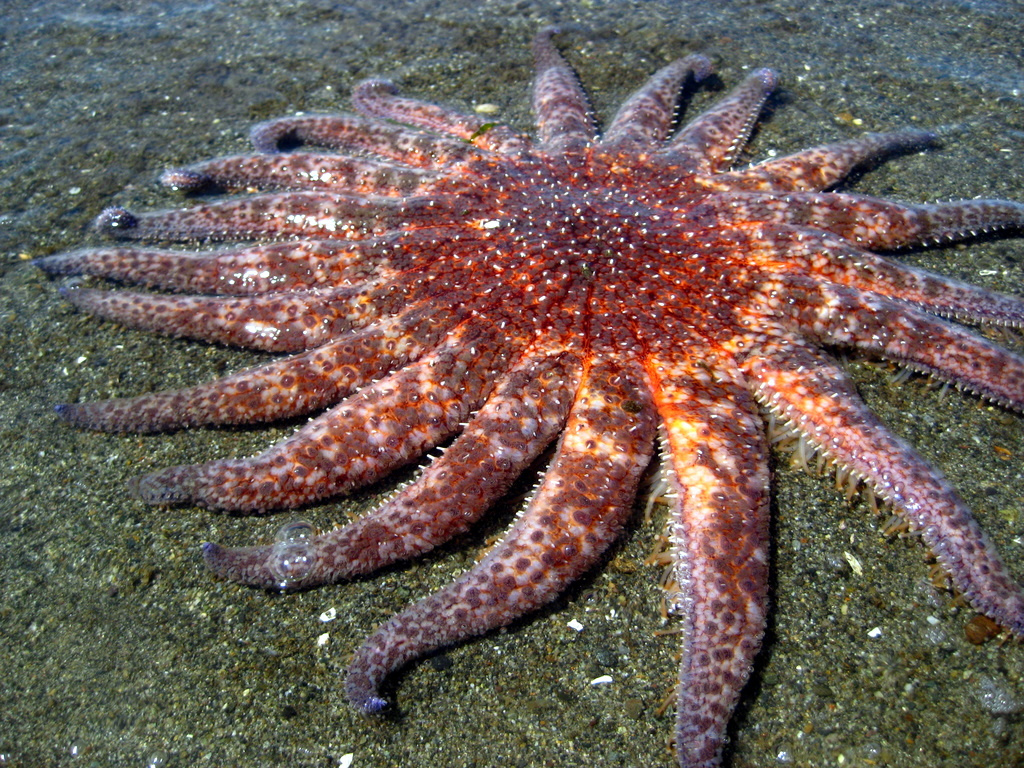
In 2014 kelp forests off the coast of California suffered a drastic decrease in spore production due to a prolonged Pacific heat-wave that depleted their environment of vital nutrients. Since then, heat waves have become more common and more intense, and in the summer of 2019 a heat-wave allowed a disease to proliferate that destroyed the region's population of sunflower sea stars. Purple sea urchins, the sea star’s main food source, felt a population boom of 60 times their initial size. The urchins wreaked havoc on the unbalanced ecosystem, consuming nearly 90% of the bull kelp along 200 miles of California coastline. Red abalone sea snails suffered mass starvation, as the kelp was their main food source, and numerous fish species who nursed their young in the kelp suddenly were unable to foster new generations of fish. Bald eagles and harbor seals had to find new food sources and California was forced to close down abalone fisheries, worth around $44 million a year. Many commercial fisheries will not recover.

Sunflower sea star nearly wiped out by virus in BC - NEWS 1130
Sunflower sea stars looking very much like a predator, here

The sea urchin boom leading to a catastrophic loss of kelp forests, here

Now, I’m not going to waste time trying to convince you that climate change is happening. If you do not believe it’s happening, it’s human-caused, and it's reversible then you’re just wrong. But what is often ignored is just how catastrophic small changes in our environment can be for the Earth’s biodiversity and complex human society. The crisis is a snowball cascading down a hill towards a cliff, the longer we wait to stop it the faster and larger it is, and eventually it will be impossible to stop its fall if it is not dealt with immediately.

The collapse of the ecosystem above is just one of the many human-caused environmental crises that have been happening ever since we learned to walk on two legs (see hunting mammoths to extinction in the Americas). In a country like the United States at this point in history, the collapse of a food source like abalone snails or the local fish populations are just a financial hit, but thousands of communities around the world depend on the ocean as a food source and will starve if anything like this happens there. Food scarcity leads to migration leads to conflict leads to food scarcity, it's a very well documented cycle.

But, as the little anticipating potential questions man in my head might ask, “Well the collapse of these fish populations are sad but they’re not gonna cause any large societies to collapse, right?”, and to that point I agree, but these are not isolated. The Intergovernmental Platform on Biodiversity and Ecosystem Services (IPBES), a UN organization, produced a report in 2019 predicting that if warming is not kept below 1.5 degrees C (above pre-industrial averages), that we can expect to see a mass die-off of up to a quarter of species in the next 20 years. This includes 40% of amphibians, 34% of conifers, 33% of reef corals, 25% of mammals, and 14% of birds. If the collapse of one starfish population can destroy an ecosystem, imagine the scale of destruction that can be cause by those kinds of numbers. We have been seeing this since 2016 with coral bleaching of the Great Barrier reef, and these ecological scientists warn that if warming is not kept below 1.5 degrees that 70-90% of coral species would become functionally extinct, and if not kept below 2 degrees over 99%. According to the National Oceanic and Atmospheric Administration (NOAA) reports that 25% of all fish depend on coral reefs for food, shelter, and breeding grounds. Over half a billion people depend on coral reefs for food, income, and protection (from storms), and they also provide vital environments for research into new medicines. And that isn’t even the worst of it.

Some of the most at-risk populations are the ones that help plants reproduce. Due to habitat loss, agro-chemical pollutants, invasive species, and climate change, pollinator populations are dropping rapidly. It's estimated in the UK that three times the pollinator species populations are decreasing rather than increasing, and bee populations are nearly extinct. In Germany, scientists revealed a stunning 76% decline in flying insect biomass over 27 years. And globally, an invertebrate abundance index has shown a 45% decline in the global population over the last 40 years. This decline has led to a rapid decline in bird populations, as they feed on the insects. Rhetorical question man strikes again, asking, “Why do I have to care about some stupid insects dying.” Well first off, dude, they're living creatures. But second off, insects and birds are an essential part of nearly every plant ecosystem on the planet. Pollinators help plants reproduce by spreading their DNA, and birds help plants reproduce by spreading their seeds as well as keeping harmful insect populations from destroying the crops (does a swarm of locusts ring a bell to anyone? anyone? (here I was considering putting a blend of bible and Bueller but I couldn't do it convincingly)?). If these populations are collapsing, plant species will be less able to reproduce and more susceptible to pests that destroy harvests across hundreds of miles.

But anticipating questions man is not done yet, oh no, and yet for some reason we still have to listen to what he has to say (much like many television pundits!). He says, “That didn’t answer my question! I don’t care about plant populations collapsing! Why should I care?” Are you serious man? Do you like to eat? I know I like to eat. If you do not care about plant populations then you are welcome to let yourself starve. Human cultivated agriculture is incredibly prone to environmental changes because of its lack of genetic diversity, that's just the way we’ve made crops so much more profitable and easy to mass produce. So any major environmental disturbances could lead to decreased crop yield and food insecurity. While we produce enough food right now for 10 billion people, it is not distributed equally among the people (much to my disgust and dismay) because farmers and governments don’t make money that way. Food insecurity (and water insecurity by extension) is the most dangerous effect of climate changes we will see in the near future. In fact, we have already seen it.

While we humans like to see ourselves apart from the rest of the life on Earth, we also exist in ecosystems and our ecosystems are similarly susceptible to collapse. In the years leading up to the Syrian Civil War, Syria suffered one of the worst droughts in its history. As the Washington Institute puts it, “Before Syria produced war refugees, it produced climate refugees.” 85% of the livestock in Easter Syria was killed, while the size of harvests decreased by 21% in irrigated areas and 79% in rain-dependent areas. 800 thousand Syrian’s livelihoods were destroyed and tens of thousands fled the region, beginning the Syrian refugee crisis. The water scarcity combined with these huge populations of restless and homeless Syrians directly contributed to the Syrian Arab Spring revolt and Syrian civil war, which led to widespread suffering and the rise of ISIS. Water scarcity destabilized a region by turning a stable 40 year dictatorship into a divided mass of different states, militias, and terrorist organizations like ISIS in constant conflict in 3 years. The Syrian refugee crisis sent waves throughout the “west”, leading to reactionary right-wing groups taking power in many states across the continent through fear-mongering about refugees (and I’m sure it has nothing to do with the fact that they are mostly Arab). A UN report from December of 2014 states, "In Honduras and Guatemala, up to 75 per cent of maize and bean crop has been lost and thousands of cattle had died. In the coming months, food insecurity is expected to get worse as families deplete their food stocks." In the years since we have seen the worst Central American migratory crisis in American history (which created a large hysteria around Hispanic migrants and their dehumanization, which led to the rise of Donald Trump, so what I'm saying is President Trump is because of climate change).

A Syrian greenhouse heavily dependent on water for irrigation, here

A 2018 report from UNESCO highlights that at present, nearly 3.6 billion people are in areas that are potentially water scarce at least one month of the year each year. During a severe drought in Cape Town, South Africa in 2018, the city came within days of the city completely running out of water, even with extensive water rationing initiatives. This drought would be considered a “once in 300 years” event, but due to warming its likelihood has now increased 3-fold, and at 2 degrees C of warming it will have increased nearly 10-fold (1 in 33 years). The writing is on the wall, heat waves will cause droughts will cause water and food insecurity will cause migration will cause conflict will cause more food and water insecurity, and the heat-waves are only getting worse.

But oh look, it's anticipating questions woman! She’s taken some biology classes and she has a legitimate question! She says, “But I was taught that life is nearly infinitely adaptable and life will find a way to exist in the face of almost any environmental change, so why are you saying that won't happen?” You’re absolutely right! Life will adapt to this, life has survived five mass extinction events, it will do it again. But that does not mean that the life currently alive will remain alive. Billions of humans will die, along with an extremely large portion of the world's existing species. Human society is more fragile than we like to believe. While I do take comfort in life adaptability should we fail, I also like humans and the societies we have on this planet and do not want us to have to retreat underground as the surface becomes uninhabitable.

This is only the tip of the iceberg. I haven’t even brought up the dangers posed by rising sea levels and increased bouts of severe weather, nor the direct effects of increased temperature on plants ability to photosynthesize (which rapidly breaks down above 35 degrees C, or 95 degrees F), nor the dangers of ocean acidification, nor future soil degradation, nor even denitrification and plastic pollution (you can read about most of these here). The world is about to see the worst ecological crash that humans have ever experienced regardless of actions taken immediately. Billions will be displaced, this is inevitable, we must prepare for this by creating a safe place for these refugees to settle. 1.5 degrees of warming is practically inevitable at this point, as the world's leaders still preach the need for a “transitionary fuel” like natural gas, or that there are other more pressing issues to deal with, or that it's happening but it's not man-made, or it's happening but there’s nothing we can do about it, or simply that it's a Chinese hoax. Agreements like the Paris Accord might have been effective in 2000 but in 2016 it was way too little and way too late. The fight is now to keep warming under 2 degrees, or even just to prevent a total runaway greenhouse effect.

Depiction of the increases in severe weather over previous 4 decades, here

Depiction of the rates in which we could mitigate greenhouse gasses to remain below 1.5 degrees C, here

Depiction of tipping points that create a runaway greenhouse effect, here

So humanity has its very last chance to prevent a planetary environmental collapse that hasn’t been seen since the dinosaurs, and we will be just as likely to go extinct as they were (whatever a potential future equivalent of dinosaurs surviving and evolving into birds is for future humans, I'm totally here for it). The collapse will not magically stop once it reaches 5 degrees, it will progress to 8, 10, 15, and suddenly the Earth is uninhabitable (to humans) in less than 200 years (if you feel like wallowing in existential dread read this book). But there's still a chance. Not a single world leader is currently up to the task of mitigating this. We need to upend every existing power structure and dismantle the fossil fuel industry, major agribusiness, and the banks that keep them funded. Fossil fuels are some of the biggest welfare recipients in this country, their lobby’s have funded politicians that provided extensive government subsidies to keep this dying industry alive. We are addicted to fossil fuels. I am not going to ask you to drive an electric car or to go vegan or to bring reusable bags to the supermarket, all of those things are fantastic ways to decrease your individual carbon footprint but they will not fix the climate. This rhetoric is actively spread by the fossil fuel industry to deflect the blame onto individuals, best exemplified by the below tweet from British Petroleum (BP). We cannot let those be the only changes we make as a society. We cannot allow the institutions that are most responsible for intentionally ignoring this impending crisis to exist, if the problem is to be addressed they must be terminated. 

BP unveiling its carbon footprint calculator on Twitter, here

In 1978 a scientist working for Exxon Mobil named James Black wrote an internal briefing paper called "The Greenhouse Effect" (huh, wonder where I've heard that before). In the summary of the presentation, he writes “Present thinking holds that man has a time window of five to ten years before the need for hard decisions regarding changes in energy strategies might become critical.” Notes from a 1980 meeting of (then) fossil fuel giants like Exxon, Mobil (at the time 2 different companies), Amoco, Phillips, Texaco, Shell, Sunoco, Sohio and Standard Oil of California and Gulf Oil (the last two eventually merging into Chevron) shows that these companies knew the dangers of carbon emissions and that they were responsible. And yet they said nothing.

In the early 90s, anthropogenic (human-caused) Climate Change became a more mainstream idea (from politicians like Al Gore), as as such straight up silence was not protecting fossil fuel companies future profits anymore, so they had to change up their strategy. For example, fossil fuel companies funded the creation of "non-profits" like the Heartland institute, including $736,000 from Exxon Mobil from 1998-2006 and a whopping $5,875,500 from Donors Capital Fund (which is in turn funded by the fossil fuel billionaires the Koch brothers, as well as other billionaires like the DeVos') from 2014-2016. The institute has explicitly lobbied for "'providing [K-12 school] curriculum that shows that the topic of climate change is controversial and uncertain - two key points that are effective at dissuading teachers from teaching science'" and "'sponsor the NIPCC [Nongovernmental International Panel on Climate Change] to undermine the official United Nation's IPCC [International Panel on Climate Change] reports' including paying 'a team of writers $388,000 in 2011 to work on a series of editions of Climate Change Reconsidered'". In another story of brothers with catchy names who are fossil billionaires, the Wilkes Brothers (weird how that keeps happening)! They made their billions off of fracked gas and fund PragerU, a right-wing YouTube channel claiming to be a university that intentionally spreads misinformation to advocate a hyper-conservative agenda. Of course, they vehemently denies climate change. They spent millions on advertisements that guide people towards climate denial (among other things). They also helped fund the creation of the Daily Wire (of Ben Shapiro fame).

But it's not just straight up denial from conservatives. Democrats and Republican both are bought by oil money, and the only way to make real change is to tear down this established pattern of denial and delay. Both of Montclair's democratic representatives have been payed off. Donald Payne Jr. (NJ-10) receives $5k from the fossil fuel company Phillips 66 every election cycle, a company that owns (among other things) a quarter of the Dakota Access pipeline, the controversial pipeline at the center of the Standing Rock protests (Payne is a bit of a lame duck from my perspective, not a very present legislator). Mikie Sherrill (NJ-11) has received since her 2018 campaign tens of thousands of dollars from law firms with extensive fossil fuel investments (including one that backed a foreign oil company against a Latin American government), fossil fuel investing megabanks like Goldman Sachs and Chase, and fossil fuel companies like PBF Energy, who owns refinery's across the country that have been reported to process oil from the Amazon River Basin. She also took money from BP (the opensecrets page for her 2018 campaign disappeared, and the page that does have them only shows the top 20). All this has culminated in a tremendously weak environmental policy. Sherrill uses the progressive environmental rhetoric to piggyback off the popularity of environmental reform movements. She stresses the need to make the US more energy self-sufficient and a transition to a "clean" economy, which is democrat-speak for natural gas is less emitting than coal and oil so its "clean". She has vocally supported offshore wind in NJ but has never wrote any legislation for it, though she wrote a piece of legislation nicknamed the "Mitigate Methane Now Act" that provides federal subsidies to natural gas pipeline companies. She has refrained from meeting with local climate organizations and deflected their questions about campaign finance, claiming "My vote is not for sale". For a better case study of this, lets talk about this years democratic primary for Texas'  28th district. 

The primary race was between Henry Cuellar (incumbent) and Jessica Cisneros, Cuellar being dubbed "Trumps favorite democrat" by Cisneros. Over his last 5 elections, fossil fuel companies have been his number one contributors by industry, with his campaign receiving nearly $720k (and his individual top contributor those years being GEOgroup, a private prison company), and a whopping $172k just this election cycle, which is far from over. He votes with Trump 70% of the time in congress and has received funding and an A rating from the NRA. Jessica Cisneros ran on a progressive platform across the board, centering a strong Green New Deal and even being endorsed by multiple national climate activism organizations. On election day she received more votes than Cuellar, but lost the election due to mail-in ballots cast weeks before. Nancy Pelosi, democratic Speaker of the House, endorsed Cuellar, saying "I'm very, very proud of Henry's work in congress, and I'm proud to support him-", and personally campaigned for him in Texas 10 days before the primary.

If you care at all about this earth then you must demonstrate, do not support corporate democrats that are bought by fossil fuels (trust me, it's more of them than you think). Find alternative candidates in your representatives districts and make sure they support a strong Green New Deal (in NJ-10, which is Montclair south of Watchung Ave, a progressive named John Flora is running against Donald Payne; a Newark native named Larry Hamm is running against Cory Booker as well and he is a much better candidate). Support local organizations (like the Montclair Sunrise Hub perhaps, find us on insta @sunrisemontclair) and force our government to listen. Joe Biden, while undeniably better than Trump, still supports fracked gas as a transitionary fuel, and if he does not appropriately strengthen his environmental platform he will likely miss out on many environmentalist votes (among other issues and other voters). We must pressure our officials to make the necessary changes.

The most important things to keep in mind are: (1) these politicians and political machines work against action only if we allow them to, if people are more politically conscious and demonstrate that they will not tolerate inaction those officials will have to adapt or be voted out; (2) that you can influence elections even if you cannot vote via electoral organizations (join the Montclair Sunrise hub please!); (3) that while it is important for individuals to reduce their carbon footprints, it is incredibly damaging to paint that as the solution or the only thing that people can do; (4) and finally, that pessimism never got us anywhere, if we are to prevent a mass extinction that includes humans (because we are already in the midst of one) we have to believe and act like it is. Do what you can, be that talking to your families, posting on social media, reducing meat consumption or even going vegan, and organizing to make legislative changes. It's easier than you think.

Tuesday, June 11, 2019

Breaking down the Climate Breakdown


Global heating? Emissions?? Cow flatulence??? The climate crisis has been at the center of conversations as of late, and rightfully so. We have a serious problem: not only is the state of our planet declining but so is the safety and security of the future generations of people to inhabit it. The current political atmosphere around climate change is marked by accusations, denying, and big talk with little action. The media coverage of this climate breakdown is also equally poor in that it gives terrifying pictures or random scary statistics, but does not provide individuals with any resources on what they can do to fix it. So I would like to take this opportunity to shed some light on the nature of this climate breakdown and share some ways you as an individual can reduce your carbon footprint and live in a more sustainable manner. 

Our Earth's climate has undergone many changes throughout time. The earth has experienced multiple glacial advances and retreats, including 7 cycles in the last 650,000 years. Our current climate is the result of the end of the most recent ice age approximately 7,000 years ago. So, given this information, you may be asking why this period of climate change is so significant if it is a natural occurrence? Why should I be concerned? From what scientists have gathered, periods of climate change in the past are due to small changes in the Earth's orbit that alter the amount of solar radiation our planet receives. However, this current period of climate change is not natural, rather, it is man-made. Human activity since the mid- 20th century is responsible for this climate breakdown, and not only is this alone unprecedented but so is the rate at which our earth is warming.


Changes over time in average precipitation and sea levels due to climate change,
So what does climate change actually mean and look like for our Earth? In order to understand the process of climate change, it is important to understand what the greenhouse effect is. In our atmosphere, there are various greenhouse gases such as carbon dioxide, methane, water vapor, nitrous oxide, and ozone. When the sun's radiation reaches the earth's atmosphere, some radiation is absorbed by the land and bodies of water, which is what heats the Earth. That heat is then radiated from Earth into space, and some are trapped in our atmosphere by the greenhouse gases, which is how the planet maintains its temperature. However, animal agriculture, burning of fossil fuels, and other human activities have led to a significant increase in emissions of greenhouse gases and thus their presence in the atmosphere. The result is that more and more heat is being trapped and our Earth is getting warmer. As a result of this warming trend, we are able to observe shrinking ice sheets, glacial retreat, warming oceans, decreased snow cover, sea level rise, declining Arctic sea ice, ocean acidification, and an increase in extreme weather events.

But why are these things significant? Does it actually change anything or affect us? If there is no immediate action to combat the climate crisis, our global climate is projected to continue to change, and produce even more costly and significant damages as time progress (until the effects are completely irreversible, that is). By 2100 it is projected that sea levels will rise 1-4 feet. This effect alone has the potential to cause catastrophic damage to coastal habitats, including destructive flooding and erosion to soil contamination and loss of habitat for marine life. Higher sea levels are also responsible for more powerful hurricanes and typhoons which will result in stronger storm surges that can demolish communities. But rising sea levels are not the only things we will have to worry about... by the end of this century we can expect more droughts and heat waves, the Arctic to become completely ice-free, increased heavy precipitation, longer and more powerful wildfire seasons, increased air pollution, destruction of marine ecosystems, disruptions to our food supply, growing threats to our electricity supply, etc.

Currently, it is the poor and marginalized groups of people that are suffering the effects of climate change the most. Impoverished families and minorities are systematically pushed into less desirable neighborhoods and communities. As a result, they are the ones who are dealing with high asthma rates due to air pollution, they are the ones with unsanitary drinking water due to contamination, and they are the ones unable to recover after constant climate-related disasters. Yet, this is not acknowledged because it is not affecting those with power. But, that will change very quickly if our attitude towards the climate crisis does not shift.

A possible future scenario: New York City underwater due to the rise in sea levels
While this may seem like impending doom (I guess because it is), the really crazy thing is we actually know how to fix it (aka no one reading this has any excuse not to act)! There are many small and big switches you can make today that will help you live a more sustainable lifestyle and contribute to the reversal of this climate breakdown...and I am going to share a few:

  1. Say NO to fast fashion! Thrift shop instead! Fast fashion is responsible for 5% of ALL greenhouse gas emissions! That is more than air travel! It also wastes a tremendous amount of water and is responsible for a great deal of chemical pollution. Buying and wearing used clothing is much more sustainable... (And fashion styles always repeat themselves, so what is in right now is probably already waiting for you in a thrift store).
  2. GO Plant-Based! Animal agriculture is the single biggest supplier of greenhouse gases, at 18% of ALL emissions! Going vegan, vegetarian, or simply cutting out red meat is the single most significant thing a person can do to combat climate change. 
  3. Use Clean Energy! Fossil fuels are the dominant source of energy and their environmental impacts are extremely dangerous. Not only does burning them and drilling release greenhouse gases, but large amounts of water are contaminated and wasted, the air is polluted, marine and terrestrial ecosystems are disrupted, etc...  Clean energy is the energy of the future! Wind power, solar power, geothermal energy, biomass for electricity, hydroelectric power, hydrokinetic energy are all a; alternative energy sources that require fewer resources and have a significantly smaller environmental impact. 
  4. Ditch the PLASTIC! When exposed to light, plastics emit the greenhouse gases methane and ethylene the effects of which we know are very harmful. So, Going to the grocery store? Use reusable bags! (some stores will even give you a discount for doing so!) Packing snacks? Use reusable sacks! Buying a drink somewhere? Ask them to put it in your reusable bottle and drink it with your reusable straw! Eating lunch? How about you do it with your reusable utensils! Are you sick of me saying reusable yet? Good. 
  5. Recycle or Ditch the PAPER! Trees, as we should all know, are our absolute best-friends as they absorb CO2 (a no good greenhouse gas)! Recycling paper means no trees are being used and they can continue to do their vital jobs, the process also requires 1/2 as much energy as paper production. If that hasn't sold you yet, the paper that ends up in landfills, which is 80% of all non-recycled paper, produces methane (this bad guy has no limits). When it comes to ditching or cutting down on paper there are many different alternatives. For example, picture this: you are going to the bathroom, need to make a #2, and when you finish, instead of using 1/4 of the entire roll of toilet paper (on a good day) you use your TUSHY!! (do yourself and the world a favor and click the link). 
  6. Last, but not least... VOTE! Voting gives you the opportunity to elect individuals who you feel will best represent you and will stand for the issues you are passionate about! So make sure you are letting politicians know during local, state, congressional, and presidential elections that climate change is a core issue, by casting your ballot for candidates who recognize and accept the climate crisis and will push for legislation to combat it! 
Now you have the facts, and so I leave you with this- "There are risks and costs to action. But they are far less than the long-range risks of comfortable inaction." -JFK

Cow flatulence contributing to global warming

Tuesday, May 28, 2019

Swim, Forest, Swim!!!

Remember those early morning swim classes your parents forced you to go to, even when you begged them not to go. Well, as global temperatures start to increase and glaciers start to melt, they may come in handy if the human race survives that long.
Google Images
Global Warming:

Global warming is the long term increase of the average temperature of Earth's Climate. Globally, the average surface temperature has increased more than one degree since the 19th century. Some may think that one degree doesn't matter, but the fact is that it does matter. That one degree difference has had major impacts on our planet. Global warming has already had significant effects and they will only increase as we ignore the issue and temperatures begin to rise exponentially.
 
  • Rise in sea levels- Global warming is accelerating the rate that sea levels rise as is melts glaciers and ice caps and increasing the threat of floods.
  • Increase in wildfires- Wildfire rates are increasing and wildfire season in Western United States is getting longer with the increasing temperatures.
  • More frequent and intense heat waves- Hot temperatures have been occurring more often than they did 60 years ago.
  • More destructive hurricanes- Research shows that the intensity of hurricanes have increased since the 1970's.
  • Wild Fire: Picture from Union
    of Concerned Scientists
    Flooding: Picture by Tim Hayes
Melting Ice:
As climate change continues to be ignored, ice structures around the world are melting. Since the industrial revolution, Carbon dioxide and other heat trapping gases, greenhouse gases, have been increasing Earth's surface temperature. Human activities like burning coal or using gas producing cars are the main cause of the increase of greenhouse gases in our atmosphere.
Carbon dioxide levels: Graph from NASA
Glacier in Antarctica: Photo from World Wildlife
Sea Ice in Finland: Photo from World Wildlife
Currently 10% of Earth's land area is covered by ice, 90% is in Antarctica and the remaining in Greenland. Scientists predict that if greenhouse gas emissions continue to go unchecked and ocean and air temperatures continue to rise, the Arctic could be ice free during summer by the year 2040 (that's simply astounding). Even if humans significantly cut back on emissions, more than one-third of the world's remaining glaciers will melt before 2100.
The melting glacial ice slows ocean currents as cold and warm water mix with each other and increases the sea level. Melting ice increases the sea levels, which increases coastal erosion and elevates storm power as warming air and ocean temperatures create more frequent and intense coastal storms. Right now, ice sheets in Greenland are disappearing four times faster than they were in 2003 and contribute to 20% of increasing sea levels. If emissions continue to rise, the rate of ice melt in Greenland is expected to double. If all the ice in Greenland were to melt, global sea levels are expected to raise by 20 feet.
As global ice continues to melt, ocean currents will continue to disturb weather patterns that has large global impacts. Raising water can flood global military bases, national parks and food supplies and coastal communities will face expensive (billions of dollars ) disaster recovery bills. Humans aren't the only ones that will be heavily impacted. As ice melts in the Arctic, wildlife like walruses and polar bears will lose their homes. Marine ecosystems like coral reefs will be destroyed and animal behavior worldwide would be altered.

--------
Summary: Pay attention during your swim classes, cause if we don't do something about Carbon dioxide emissions they will save your life.

Photo from Google Images

Thursday, May 16, 2019

The Meat Industry and its Impact on Climate Change

With global warming rates on a continual rise, scientists and environmentalists alike are perilously searching for a solution to decrease our warming rate and save many species from extinction.

Countless large strides have been taken to reduce our carbon footprint, especially in the United States, through the implementation of legislature such as The Clean Air Act and The Montreal Protocol. The government has been largely focused on reducing emissions in the automotive industry as well as in greenhouse gas emitting factories. Although doing this has led to some decrease in the rapid depletion of our ozone layer and in the exponential warming of the polar regions, there is a much larger source of air pollution the government chooses to ignore--the meat industry.

Consumption of meat by humans is something that has been occurring for many years. Its origins date back to over 2.6 million years ago. Although meat consumption has been a part of human life for nearly the entire existence of our species, many things surrounding how we access that meat has changed.

For early humans, it was common to consume large quantities of fruits, vegetables, nuts, insects, and smaller quantities of meat. Fast forward over 2 million years and humans now have a very meat-rich diet of every animal imaginable. Although diet expansion is typically a good thing for an expanding species, it definitely comes at a cost.

The meat industry today is largely dominated by factory farms and massive meat processing plants to accommodate the endlessly growing demand. The increased demand has led to farmers diverting from traditional methods of raising livestock to ones that are not only inhumane but detrimental to our environment.

Increase in number of factory farms in the United States
According to the Pace Law School Library, animals in factory farms produce over one million tons of manure every day, often containing undigested antibiotics and growth hormones which are given to the animals to make them more profitable. This waste is pumped out of the warehouses and slaughterhouses into lagoons outside. These lagoons are deep pits designed to be filled with manure until they can be emptied.

The waste in these pits will often seep through the bottom of the pit and contaminate groundwater. In many cases, this dirty water can leak into clean water aquifers and wells which further limits the amount of available drinking water to a nearby community.

Manure Lagoons outside a factory farm in Iowa
Methane is a greenhouse gas and is a simple hydrocarbon consisting of one carbon atom and four hydrogen atoms. Methane is naturally released in animal flatus and is typically not an issue surrounding climate change as it is in such small amounts. However, when farmers create large livestock farms, they cram thousands of animals into small spaces and alter their diets to make it easier and cheaper to feed them. These diets, often consisting of corn meal, increase the animal’s flatulence which in turn releases more methane into the atmosphere.

Beyond methane production, the meat industry has many other pollutants which can be traced back to industrial farming. With our supply of fresh water decreasing at alarming rates, the government decided to take initiatives to encourage citizens to conserve, telling them to turn off the water while brushing teeth or use more efficient dishwashers and washing machines. Though, in reality those are miniscule compared to the amount of water used in industrial farming. Not only is the meat industry using absurd amounts of water, but they are severely contaminating it to the point where it cannot be used for human consumption anymore.

Studies at Colombia’s International Centre for Tropical Agriculture have concluded that one quarter to one third of all greenhouse gas emission worldwide can be traced back to the food industry, yet the topic of how meat consumption effects climate change remains undiscussed.

Marco Springmann, a scientist at the Oxford Martin School Food Programme has said that if everyone were to go vegetarian by the year 2050 we would see a 60% decrease in greenhouse gas emissions and the depletion of the ozone layer, 70% if everyone went vegan.

Impossible Foods is an alternative foods company, specializing in creating plant-based meat. This meat is said to have more protein, less fat, and fewer calories than a traditional burger! Their most popular product, The Impossible Burger is a meat free burger which is cooked exactly like a normal burger and is nearly identical in taste. With thousands of locations in North America serving the Impossible Burger, they are easy to access. With over 10 locations within 5 miles of Montclair, there's no reason to not give one a try! Bareburger Montclair, located on Bloomfield Ave, is the nearest location to Montclair and serves a delicious Impossible Burger, definitely recommended!

Having been a vegetarian and firm supporter of animal rights since birth, I feel as though I've proven that meat is not a necessary component to ones growth and well being (I'm 6'5" and 195lbs). As more meat alternatives have emerged in the last 10-20 years, vegetarianism is on the rise and with the Impossible products entering the market, it is expected to continue to rise.

The facts against the meat industry in regards to global warming are obvious and continue to be a huge problem which is largely overlooked by the government and forgotten by consumers who chose to be ignorant of both the ethical and environmental impact their meat-eating has. The entire world going vegetarian by 2050 is very unlikely but there are things that the government should be doing to try and reduce the amount of greenhouse gases that are emitted through the food industry. At the rate we are going, the current generation could be the firsts to see devastating results of this climate change and how it will affect generations to come. If action is not taken soon by both the government and its citizens, we could see permanent and irreversible damage to our climate and to the earth.

Thursday, May 25, 2017

Climate Change Crisis

What is Climate Change?

Climate is the usual weather of a place and is incredibly important in shaping natural ecosystems and human economies that depend on climate.  Climate change is a change in global climate.  The Earth's climate is constantly changing, however, the majority of scientist agree that the climate is getting warmer but not from natural causes.  The earth's greenhouse effect is created by gasses in the atmosphere that traps the sun's radiation and makes the earth suitable for life.  One of the major greenhouse gasses is carbon dioxide.  CO2 naturally gets into the atmosphere through respiration of organisms but, humans have significantly increased the amount of CO2 in the atmosphere which is the main cause of global warming. Humans burning fossil fuels, such as gas, coal, and oil, causes more CO2 to build up in the atmosphere.  The more greenhouse gasses the more heat is held in. Since the industrial revolution, the burning of coal, oil, and natural gas has emitted roughly 500 billion tons of CO2 and about half has remained in the atmosphere.

How Does Climate Change Affect Us?

There are many ways climate change affects us.The change in climate is causing a lot of problems on earth such as extreme weather, drought, and flooding. Many people don't believe that this will affect them. Refugees are a big controversy in the world today but many people don't talk- or do not know- about climate refugees.  Thousands of people are being displaced from their homes due to ocean levels rising, extreme weather, and drought. Soon the refugee crisis will reach an "unimaginable scale."
Climate change is a major threat to agriculture. When and how we grow our food is connected to having normal climate patterns.  All over the world farmers are having a difficult time with unpredictable weather and water supply.
Warm, polluted air affects our health.  More people are likely to die during extreme heatwaves and polluted air irritates lungs and triggers asthma attacks. 

Why do People Deny Climate Change?

Although 97% of scientists agree that climate change is real and there is incredible evidence proving it, many people still deny it.  Leaders and Big corporations deny it for financial reasons.  Major corporations have a big influence in government and it is in their best interest to have no change in how they are run even though big changes, such as a carbon tax or switching to renewable energy, could help solve the issue.  Cognitive dissonance and motivated reasoning play a big role in climate change and you can click here to learn more about what that is.  People seek out information that confirms their preexisting beliefs.  People do not like to be wrong and have a natural tendency to seek facts that support their beliefs and ignore anything that challenges them.  People distrust scientists. Because the topic of climate change is really controversial at the moment between scientists who believe and do not believe that it is happening, people tend not to listen to them and instead listen to the people in their community and high-profile skeptics.

Why do People who do Believe Choose Not to Act?

I found a really awesome video that goes into more depth and you can watch it here.
Many people view climate change as a future problem and are therefore are not as motivated to do anything.  People feel powerless and think that what they do won't have any effect.  If everyone thinks like this, then there will be no change. It's hard to break a habit.  People may want to help but they have a hard time committing or breaking the habit that harms the environment.

What Can You Do?

Some great ways to get involved can be found here 

Few Ways I Got Involved

I helped organize an art workshop with the Montclair Co-op and the Montclair Film Festival to help bring awareness to the effects of climate change on the ocean.  The art was all made out of plastic water bottles and plastic bags.


I also went to the march for science in NYC.
And my family and I grow a lot of our own food.  Buying locally grown food and growing your own food is a great way to minimize your 

Tuesday, May 23, 2017

Greenhouse Gases and the Paris Climate Accords

For the longest time climate change had been a meaningful issue to me because I knew it was going to have a profound impact on the future of our whole planet. However, I didn't know what exactly was being done to combat climate change. When I heard we would get to research any topic relating to biology, I took the opportunity to educate myself on something I had vaguely heard of but wanted to know more about: The Paris Climate Accords. The Accords were signed, in December 2015, signifying the first time in history when all of the most powerful nations in the world agreed to a framework for how to handle climate change in the future. The goal of the accords was to reduce climate change by reducing worldwide greenhouse gas emissions. To understand the importance the Paris Climate Accords, it is necessary first to know what greenhouse gases are and how they work on a molecular level, and second to know the history of international climate change policy and conferences.

Greenhouse gases are gases that can absorb solar radiation. They include ozone, carbon dioxide, water vapor, and methane. While greenhouse gases might commonly be seen as problematic, in proper amounts, they are necessary to life on Earth because they keep Earth warm, protect Earth from solar wind, and prevent heat from immediately escaping Earth's surface. Greenhouse gases in the atmosphere keep the Earth warm because they refract infrared radiation (heat). When a photon of the infrared hits a greenhouse gas molecule, the gas molecule absorbs the radiation and starts to vibrate. The vibration forces the gas to emit a different infrared photon. Once the photon is released, the greenhouse gas molecule stops vibrating. All molecules vibrate when they are hit by a photon, but greenhouse gases vibrate in more ways because they are non-polar and have more atoms than the other gas molecules. As a result, when heat rises from the Earth, greenhouse gas molecules refract some of that heat back down, while the remainder passes through into space. The more greenhouse gases in the atmosphere, the more heat is trapped. (Still confused how the greenhouse effect works? Check out this zany video.)

Illustration of carbon dioxide absorbing and emitting infrared radiation.
It might be asked why greenhouse gases don't prevent heat from entering the atmosphere in the first place, since they can refract it back in the direction it came. But greenhouse gases don't keep heat out as they keep heat in. Part of the reason for this is because go the length of lightwaves. The sun releases shorter waves that are not as easily absorbed by greenhouse gases, but when these waves hit the Earth they elongate. The longer lightwaves coming from the surface of the Earth are more likely to be refracted back.

Lightwave length and the greenhouse effect.
In recent years the quantity of greenhouse gases in the atmosphere has increased because of a variety of human activities. These activities include increased combustion (cars and other machines rely on fossil fuels that release carbon dioxide), increased methane emissions (large numbers of cows and other animals bred by humans emit methane as farts), and deforestation (fewer plants are taking in carbon dioxide). The excess greenhouse gases in the atmosphere keep infrared light radiation trapped near Earth's surface for longer, as they are more likely to be refracted down, slowly heating the planet. Leading climatologists estimate that if the trend regarding greenhouse gas emissions continues as is, the Earth's average temperature will rise by 3.8 degrees Celsius by 2100. This could spell disaster for the future. Coastal communities will be flooded, freshwater sources will be depleted, ecosystems will be ravaged, and species will go extinct. The list of the possibly terrible consequences could fill a book.

Cow farts are a serious contributor to increased levels of methane in the atmosphere.
Worldwide governments have started to recognize the threat of increased temperature and climate change. Since the 1990s, the United Nations has been hosting annual conferences focused on climate change, but these have been relatively unsuccessful (or worse) because more developed nations have tried to impose idealistic policies (like regulating coal production worldwide) that would be a great burden for developing nations. After two decades, the United Nations decided to change their approach. Instead of trying to enact global policies, each country would present a specific national plan and goal to limit its own greenhouse gas emissions at the 2015 Paris Climate Conference.

All United Nations member nations presented their own targets, called Intended Nationally Determined Contributions (INDCs), at the Paris Climate Conference. Different nations and groups of nations set goals appropriate to their own societies and economies. The United States and Australia put emphasis on reforming their cattle industries. The United States and Japan, both countries with large auto industries, focused on imposing fuel-efficiency standards on their vehicles. Japan and the European Union announced new reforestation efforts. The European Union and India planned to make their heavily used transportation systems environmentally friendly. China and India made pledges to transition from using coal to using renewables and nuclear energy to power their factories.

Every United Nation member nation except for Syria and Nicaragua signed the Accords.
After a month of negotiations, all member states of the United Nations signed onto the agreement. Over 190 countries, from different kinds of government, from different economies, from different languages, from different locations, all came together to sign the agreement. Scientists estimate that if the INDCs are followed, Earth's temperature will only rise by 2.5 degrees Celsius by 2100. While a 2.5 degree increase in temperature is not ideal, it is significantly better than a 3.8 degree rise, as the effects of climate change are exponential. The countries agreed to meet again in 2020 to discuss the progress they in implementing their INDCs.

The red shows the forecast with current policies. The yellow shows the forecast adjusted to the Paris Climate Accords.
Even with the signing of the Paris Climate Accords, climate change is by no means solved. Greenhouse gas emissions are still at extremely high levels, the 2010s have been the hottest decade on record, and many countries still rely on fossil fuels for energy. The agreement has its flaws too. The agreement cannot be easily enforced and funding is only guaranteed through 2020, when the next meeting is planned. Although The Paris Climate Accords does not directly resolve anything, it shows that the world is willing to address climate change and that is an accomplishment in itself. We now have a framework for the world to combat climate change in order to secure the future safety of our species. The Paris Climate Accords gives me a glimmer of hope in a time when progress regarding reducing greenhouse gas emissions seems helpless. We must not resign ourselves to a feeling of hopelessness, instead we should realize the strides the Paris Climate Accords have made to reduce combat climate change and make our leaders uphold our commitments to future generations.

Thursday, June 2, 2016

Why Cattle Production is Killing Our Planet

    "It’s fair to say that meat eating is critical to our history," Joseph Ferraro, an anthropologist at Baylor University says, "and without the consumption of meat, we would not have large brains, and wouldn’t be where we are today." Although studies show that it would have been biologically implausible for humans to evolve such a large brain without eating meat and that this meat filled diet was a crucial element of human evolution, now it is fully possible for humans to maintain perfect health through a vegan diet. But just because we can stop eating meat and be totally nourished, why should we? Globally, 14.5% of all greenhouse gas pollution can be attributed to livestock production. However, cattle production alone dominates almost 65% of this statistic. Using calculations made from the U.S. Environmental Protection Agency, eating 0.61 pounds of the beef was found to have an equal impact on climate change as burning enough fuel to drive an average American car 70 miles.
There are three main ways cattle production is hurting our planet. First, over 37 percent of methane emissions result from factory farming. In addition to methane, the energy used for factory farming emits 90 million tons of carbon dioxide every year. Cattle production doesn’t just pollute the air, it’s also severely polluting our water. All factory farms are home to massive cesspools that store animal waste. These cesspools often leak into adjacent waterways. These leaks can cause “dead zones”, massive fish kills, and disease outbreaks. In addition to polluting water, factory farming has sucked up 70 percent of the world’s fresh water supplies. Finally, cattle production uses an incredible amount of fossil fuels. Between transportation, synthetic fertilizers/pesticides, and the amount of energy it takes to run these farms, factory farms uses about 5.5 gallons of fossils fuels per acre. Taking into consideration that the average American farm is over 400 acres, that's a lot of fossil fuels.
So how can we put an end to this? While becoming vegetarian or vegan are certainly options, it’s sometimes a difficult choice to make. I myself understand the savory feeling of biting into a delicious beef burger. Luckily, there are other options. It always helps to purchase only local and organic produce, or to better yet grow your own. For those who don’t feel quite ready to give up meat, an interesting article was recently written introducing the idea of a “test tube burger”. Dr. Mark Post of Maastricht University in the Netherlands released his findings after five years of research: a lab-grown “test tube” beef burger. Using a few cells taken from a cow scientists were able to create 10 tons of meat. Tasters of the burger reported that they detected no difference between the test tube burger and a normal beef burger. If anything, they announced that the test tube burger was more flavorful, and with less fat. Sergey Brin, founder of Google and the single donor who provided funding (nearly $1 million so far) for Post’s research, has said he sees potential in this test tube burger to save our planet. 
 The "Test Tube" Burger