Garbage and the enormity of it is piling up throughout the world, including the small park Montclair High School is located on. Adolescents blatantly throw their trash into Rand park, instead of the trash cans located throughout the area.
The immediate solution to help reduce the garbage amount would be to educate and inform the high school students, especially the incoming freshman, on the impact trash has on the environment and on the small scale, the beauty of Rand Park. By freely littering the high school campus, it not only reflects poorly of the students, but prevents any improvement of the park from happening. Local government believe that putting in money and time into Rand Park would be pointless and ineffective because of the continuous stream of trash being dumped into the park by the MHS students. And while this is partly true, perhaps the upkeep of the park would motivate and inspire others to stop littering.
Getting students involved in the maintenance of the park is a first easy step to help the "Garbage Island" of Montclair. With countless community service clubs, students could get service hours in exchange for time spent cleaning the park. For example, Key Club, a community service club where every member must have a minimum of 50 hours of volunteer work a year, that has over 100 members could easily transform Rand Park into the beautiful breath of nature it is meant to be. After school, students could congregate and comb the area for litter, help maintain the landscape, and oversee something with meaning. Additionally, Peer Leadership, a mentor group of seniors that help freshman orient into high school life, could inform incoming students about how the responsibility they have in keeping Rand Park clean and litter-free.
After digging into this problem we brainstormed alternative solutions; of course there’s always the possibility of the town providing additional trash and recycling cans, in hopes that the majority will actually use them. But the reality is to end any problem one must go to the source, if the student body and administration would support a movement to keep campus litter free with security guards doubling as waste monitors we could eliminate much of the litter. However, one of our biggest issues facing this epidemic is out of our control, using plastic- specifically styrofoam. Food trucks are part of the natural order at Montclair High, but with their continuous usage of non-environmentally friendly products to serve their products it’s not difficult to hypothesize where the majority or trash originates from. One way this town could rewrite that construct is introducing vendors to companies creating products targeting sustainability rather than saving money.
Then we stumbled up Eco Products: "a green company who happens to operate in disposables”, the company creates kitchenware, such as utensils, targeted as "sustainable disposable products"- oxymoron much? But the company's values and goals intend to follow through on their claim, calling worker "greengeeks" as well to aid promoting this go green philosophy. The company claims every product uses materials made from renewable resources and recycled content.
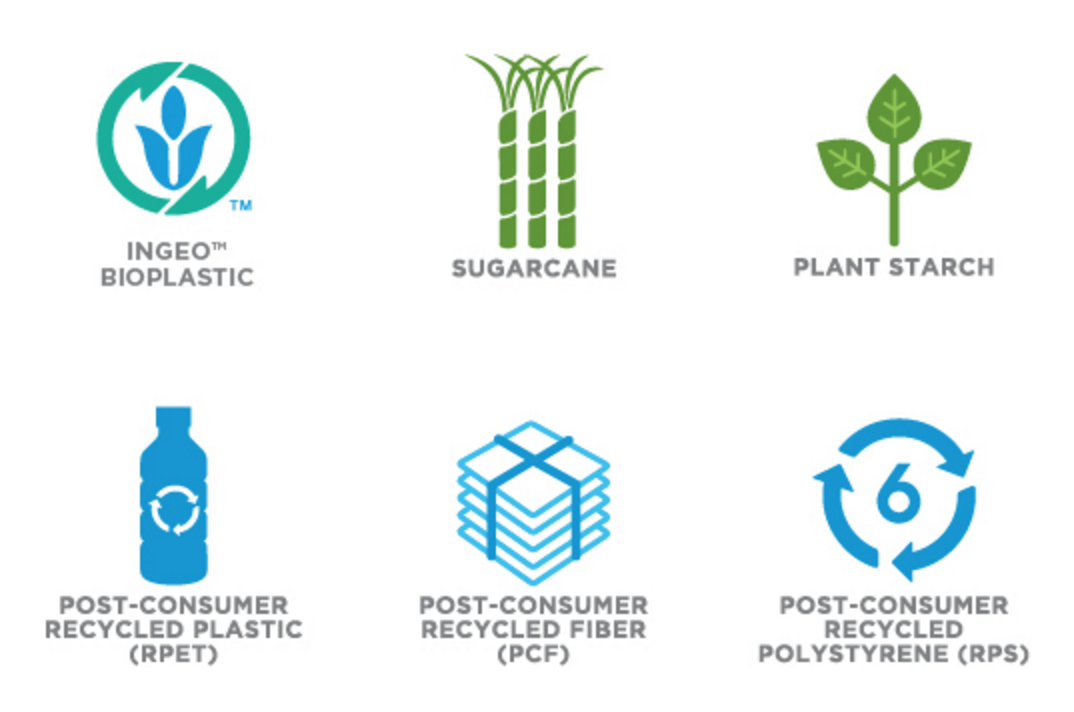
A few of Eco Products top used materials, provided by ecoproducts.com
You can check out their website here:
Or find your nearest location to buy their biodegradable products here:


