Showing posts with label brain. Show all posts

Sunday, June 11, 2023

The Science Behind Sadness: Unraveling the Mysteries of the Human Emotion

Sadness, the dark cloud that looms over our hearts, also has a scientific component! Yes, you heard right. Behind those sobs and depressing music, a fascinating scientific universe is at work. Therefore, prepare your lab coats and emotional goggles as we set out on a fun-filled adventure to discover the peculiar science of grief. We all experience sadness at some point in our lives because it is an emotion shared by all people. Sadness can have a significant negative effect on our mental and physical health, whether it is brought on by failure, personal loss, your first heartbreak or other difficult situations. But what precisely is sadness, and what processes take place in our bodies and minds when we experience it? In this blog, we will look into the complicated mechanisms that underlie the complex emotional state of sorrow and explore the science behind it.
Art by Malte Mueller

The Mood Molecules: A Neurochemical Tango

In our minds, sadness is like a chemical dance party. Those small messengers known as neurotransmitters are essential to our emotional experiences. Serotonin, dopamine, and norepinephrine are the main players when it comes to sadness. In times of sadness, serotonin, the "feel-good" neurotransmitter, takes a huge hit. It's as if the DJ of joy takes a vacation and leaves us with a sad mixtape. The party-starter dopamine is also involved in sadness. It's as though the energy on the dance floor wanes when its levels drop. Additionally, when norepinephrine, the sidekick of adrenaline, is out of balance, it can interfere with our ability to feel emotions.

The core of sorrow


The emotional brain, the source of sadness: the amygdala

The amygdala is the drama queen of our brains. This almond-shaped structure is in charge of handling negative emotions, such as sadness, but furthermore the amygdala does a lot more than handle sadness. The amygdala is in charge of managing aggression as well as perception of emotions including fear, sadness, and rage. In order for someone to be able to recognize similar situations in the future, the amygdala helps maintain memories of past events and emotions. It's similar to a director experiencing an emotional rollercoaster as they read instructions and create a show-stopping performance. According to studies, the amygdala is involved in the experience of sadness since it is particularly active during sad emotional states. The amygdala communicates with other brain areas, like the prefrontal cortex, which is in charge of logical thinking, but sometimes their communication gets lost in translation, leaving us feeling like we're stuck in a never-ending melodrama whenever we are sad.


When Sadness Throws a Party

Emotions can also be expressed by facial expressions, sounds, and bodily responses, such as when your heart beats faster because you're enthusiastic, or when you utter "woah" because you're interested by something. Additionally, emotions can lead to actions, such as yelling at someone when you're upset. 
The Stress Response Sadness might enter the party like an uninvited guest and startle our stress reaction. The hypothalamic-pituitary-adrenal (HPA) axis, the stress response system, is now activated! When sadness strikes, the hypothalamus generates corticotropin-releasing hormone (CRH), starting a domino effect reaction. The pituitary gland comes next, acting as a DJ by releasing adrenocorticotropic hormone (ACTH). When the adrenal glands are stimulated by this hormone, cortisol, the stress hormone, is produced. Our immune system, sleep patterns, and even our ability to think clearly are all suddenly compromised as cortisol turns our body into a dance floor of stress. 

The Social Connection Rhythm

Even though sadness has a gloomy beat, interactions with others aren't always bad. In fact sadness helps us out a lot. Because we are social beings, fulfilling connections are essential for maintaining our emotional health. Our brain's reward system can get a little off when we're sad, which drains our desire to interact with people. But fear not!! Social interaction and encouragement serve as the best dance partners against sadness, swooping in to cushion against its negative effects. So put on your dancing shoes, look for those supportive friendships, and groove your way to emotional flexibility!


The Evolutionary Benefit and Overall Benefits of Sadness

Sadness has an evolutionary function despite its bad label. It promotes social ties and can help in overcoming tricky situations. Sadness alerts people to your misery, evoking sympathy and support. By creating a social support system, this emotional response from others can improve our chances of survival. So, sadness serves as both a burden and a tool for developing and preserving connections. Even if it seems odd, there are many other benefits to sadness as well. According to research, sorrow can improve thinking and memory. When we are sad, we often think back on the past, review our priorities, and learn important lessons. It can act as an outlet for our personal growth, fostering qualities like resiliency, empathy, and a greater comprehension of both ourselves and others.

The fascinating scientific world of neurotransmitter DJs, dramatic amygdala, stress response parties, and the importance of human connections is hidden below the veil of sadness. Therefore, keep in mind that there is a scientific rhythm at work whenever you feel yourself overwhelmed by emotions in the future. Accept the dance, look for help, and have faith that someday the clouds will separate to show the brighter side of life. Keep grooving, my friends, and never forget that there is beauty even in the saddest of moments.

Thursday, June 8, 2023

The Science Behind Why We Get Deja Vu: Is there Something Wrong With my Brain?

Have you ever walked into a room or been to a place and felt like you have been there before? But deep down your brain knows that you haven't been there. Sometimes the feeling is uncomfortable and often can leave you wondering if you're losing it. Don't worry though because it is normal; almost everybody gets the feeling of déjà vu. I get it, you get it, your mother gets it. In fact, almost 97% of the world population experiences it at least once in their lifetime. The word déjà vu means "already seen" in French and the term is credited to be named by French philosopher Émile Boriac in 1876. 

Personally, I get déjà vu all the time: in class, at home, or at work. It always feels like I already experienced this moment or visited this space. Déjà vu has always interested me because I couldn't tell whether I was going crazy or I had actually experienced something similar. Sometimes, I trick myself into believing I already know the outcome because I believe that I have experienced the situation before. After researching, I discovered that déjà vu occurs when the wires in your brain get crossed.  The wires in your brain are called axons which are extensions of your brain's neurons that connect with other neurons in your brain in order to send signals to the rest of your body. The part of your brain responsible for déjà vu is the hippocampus in each temporal lobe. Parts of your brain can get incorrectly activated and other regions of your brain have to do a fact check and recall past memories to see if they are connected to this moment. Leaving a strange sense of déjà  Each person has two temporal lobes. The temporal lobes contain a hippocampus which is responsible for storing your short term memory. The temporal lobes are also responsible for your ability to recall words, people, places, language, and your ability to interpret emotions in other people. The hippocampus is responsible for memory recollection and familiarity.


                          Location of the Hippocampus                    Location of the Temporal Lobes

The hippocampus contains three major regions: subiculum, hippocampus proper and dentate gyrus. The hippocampus proper is responsible for decision making and memory storage, the dentate gyrus acts as a preprocessor for incoming information, and the subiculum is responsible for memory retrieval. There are two distinct classes of neurons in this area of the brain: projection neurons which send information to more distant parts of the brain and interneurons which send information to nearby neurons. The neurons in control of excitatory synapses tend to be the principal neurons. For clarification, excitatory synapses is when activity from one neuron influences the activity of a nearby neuron triggering a neurological or physical response. 


Hippocampal Anatomy: Source
It is normal for a healthy brain to experience déjà vu at least a few times per year. The feeling is often associated with high levels of exhaustion, being busy, or stressed out. Déjà vu occurrences are more frequent in people who have high level college degrees, travel, or exhibit high levels of intelligence. For the brain, high levels of stress and exhaustion can cause cloudy long term memory. Long term memory storage is associated with the right temporal lobe. 

While experiencing déjà vu occasionally is completely normal, sometimes déjà vu is associated with serious underlying health conditions. More frequent occurrences of déjà vu are associated with people who commonly have seizures. These types of people typically have central nervous system disorders such as epilepsy or narcolepsy. Epilepsy is when clusters of nerve cells in the brain misfire resulting in abnormal bodily response that is presented through a seizure. The most common form of a seizure that people with epilepsy experience is a focal seizure. People who commonly experience focal seizures report to experience intense déjà vu before the seizure occurs.  This occurs because of the  misfiring neurons that form an inccorrect connection between parts of your brain responsible for memory storage, which is in the hippocampus. A focal seizure is when the nerve cells in your brains send out uncontrollable electrical signals. Focal seizures impact motor control (ability to control muscles), sensory feeling (tasting, smelling, seeing, or feeling something that is not really there), sudden intense feelings of happiness, nausea, or anger, repetitive behaviors (blinking, twitching, or involuntarily moving your mouth). The neurotransmitter responsible for excitability is the amino acid glutamate. Glutamate receptors are locatated all throughout the central nervous system which is essential for maintaining optimal glutamate levels in the extracellular space. Glutamate is extremely important to memory, cognition, and mood regulation; too much or too little could have negative affects on your mental health.

  Focal Vs. Generalized Seizure Occurrence. Source
Don't worry, younger people like you and me are more likely to experience spontaneous déjà vu because our brains are more active, more excitable. The temporal lobe in our brains will misfire or get overexcited more frequently than an older persons brain. 

The Science Behind Happiness


Welcome, my dear readers, to an adventure through the science behind happiness! Happiness is something we all wish for; it is the thing we long for during finals weeks, and it is the thing that invades our most precious moments. But what exactly is happiness? For many, happiness is a positive emotion associated with joy. But in this blog, I hope to help you unravel the fascinating science behind what makes us smile and laugh. 

What determines happiness? The answer to that question lies in the pie and not the pie you eat on Thanksgiving but the scientific kind created through research. Many may assume that happiness is an emotion, so it must be determined by your experiences and actions like journaling, volunteering, and laughing. Still, scientists have also found that not only is one of the underlying factors of happiness circumstances and intentional activities, but it is also predetermined by the biology and genetics of a person. Of course, this doesn't mean you have no say in your happiness or that next time you're in a fight with your parents, you can say you made me genetically unhappy. But it does mean that not all of your happiness is determined by just one thing.  


So how can scientists discover that some of the underlying factors of happiness are due to genetics? For many scientists, the studying of emotions, mainly those such as happiness, has been found to be a significant challenge. How do you measure something as subjective as happiness? After all, our definitions and levels of happiness are all different. To answer this question, scientists have brainstormed and looked at other research and tools, including identical twins; yes, some of the very people you are friends have the ability to be a vital tool for genetic studies. But why identical twins? Identical twins have the same genes making them prime candidates to understand their psychological differences while also studying the level of variance in their trait attributes due to genetic variation and their differences due to environmental similarities and differences. 

Recent research by scientists such as Susan Zinn has been found to support that close to 40% of human happiness is a result of your genes. In research like the Journal of Happiness Studies, researchers have found that certain variations among genes may predispose individuals to experience more positive emotions. Other studies, such as a 2018 study in Norway, found that certain personality traits inherited from parents influenced the percentage of happiness determined by genetics. Some of these traits include neuroticism, extraversion, and disposition.

So what does it mean for you? Well, it could mean a lot of things, especially considering that we are always learning more through science and that new research is constantly being found through scientific studies and observations. While this may seem unfair that you may not have as much predisposition to happiness as other people, you still have a say in your own emotions, and that doesn't mean you can never be as happy as someone else. This is truly only part of the foundation of your happiness, and it is very important to remember that happiness is not entirely determined through your genetic makeup and that your experiences and actions can also determine your feelings. 

    Genetic Happiness

One of the other scientific factors behind the bliss we call happiness is the neurological chemicals found in your body. Some of these hormones you may even know of include Serotonin, Dopamine, Oxytocin, and Endorphins. 


Let's start with the superstar of happiness hormones, Dopamine. The hormone dopamine is often associated with pleasure, reward, and motivation. This chemical is part of the reward system found in your brain, and when you accomplish a goal or engage in fun activities, dopamine floods your brain. This rush from Dopamine gives your brain a pat on the back and motivates you to keep experiencing delightful experiences that can cause you to feel greater levels of happiness. 

Next up is the mood-lifting hormone serotonin. This hormone is very important for the regulation of sleep, mood, and appetite. When you have optimal serotonin levels, you can feel calm and happy. You can boost your serotonin levels in many ways, including exercise, sun exposure, and being in nature.

Have you ever experienced a good old fashion euphoric rush after a workout or long laugh? Well, you can thank endorphins for that fantastic sensation! Endorphins are our bodies natural painkillers and mood enhancers. This hormone inhibits the transmission of pain and enhances our mood. Some easy ways to increase your endorphin levels are exercising, laughing, or even eating dark chocolate. 

When it comes to the warm and fuzzy oxytocin, it will be found center stage. It is known as the "love hormone" because it is associated with bonding and trust. In addition, this hormone helps create a sense of love and empathy. Oxytocin is released Through physical touch and acts of kindness, creating an amazing sense of warmth. 

So how do you feel happiness? Well, there are many ways; one of the easiest ways to feel happiness is to exercise. Exercising causes a release of chemicals that boost your sense of happiness while suppressing emotions of stress. Another way you can increase your happiness levels is through relationships. Research has found a connection between people's relationship strength and their levels of happiness. Some other ways you can increase your levels of happiness are by practicing gratitude, meditating, getting sleep, and helping others.   

Did you know Finland is the happiest country in the world? For the past 6 years, Finland has kept its streak of being the world's happiest country. Primarily based on the Gallup World Poll evaluations, the World Happiness Report was created to rank countries by their happiness levels. Some reasons for Finland's happiness streak are low crime levels, a high standard of living, a strong education system, and overall equality.  

Although the U.S. isn't number one as of now in the World Happiness Report, that doesn't mean places in the U.S. haven't taken strides to help further people's education on happiness. At Yale, located in New Haven, Connecticut, Laurie Santa, a professor of psychology, has created a class called the Science of Well-Being. What initially was created as a one-time course has become one of Yale's most popular classes. Throughout the class, students were taught to track sleep patterns, keep a gratitude journal, and perform acts of kindness, alongside many other things. For many students, this class has significantly impacted their mindset and habits, especially following the pandemic when many struggled to find ways to protect their mental health.  


Fight, Flight, or Freeze: The Science + Evolution Behind Panic

Picture this. You're about to walk into Ms. Eckert's AP Bio classroom, and as you walk in, someone from the last class walks out and says "She's giving a pop quiz today!" (This is a hypothetical of course, Ms. Eckert would never.) There could be a couple of things that run through your mind as you realize you forgot to do the reading due today. The first is flight. You turn right around and sprint out of the classroom before Ms. Eckert can see you were even there. The second is fight. You march right up to Ms. Eckert's desk and say "Pop quizzes aren't fair! You said we wouldn't have any!" The third is freeze. Your brain is stuck and you just stand there trying to think about what you can do to stop yourself from failing. These three responses are more than just you being scared of a pop quiz, they are rooted in physiological responses to a perceived danger. Humans have evolved through time to have these safety mechanisms to increase their survival rate, and the science behind it is fascinating!

 The Three Fs

Responses - SURVIVORS VOICES
The human body has an amazing physiological reaction time when it perceives danger. This is the result of the limbic system, which consists of multiple components that work together to process emotion, stimulus, and memory. The amygdala, hippocampus, thalamus, and hypothalamus are the components of the limbic system most associated with the fight or flight response. All these terms can get kind of complicated, but I'll try and simplify it a bit. 

For example, you see a wolf right outside your tent while you are camping. The moment your eyes see it, your thalamus processes this visual stimulus and sends it to your amygdala, activating it. When activated, the amygdala sends a signal to the hypothalamus, the "command center" of the response. This signal is sent through a band of fibers connecting the amygdala and the hypothalamus, called the stria terminalis and the ventral amygdalofugal pathways. Now that the hypothalamus is in control, it sends signals through autonomic nerves to adrenal glands and communicates to the rest of the body using the autonomic nervous system. This is a part of the nervous system that controls the unconscious functions necessary for survival. It consists of the nerve network that runs throughout the whole body. The use of adrenal glands is to secrete steroid hormones such as epinephrine (adrenaline) and cortisol into the blood. The epinephrine is the signaling molecule, and after binding, the alpha G-protein exchanges a GDP molecule with a GTP molecule. This exchange starts the dissociation of the alpha G-protein from the receptor, making it active. Then, the activated alpha G-protein binds to adenylate cyclase, leading to the conversion of ATP molecules into cAMP molecules. The generated cAMP molecules then activate protein kinase, which stimulates various enzymes and molecules involved in numerous cellular processes. These hormones are why you notice the physical changes in your body as it is going through this stress response. 

The Limbic System Diagram | Quizlet

Your specific response will depend on how you tend to respond to panic or stress, but you can usually bank on these few things to happen: increased heart rate, quick breathing, excessive sweating, and dilated pupils. I mentioned that responses may vary for different people, because with a "freeze" response, you may find some differences. For instance, your heart rate may decrease instead of increase, and you might find yourself holding your breath instead of quickening it. The person who froze is very alert, but they feel like they can't move. The use of this is it can help someone hide, because without movement many predators would lose interest.  Freezing is also associated with a higher perception of one’s surroundings, which helps process information. The purpose of these responses is to prepare your body to fight, flee, or freeze in a dangerous situation. These responses get your body ready to act under high pressure and make you quickly assess whether fight, flight, or freeze is the best course of action. The responses don't always have to relate to immediate survival either. People often perceive things as danger that really have nothing to do with survival. The perception and response to risks can be shaped by various factors. Personal values, beliefs, and attitudes, along with broader social or cultural values or tendencies, significantly impact the way risks are perceived and embraced by individuals. Continued activation of the stress response system over an extended period, coupled with excessive exposure to cortisol and other stress hormones, can disrupt virtually all physiological processes within the body. When cortisol levels remain excessively high for prolonged periods, its beneficial role in reducing inflammation can have reverse effects. The elevated levels of cortisol may inadvertently suppress the immune system, making individuals more vulnerable to colds and contagious diseases. This increases the risk of developing cancer, autoimmune diseases, and food allergies. It also causes you to be at a higher risk of anxiety.

Premium Vector | Stress response system scheme

You might have noticed that I missed one of the components I originally listed in the limbic system, the hippocampus. This is because the hippocampus is a little different than the others, and isn't directly involved with the same response system as them. The hippocampus is very important for memory formation and learning. It links the fear response to an event in your memory, so for instance, now that you've had that stressful experience with the wolf, your hippocampus will remember it and link wolves with fear. You most likely will not return to that camping spot, because your brain now associates it with danger. This is why the hippocampus is one of the few parts of the brain that continues neurogenesis (the formation of new neurons) into adulthood. You're constantly experiencing new things and creating links between experiences and emotions.


A lion chases a water buffalo

So how did the "fight, flight, or freeze" response develop? Natural selection and evolution have everything to do with it. It's important to note that this response is not specific to humans. Most, if not all, animals also have the fight or flight instinct. You can see this in many nature documentaries, specifically in a common scene where they show a gazelle detecting a lion and going from stand-still to a sprint in less than a second. The gazelle doesn't have enough time to prepare itself for the attack, and the fight or flight response gives it a mechanism to unconsciously respond to danger in a split second. The fight/flight/freeze mechanism evolved so animals could react quickly to immediate dangers and ensure a higher chance of survival. Because this instinct aids them in survival, it was passed down to offspring, and has become a trait similar to all animals and individuals today. 

What About the Brain Makes Us All Unique?

Most of us know that your environment can have an intense impact on your thoughts, feelings, and emotions, translating into differential personalities and tendencies amongst all people. But, what many people do not know is that there is more than just this "nurture" aspect of behavior, but a "nature" factor as well. There are several biological functions of the brain that contribute to these behavioral differences in significant ways. I have always been fascinated by what it is that specifically causes this disparity amongst people and wanted to get a better understanding on what makes us all so unique. So, I did some research on several aspects of the human brain that might have some correlations with mood and behavior to see how these may vary amongst us all.


Differences in Brain Structure and How This May Change the Function 

What many people may not have realized about the brain, myself included, is that the structure varies for all people, contributing to the way we express different traits. In AP Bio this year, we have learned that a change in shape or structure will result in a change in function, and this can be said about the brain. Studies have found that the thickness, amount of folds, and volume of the cortex (the brain's outermost layer) may be associated with different behavioral patterns. Each of our brains folds in order to increase their surface area-to-volume ratio and maximize the amount of tissue in our confined head space. When there is more folding in the brain, the thickness of the cortex decreases and thins out. This is what allows for the greater surface area, without increasing the volume as well. All of this folding leads to greater efficiency in the brain to allow for more neurons and synapses to form, ultimately increasing our cognitive abilities and then behaviors. It seems a decrease in cortical thickness with an increase in volume and folding correlates to feelings of curiosity and sensation seeking. An increase in cortical thickness with a decrease in volume and folding seems to result in greater feelings of impulsivity and neuroticism. The temporal lobes and thalamus in more socially conscious and sensitive people have been found to have increased activity, and greater activity can also be found in the inner and lower frontal lobes, contributing to a feeling of determination. 

What is temperament and how does this relate to our personality? 

Temperament refers to physical and emotional traits a person is born with that help shape and influence the decisions they make throughout the course of their life. This most often means behavioral distinctions such as how one learns (attentive/distracted) or interacts with others (introverted/extroverted) as well as several other personal attributes. These traits may be altered over time as a result of external forces and influences, but they are obtained at birth, resulting in their large role in our decision-making while growing up. I personally have had a more shy, introverted temperament since I was younger, and those tendencies have remained qualities of mine over the years. However, I have learned to be more friendly and talkative as a response to my experiences and environment thus far, even though those shy and quiet parts of me still remain prevalent.

The question of whether temperament is determined by genetics and can be inherited is still not entirely clear to neuroscientists studying this area. However, research has suggested that there are genes that act as factors in expressing certain emotional and social traits, both negative and positive and may be responsible for 20-60 percent of temperament. For example, research shows that greater interactions between the DRD2 and DRD4 genes result in greater potential for antisocial behavior or conduct disorder than those without this same level of interaction. Abnormal activity from the MAOA gene plays an active part in causing one to have more aggressive, violent, or impulsive manners. This same gene can also determine other social temperaments, like introversion, because of its role in transcribing enzymes that break down neurotransmitters, altering a person's response to their circumstances. Irregular activity of this gene causes an unstable amount of neurotransmitters in the brain, resulting in negative responses, either at higher expression levels of MAOA or decreased levels of expression. 

Activity of Neurotransmitters & Its Role in Behavior 

I'm sure you've all heard of neurotransmitters like dopamine, serotonin, epinephrine, and possibly others, but most of us don't know what these neurotransmitters really are and how they work. Neurotransmitters are chemical messengers that travel between between instead of amongst your neurons (nerve cells in the brain) in order for these neurons to communicate. They are responsible for allowing our body to function both physically and psychologically, resulting in different emotions. Some of the biggest neurotransmitters that affect mood are dopamine (feeling of reward), norepinephrine (feeling of attentiveness), and serotonin (feeling of happiness).

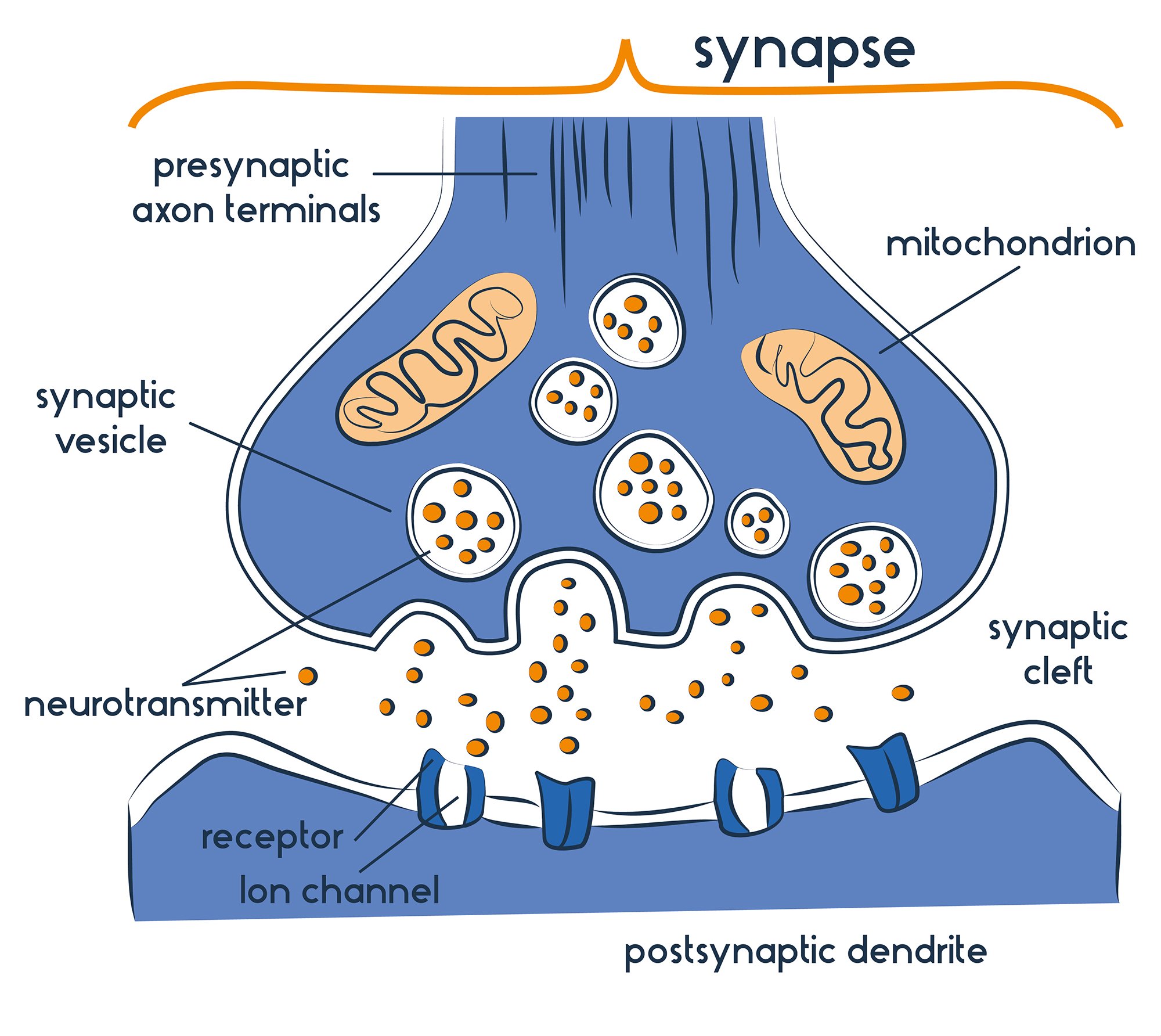
Neurotransmitters are secreted by vesicles in the axon terminal of the neuron. They will then diffuse down ion channels out of the cell membrane until they reach the receptors on another neuron, forming what is called a synapse. This allows a ligand-gated ion channel to open or close to let/prevent ions from passing through the membrane of this new target cell. The ions that are controlled by neurotransmitters are responsible for many bodily functions, such as nerve impulses in the brain, the central nervous system, and the peripheral nervous system. Shifts in the membrane potential of the neuron are altered by the ion concentration inside and outside the cell, which will then affect the signals being sent throughout the body. Resting potential is when there is a greater concentration of positively charged ions outside the cell, creating a negative concentration gradient. Action potential is when there is a shift from this negative concentration gradient to a positive gradient because of the ligand-gated ion channel opening, causing a change in the voltage across the membrane. This change in voltage is responsible for the electrical charges in neurons that allow them to transmit information for these bodily processes/functions to occur. 

Heightened or reduced activity of neurotransmitters plays a vital role in a person's mood, ultimately influencing what makes our individual character. An example of this is the activity levels of dopamine that have shown to differ between extroverted and introverted people. Extroverts have higher dopamine levels because they have a lower sensitivity; they don't feel its effects effects as strongly as introverts at the same dopamine levels. Because introverts have a higher sensitivity to dopamine, they can easily feel overwhelmed from it. Instead, acetylcholine has a better response for introverted people, often meaning myself, and allows us to have a more internally calm and thoughtful mood. The difference in suitable neurotransmitters for each personality type contributes further to behavior depending on the pathways caused by them. Extroverts have more talkative, quick-thinking, and social energies, whereas introverts have greater self-awareness, clearer thoughts, and a more reserved social presence. The bodies response to these neurotransmitters can result in entirely contrasting identities.

Neuroplasticity

What exactly is neuroplasticity? Neuroplasticity is a term used to describe how the brain changes and adapts structurally throughout one's life based off of your personal experiences. This is meant to reflect the "nurture" aspect I was referring to earlier. In AP Bio, we spend a lot of time learning about how the environment shapes us, and neuroplasticity is meant to reflect how these environmental factors can play such a large role in who we are. Learning, most often correlated with neuroplasticity, is what will help strengthen and form new neurological pathways in the brain. Something like learning a new language, instrument, or skill is more likely to increase neuroplasticity than learning small facts. 

There are two types of neuroplasticity: structural and functional. Structural neuroplasticity is when the brain has a physical change in its structure due to learning new things throughout life. Functional neuroplasticity is when the brain changes the location of certain functionalities as a result of damage in that area. The function is then relocated to an undamaged area, something that happens primarily due to injury. 

So how does this affect behavior? Well, neurological connections form as a result of repetition in your life. Behavioral habits like worrying, meditation, exercise, and more become instilled in your brain and overall mindset, eventually contributing to the type of person you become. In order to change habits you feel may play a negative role in your mind, you have to re-route the pathways in your mind by adopting new behaviors and habits to replace these old ones. Learning new material takes time, and the best way to process information is through slow, consistent practice. There are no long-term benefits to trying all at once because the information will all disappear in time. The most beneficial way to grasp something new is through steady effort over time. Studies also show that social interaction also has a major influence on the brain and behavior. Experiences such as the relationship you may have with your parental figures as a child or stressors in your life shape the connections you form in your mind, and--as I said before-- these synapses are what initiates nerve impulses and the nervous system. 

I learned that there are so many factors that partake in creating this individuality amongst people. Everyone has their own response to parts of the brain, whether that be related to structure, genes, neurotransmitters, or something else. While our personal experiences do provide us with a lot of these moral and social developments throughout our lives, there is more to it than just our surroundings. So many biological processes are responsible for what makes us all special.

Wednesday, June 7, 2023

Help! I Think My Brain is Frozen...

Aghhh...My Head Hurts

I am sure that whoever is reading this has most definitely had Sphenopalatine Ganglioneuraliga at least once in their life. The voice inside your head probably just responded to that statement with extreme confusion and denial. Of course you have never had whatever that confusing name was, it sounds too serious to have affected you, right...? Well, I am here to tell you that you actually most likely have because in reality, it is simply just the scientific term for a brain freeze.   

What you think a brain freeze is


Have you ever wondered what that agonizing pain you feel in your head is after consuming a delicious, cold, refreshing treat on a hot summer day is? Although it only lasts for a short period of time, the pain can be quite unbearable. I am going to assume you know that it is a brain freeze. But what exactly does this even mean? A brain freeze, other wise known as an ice cream headache, cold neuralgia, or cold stimulus headache, is a an intense, but brief, pain located in the front of the head as a result of eating or drinking something cold. Such pain can arise from things such as ice cream, ice cubes, ice pops, frozen drinks, or even cold air. 

Let's take a deeper dive into what is actually happening inside that head of yours

But what is going on at the molecular level? For starters, no, your brain is not actually frozen, nor is your blood getting cold. In reality, your blood vessels are rapidly constricting (vasoconstriction) and rapidly widening (vasodilation) as a response to cold stimulus in the roof of your mouth or back of your throat. Subsequently, this activates pain receptors in the trigeminal nerve, or the nerve that perceives pain and temperature shifts from inside the mouth. Because these nerves are so sensitive, the extreme stimuli changes and proximity of these nerves causes them to react. Essentially, the trigeminal nerve sends a signal of pain and frigid temperatures to your consciousness which is then received and interpreted by the brain cortex. But why does this rapid dilation of blood vessels cause such sharp pain in the head? Well, the brain interprets this as head pain since the trigeminal nerve also transmits sensation to the head and scalp. In other words, your brain briefly malfunctions and misinterprets the rapid movements and cold stimuli for that excruciating pain you feel. Who knew your brain could make mistakes?! 

FUN FACT: Did you know the rapid constriction of blood vessels is a survival instinct used to maintain your body's core temperature? It is truly fascinating what our bodies are capable of doing!

What is really happening inside your brain


A closer look into the trigeminal nerve

The trigeminal nerve, or CN V, is the fifth cranial nerve and the largest one. It has three main branches, each of which serves the face's sensory innervation as its main purpose. The ocular (V1), maxillary (V2), and mandibular (V3) nerves are the various branches.

The Trigeminal Nerve/System

So, how can you stop this searing head pain?

One of the most common solutions you might have been told to stopping a brain freeze is placing your thumb on the roof of your mouth. I am here to tell you that this actually does in fact work! Do you know why? Well, putting your thumb on the roof of your mouth helps in transferring warmth to the area, alleviating the pain from the cold stimulus. Basically, any method that involves circulating warm air into your mouth and body will help in bringing mouth and throat temperature back to normal. This can be as simple as drinking a warm drink or covering your nose and mouth with your hands and breathing rapidly to increase the flow of warm air. 

A boy getting a brain freeze with ice cream!


Are there those more prone to getting brain freezes?

In a sense, yes there can be people who experience more pain or brain freezes more often than others. This really just means that they have a more sensitive trigeminal nerve than other people. Also, recent studies have shown that individuals who suffer from migraines are more often prone to brain freezes. More specifically, Dr. Jorge Serrador, a cardiovascular electronics researcher, explores this idea more closely in his research in the "FASEB Journal" (April 2012 Issue). Dr. Serrador claims that we already know migraine sufferers are more likely to suffer brain freezes after consuming something cold compared to those who never get migraines. The real mystery is what happens during a migraine vs. a brain freeze. Well, Serrador hypothesizes that actually, the same process most likely occurs or at least something very similar and vasodilation causes a rush of warm blood into brain tissue so that the brain remains warm and avoids any drastic temperature shifts. Moreover, Dr. Serrador and his team suggest that further research may finally lead to medications that can help treat or even cure migraines. Since dilated arteries result in a blood rush to the brain that causes immense pressure and pain, then a drug that constricts the blood vessels should reduce the pressure, ultimately alleviating the pain an individual feels. 

How common are brain freezes?

Believe it or not, only 30%-40% of people are susceptible to brain freezes. Isn't it weird to think about how there are people who have never experienced this before? I guess you might be more special than you think ;) 

So, next time you have a cold treat and feel that excruciating head pain, remember your body is trying to keep you alive!