Showing posts with label Neuroscience. Show all posts

Sunday, June 14, 2020

The Effects of Sleep Deprivation on the Human Body

Since coronavirus has forced the U.S into a nationwide shutdown, many of us have found ourselves staying up well past the time we did before. Personally, it is a rarity for me to go to bed before 2 AM now, and it is the same for many of my friends and it probably is for you right now, as you sit here reading this. If it isn’t, I envy you.

Screenshots of my friends telling me to go to sleep/ questioning my sleep schedule
Even though the nation is shut down, which includes school, most of us still need to wake up at some point to do work or participate in class. To many, this is an issue because it means that we have to get up before 11 AM, meaning that many people are not getting the right amount of sleep. Unfortunately, this tiredness was probably even more prevalent in pre-corona life. As kids struggled to cram school, homework, sports, and more time-consuming extracurriculars into a short 24-hour span, they more often than not put aside one of the most important tasks: sleep. An important factor that makes it all the more impossible for teenagers to get enough sleep is how their circadian rhythms change when they reach puberty. This causes for teens to begin to release melatonin much later, causing teenagers to become tired around 10:00 or 11:00 instead of 8:00 or 9:00. According to the CDC, teenagers (ages 13-18) require 8-10 hours of sleep each night. During the school year, I know that that is almost impossible to reach. I found myself getting maybe 5-6 hours of sleep most nights, and many of my fellow peers were probably getting around the same amount. According to the CDC, 72.7% of high school students said that they did not get enough sleep. When a teenager begins to get tired at around 11:00, yet has to get up for school around 6:30, it is awfully difficult for a teenager to get at least 8 hours of sleep. Besides the rigorous schedules that some students may subject themselves to, the delay of melatonin release also prevents students from getting adequate rest.

Chronic sleep deprivation can wreak havoc on a person’s body. When you sleep, your pituitary gland releases hormones, primarily somatotropin (also known as GH), that cause your bones and muscles to grow, fat metabolism increases, and your immune system functions much better. When an individual suffers from chronic sleep deprivation, there is an increased risk of diabetes, heart arrhythmia, high blood pressure, cancer, obesity, and many more. All of these health issues sound scary and like the side effects that you would read off of a bottle for a new weight-loss drug. In regards to your immune system, the cells that destroy viral and cancerous cells do not function as well when you are sleep deprived. Reproduction of antibodies is also altered when one is chronically sleep deprived. 

Even more interestingly, sleep deprivation has a profound effect on the brain. I found this one really cool TedTalk about how a lack of sleep affects the hippocampus, which is a part of the limbic system in your brain. The hippocampus is most well known for converting short term memory into long term memory. 


The researcher in this TedTalk explained his studies on the effects of sleep deprivation on this part of the brain using mice. The results of this study showed that the sleep-deprived mice had less memories, and he found that the dendrites of their neurons had less spines. Hold up- you may have no clue what I’m talking about right now because the nervous system was edited out of the AP biology curriculum. In our nervous system (the brain is part of this), we have special cells called neurons. They communicate with each other through cell structures called axons and dendrites. The axon is what is used when a neuron is sending a signal. The dendrite of another neuron will then receive this signal. 


This particular study, however, mentions the mushroom spines of dendrites which are important for neuronal communication. The more spines there are, the better the connection between the neurons will be. That being said, the researcher found in his study that less mushroom spines are present in neurons in the hippocampus when an individual is sleep deprived, which means that neurons in this part of the brain can not communicate as well. 

This makes sense because the mice had lesser memories after being sleep deprived, as the part of their brain responsible for processing their memory is not at its peak performance. For us, that means that we become more forgetful when we are sleep deprived, which I think most of us have experienced. 

Overall, sleep deprivation is a massive issue in the U.S. According to Johns Hopkins, 6,000 fatal car crashes occur every year due to drowsy driving. That is a horrifying statistic if you think about it because most of the people reading this are my age, so around 16-18. In the state of NJ, a 17-year old can drive without an adult in the car. Many of these new drivers are also sleep deprived, which makes a very dangerous situation, and they are also people you care about. Furthermore, chronic sleep deprivation puts you at a 33% increased risk for dementia according to Johns Hopkins and makes you more at risk for mental illness. 


The increased risk of getting dementia due to chronic sleep deprivation makes a lot of sense when you think about the glymphatic system. This system works to eliminate waste from the central nervous system, which is your brain and spine. The glymphatic system does this by circulating cerebral spinal fluid, which serves to cushion your brain, facilitate the movement of neurotransmitters, and aid in waste removal. When you sleep, your CSF circulates much better. Essentially, your body gets rid of a lot of harmful waste when you sleep thanks to that increased CSF activity. This is an extremely important feature because it allows your body to get rid of some really harmful substances, such as misfolded β-amyloid proteins. These misfolded proteins are usually present in the brains of Alzheimer's patients. This disease results in severe atrophy of the brain, which is why it is so fatal: it causes severe damage to your body's control system. That being said, if you are sleep deprived, your CSF is not as active as it needs to be, meaning that this harmful protein is not being removed from your brain. People being more at risk to get dementia due to chronic sleep deprivation makes so much sense because without sleep these harmful proteins are not being removed from your body. 

After reading this article, I bet that you are thinking about how you can fix your sleep schedule and become more well-rested. Some of the effects of sleep deprivation that I have mentioned are quite frightening. Fortunately, there are many ways to get more sleep. Cutting down on difficult classes may be a good idea, as well as actually trying to get work done in study hall. This way, you would have more time to sleep because you are taking fewer time-consuming classes and you are eliminating some of that work during the school day. Participating in fewer clubs and sports may also free up more of your time. You could also try taking melatonin before you go to bed. That solution tends to work very well for me most of the time. However, it may be more helpful to try to reset your circadian rhythm by reducing stimulus an hour or so before bed. This can be done by dimming lights, staying off your phone, and staying clear of technology in general. Another solution to this problem is working on not procrastinating. I personally waste so much time doing this. You should seriously consider some of these solutions or think of ones that may work better for you if you struggle with getting enough sleep. Being well-rested is extremely important, and it keeps you safe and healthy!

Friday, June 12, 2020

Seeing Sounds, Hearing Colors, and Tasting Words

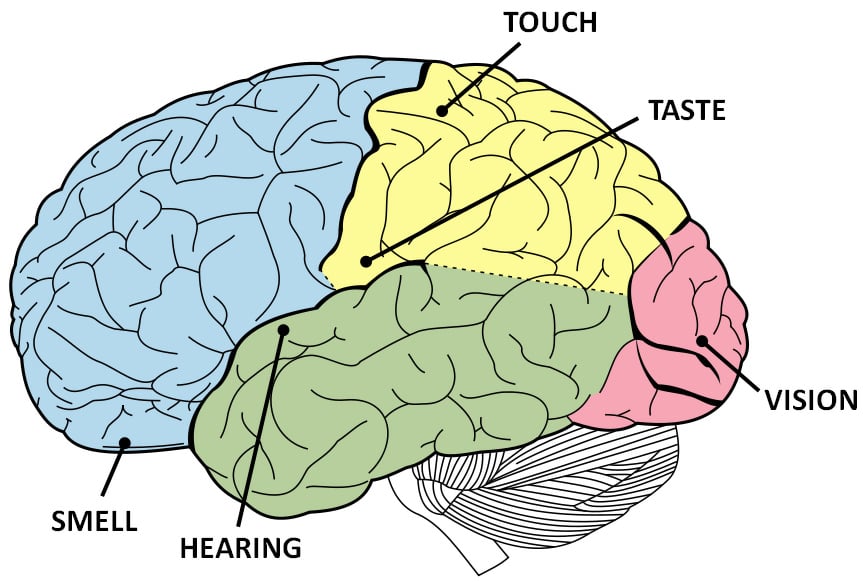
Synesthesia. Sounds interesting, right? Well, it really, really is. Synesthesia is a neurological condition that causes the brain to process data in the form of several senses at once. While most people haven't heard of this remarkable phenomenon, it's relatively common. Research suggests that 1 in every 2,000 people are synesthetes, and some research even suggests 1 in every 300 people have a variation. I wish I was so lucky to have it. There are many variations of synesthesia, but effects could include seeing sounds, hearing colors, and tasting words. How does synesthesia work on the brain you may ask? In simple terms, when you experience one sense, your brain involuntarily connects it to another sense. So, when a “grapheme-color synesthete” hears a number or letter, he or she automatically sees that number or letter in a specific color, a color that remains associated with that particular letter or number throughout life. For example, Billy Joel senses blue or green colors when he hears slow or soft music.
Synesthesia: How does your name taste? – The Brain Bank North West   
Senses in relationship to parts of the brain (Source)

Billy Joel isn't the only well-known person who has this experience. Some of the most creative people in the world owe it in part to this condition. John Mayer, Kanye West, Alessia Cara, Billie Eilish, Beyonce, and Duke Ellington were just a few of the well-known people with synesthesia. Imagine having a four-dimensional outlook on everything--it could be life-altering. As someone who loves colors and music, I think being able to have an ability similar to these people would be wonderful. But there are some things I wonder about... 

I often question if everyone can see the same colors. Let's say when I look at "grey," I see what we would consider as blue. But, when my friend looks at "grey," she actually sees what we consider green. If this happened for every color, we could never really know. Because we would all be defining our own colors. It also could partially explain people's tastes in fashion, art, and more. While this isn't synesthesia, we know for a fact that synesthetes have a similar experience. When I look at grey and see grey, a synesthete could see grey while hearing jazz music. Everything is more enhanced. I wish there were some kind of glasses or machine that could allow us to experience synesthesia. Look later in this post where I find out there actually IS a way (and it's not drug-related).
Amazon.com: A Mango-Shaped Space (8601417156988): Mass, Wendy: Books  
                                        "A Mango-Shaped Space" book cover (Source)
I first learned about synesthesia in middle school when I read a book called A Mango Shaped Space by Wendy Mass. It's about a young girl, Mia, who has a severe version of synesthesia, and how she comes to understand and appreciate her differences. While that synopsis sounds cheesy, it was incredibly interesting. One of my favorite parts is when she recounts the first time she realized that not everyone was like her. Mia's synesthesia meant that she could see a color with a number. It kept her from completing more complex math problems. Additionally, Spanish words had different colors than their English translations, making school incredibly difficult. I loved reading this book because it gave me my first insight into the synesthete experience.
Synæsthesia, synaesthesia                    
How a synesthete could see numbers and letters (Source)
 So, do you have synesthesia? I'm pretty sure I don't. But, maybe you do! You can find out by taking one of the tests in this link. But synesthesia can often be very subtle. So, there's a chance you have it and may never realize, even if you do take that quiz.

Not only that, but there are over 80 official types of synesthesia. One new form I read about is "Mirror-touch" synesthesia: when you see someone touched, you feel the sensation of being touched yourself. There's also "mirror-pain" synesthesia: when you can feel other people's pain. I feel like that would be very difficult to live with and gives a whole new layer to being empathetic.

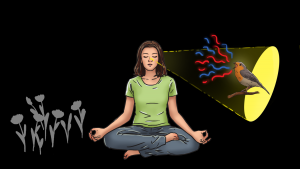
Synesthesia meditation (Source)
                                                   
If you really want to experience synesthesia, like I do, there is one possibility: meditation. Studies show that the best way to cultivate synesthesia isn't through something like LSD, but actually through meditation. I think I know what I'm going to do this summer!

Monday, May 22, 2017

Dream Until Your Dreams Come True

To be perfectly honest, after devoting nearly 12 years of my life to watching Grey's Anatomy, I'm pretty sure I can perform a tracheostomy using a pen or a straw. If you have ever watched even a single episode, you feel prepared to ask for a scalpel to start a huge surgery (maybe even while having the other hand on a bomb inside your patient). Every "neuro" page, every "psych" page, and every PET or CT scan that is requested, makes me more and more fascinated about the most important, and least understood, organ in the human body: the brain. Even today, with all the technology present and active research, people are unaware of everything the brain can do and how it functions. Subsequently, even the known facts of the brain are generally theories rather than definite. Since many diseases such as epilepsy and Alzheimer's have become present in a larger population of people, the government has just recently began to raise its spending on brain research. To me, one of the most fascinating functions of the brain occurs when we are not cognizant of our surrounds: when we are sleeping. While your body is asleep, your blood pressure drops, your muscles are relaxed, your breathing and heart rate slow down, and energy for the day to come is restored. So why is it that while your body is theoretically "off", your brain still has the capability to dream?
Dreams allow you to explore the world

To clarify, there is no definitive answer to why people and other organisms dream. Rather, many theories and hypothesis have been given. One explanation to why people dream is based upon a defense mechanism dating back to the early foundations of biology. During sleep, the brain may stimulate a threatening event to prepare the mind for how to act if this event were to actually occur. With this theory, it can be implied that people who are surrounded by a great deal of threatening occurrences will have more dreams that "exercise the mind" for real-life preparation.

Highlighted is the Amygdala: the part of the brain that initiates the instinctive "flight or fight" action
Another explanation to why we dream can be explained through the activation-synthesis model which states that during the REM (rapid eye movement) sleep, the brain's cortex inhibits signals from the sensory system from reaching the cortex. Instead, the structures that bring sensory signals from the sensory system to the cortex create PGO waves that lead to the activation of the cornea. This action keeps the brain functioning. With the increase in brain activity, dreams occur due to the cortex interpreting these waves and disruptions. 
A CT scan of brain activation in REM as opposed to NREM 1 (the beginning of relaxation where arousal is easy)
A third theory of why we dream is to absorb all of the information we gathered throughout the previous day. During sleep, the brain processes everything that was learned within the day and attempts to understand it. With the help of images and mental emotions, the brain can make cognizant decisions on how to react in the event of seeing what was learned in the day at another time.
A touch of humor to activate your medial prefrontal cortex

The reason behind dreams is not the only night time process that scientists cannot come to a conclusion about. The purpose of sleep in general has been disputed since the beginning of time. Some believe that people and animals sleep for the sole purpose of memory consolidation, others think it occurs to empty the brain of toxic metabolic byproducts, and some note it as a period to de-stress and be at peace. This scientific indecisiveness only further shows that if scientists do not understand the reason behind why we sleep, it is just that much more difficult for them to discover why we dream.
A sleeping nugget engrossed in discover dreams to chase  
As previously mentioned, psychologists, neuroscientists, and researchers of the brain have yet to come to a full consensus on the true reason behind dreams. In spite of that, besides the occasional nightmare, dreams are where the mind can wonder, where you can get lost in fantasy, where you can be whomever and whatever you want to be, where you can see pigs fly. So regardless of the science, "dream on. Dream on. Dream until your dreams come true."