A window into the world of biology in the leafy suburb of Montclair, NJ. Written by students save for a few bio teacher posts.
Wednesday, June 8, 2022
Does Melatonin Actually Help You Sleep?
The Science of Pseudoscience
Introduction
For all the baseball fans out there, here's a fun fact for you. Ted Williams, nineteen-time all-star and two-time recipient of the AL Most Valuable Player, has never actually won a World Series in his nearly two-decade-long career. He was also cryonically frozen in Arizona almost twenty years ago.
![]() |
| Ted Williams, May 1949 |
If you're willing to pay upwards of 60,000 dollars, you too can be stored at temperatures below -196 C for a chance of reanimation in the distant future. Unfortunately, it's looking like the very, very distant future. The science of cryonics is entirely dependent on the existence of advanced human or alien societies that have developed the unknown technology required to stabilize and resurrect dying cells. Using the biology knowledge we have from this class, you can probably figure out that this would be pretty hard to do. Not to mention, if I was a futuristic alien society, I wouldn't really want to resurrect someone stuck in a tube for that long.
Additionally, the website used by the Cryonics Institute is sketchy at best. Not very convincing for an actual scientific process. All of these factors, in addition to quite a few more I was able to find in my brief research, have led to cryonic freezing being categorized as a 'pseudoscience' by the scientific community.
What is pseudoscience? Well, according to Merriam-Webster, it is "a system of theories, assumptions, and methods erroneously regarded as scientific." Take astrology, for a lighter example. In some ways, it could be seen as scientific. Whenever someone brings up the equinox or eclipses or planets in retrograde, they sound pretty smart. The fancy terms work, too. Almost 34% of Americans consider astrology to be 'very' or 'somewhat' scientific. But why?
![]() |
| Astrology divination chart (looks scientific!) |
Cognitive Bias
The human mind is very prone to cognitive bias, which pseudoscience takes advantage of. Our brains enjoy patterns, so when we already have a theory or unconscious belief formed in our heads, we are inclined to seek out evidence that supports what we think is true. Unfortunately, these biases impact much more than just our horoscopes. Everything from the recollection of memories to relationships with other people is crowded with internalized cognitive biases. Because of its power and persuasion, it is super important to understand the why, what, and how to mitigate biases successfully.
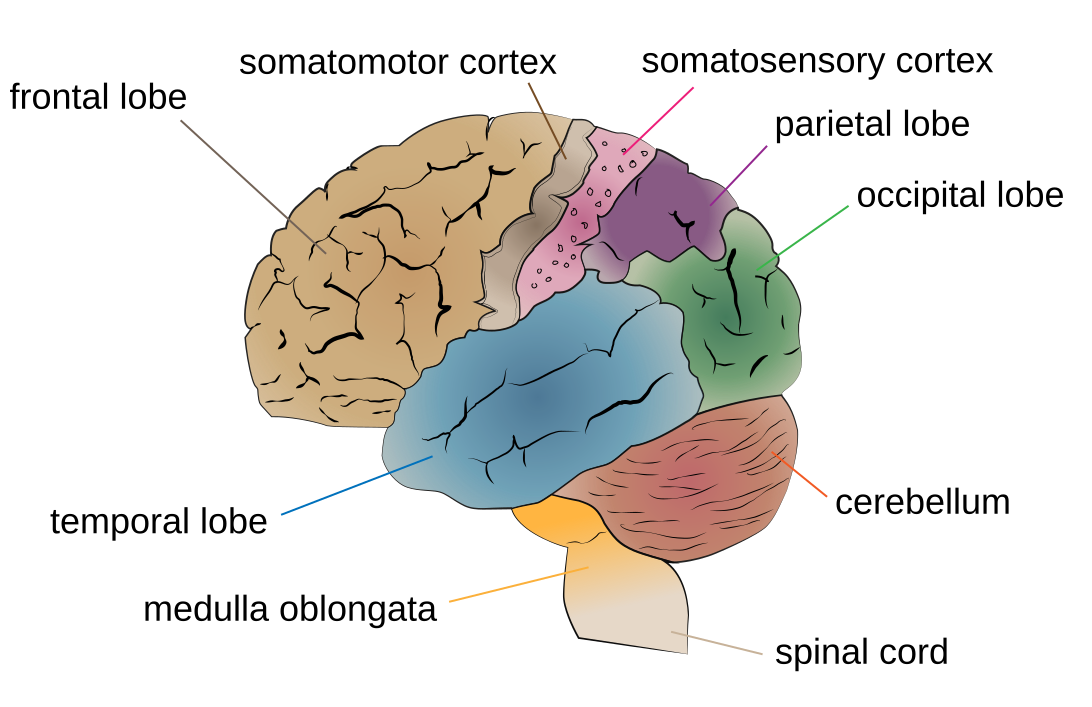
Obviously, cognitive bias originates from the brain, where over 100 billion nerve cells (with up to 10,000 connections each) work together to control our thoughts and behaviors. Discrete brain circuits and neurotransmitter systems are regulated by dopamine, noradrenaline, serotonin, acetylcholine, glutamate, and GABA, all of which drive certain behaviors within specific parts of the brain. However, only some of these processes actually enter our conscious awareness.
It has proven incredibly challenging for scientists to distinctly determine cognitive processes, due to their convolution and synergistic operation. But, some domains of cognitive function have been identified and documented through modern testing batteries, such as CANTAB, which can separate functions dependent upon diverse neuronal circuitry.
![]() | |
|
| Regions of the Brain |
Consequently, to go along with the varying sections and functioning of the brain, there are multiple types of biases that can impact specific judgments and decision-making in different areas.
Cognition is constantly changing and adapting to new information, assisting us in literally every thought we ever thought and emotion we ever felt. However, this exceptionally complex system clearly isn't perfect. That's where pseudoscience can come in and take advantage of the natural biological processes of the brain.
Conclusion
There is no single cause for cognitive bias, just as there is no single solution to solving it. However, it is important to make an effort towards identifying the biases you experience and act upon in daily life.
But hey, don't get too down on yourself for all your irrational behaviors and the mental shortcuts you make on a daily basis. It's only natural. In fact, cognitive bias has been recognized in all sorts of animals: rats, pigs, chicks, rhesus macaques, and even honeybees!
| A rhesus macaque!! (Awww) |
In its own unique way, pseudoscience illustrates the basis of not only AP Biology but every science class I can remember taking since the 5th grade. Not cellular structure or photosynthesis, but the scientific process in and of itself. In order to make a claim, you must have evidence and reasoning that creates a sound explanation of an observation (See Mrs. Eckert's article on that here). Pseudoscience acts as a counterexample to this process. When evidence or reasoning is eliminated, there is always lingering invalidity in the explanation that can be easily ignored in an attempt to validate previously held beliefs.
Pseudoscience has, and always will be present. Debunking it doesn't stop people from believing it, and we all know how hard it can be to get someone to change their minds once it's set on what they think is right. With this in mind, when you find yourself on page seven of Google trying to find support for your argument, keep in mind the principles of cognitive bias and how much of an impact it has on our minds.
Ethiopia and Kenya - The Hotbeds of the Marathon World
If you know anything about the marathon world, you've heard the names Eliud Kipchoge, Kenenisa Bekele, Brigid Kosgei, and Yalemzerf Yehualaw. You have probably heard the name Eliud Kipchoge who is most famous for breaking the 2 hour mark for the first time ever in the marathon. There is more than one thing that these people have in common other than being stellar athletes: they are all from either Kenya or Ethiopia. Kenya and Ethiopia are located on the eastern side of the continent of Africa and are known for being running hotbeds of the world. These two countries are home to some of the most rigorous marathon training camps in the world and produce THE BEST distance runners. To put this into perspective, 19 out of the 20 male fastest recorded marathon times EVER were run by people from either Kenya or Ethiopia. Isn't that crazy? Even more insane, 88 out of the fastest 100 recorded marathons were run by men from either Ethiopia or Kenya. In addition to this, 74 out of the 100 fastest marathons run by women EVER were from either Ethiopia or Kenya. The question that emerges is: how is it possible that so many good marathon runners can be from these two countries? Is it genetics? Training? Environment? Culture?
I just want to make it clear that there are many other countries, mostly from Africa and specifically Eastern Africa, that are home to incredible marathon runners. Some of these countries include Eritrea, Uganda, and Tanzania. I chose to focus on Kenya and Ethiopia because they are the two most common origins of ethnicity amongst the elite of the elite Marathon Runners.
![]() |
| Kenya (orange) and Ethiopia (green) |
Firstly, I want to focus on the physical features of Kenya and Ethiopia. Both countries are thousands of feet above sea level and have a mountainous environment. Kenya has plateaus reaching an average height of 4,921 feet above sea level while Ethiopia has a high central plateau that varies from 4,232 to 9,843 ft above sea level. The plateaus in both countries are surrounded by mountains that exceed 10,000 feet. The importance of all this is the high elevation. A higher elevation environment entails higher performance training. When you train at higher elevations you develop more endurance. In more detail, it increases oxygen flow to your muscles. There is science behind this! At higher elevations, there is less oxygen in the air and when athletes train at higher elevations, their bodies produce more red blood cells, which allow their blood to carry more oxygen. The hormone that is responsible for increased red blood cell production is erythropoietin (EPO). EPO is secreted by the kidneys in our bodies and this happens when cellular hypoxia occurs. In turn, the release of EPO stimulates red blood cell production in the bone marrow. As red blood cell production is stimulated, and as it increases, it raises your hemoglobin levels. Hemoglobin is a protein in red blood cells that helps blood carry oxygen all throughout the body. This process is a negative feedback loop! EPO is actually used to treat anemia. Bodies naturally build new red blood cells when they are in conditions of low oxygen. This advantage is not significant when they compete at higher elevations and against people from the same area. It is significant when they compete and run marathons at places with lower elevations around the world. The athletes get a natural boost to their muscles when additional oxygen is available (at lower altitudes).
![]() |
| Erythropoietin Cycle |
![]() |
| Runners in Kenya Training |
Secondly, I want to talk about the physiological aspect that pertains to the bodies of Kenyans and Ethiopians. When you think of someone who is really fast, you may start to picture someone that looks similar to Usain Bolt: 6 feet 5 inches tall, with long legs, and muscular. This body type is not ideal when it comes to distance running. The best distance runners in the world are usually 5 feet 7 inches tall and 130 pounds. For example, Eliud Kipchoge is 5 foot 6 inches tall and 115 pounds. This body type is ideal for distance running because it is the most efficient. In other words, a lower body mass has a clear thermal advantage when running in conditions in which heat-dissipation mechanisms are at their limit. The typical build of a marathon runner from Ethiopia or Kenya is exactly this: small, compact, and highly efficient for long distances. An average Kenyan’s leg is 400 grams lighter than those of their European competitors, which translates to an energy saving of 8% when running. Over time, communities in Kenya and Ethiopia that produce these world-class runners have evolved and developed superior physical traits better suited for running.
![]() |
| Eliud Kipchoge |
![]() |
| Barefoot Runner |
Artificial Intelligence and Medicine: The Future is Now.
AI and the Medical Field
Aidan Ouckama
What even is considered AI?
AI, or Artificial Intelligence, is a recent breakthrough in Computer Science. Imagine Intelligence, but artificially made. That wasn't much help. AI is basically a computer that can do what a human can do, think, learn, and complete tasks that require a human-level of intelligence without the support of a human. AI is commonly described as "smart" which it technically true, but this isn't the aspect of AI that we find useful. The presicion an AI has when given data and the pin-point predictions it makes with said given data is what makes AI so useful to us humans.
Artistic representation of Artificial Intelligence
How is AI used in our world?
AI is always helpful when there are large amounts of data involved. And there are massive amounts of data in the medical field: diagnoses, prescriptions, medical documents, etc. Outside of the medical field, however, AI is used in a multitude of areas. The AI that most of you have heard of is probably video game-based AI where your enemies or allies are controlled by computers within the game. These AI give the gaming environment that they are deployed in a more realistic feel, whether it's to simulate a war or even just a peaceful village with passive NPCs (non-player characters) roaming around the terrain.
The most basic form of video game "AI". Pong was the worlds first wide-scale video game to be released and future versions of the game introduced AI.
Here's an example of a Machine Learning AI tic tac toe algorithm that I developed. It learns how to beat you as you play it! (It might take a LOT of games though... I'm still working on it)
If you're interested in looking at the source code take a look at this.
Tic Tac Toe
Other common, everyday examples of AI are Google Home, Alexa, and Siri. This software is known as conversational AI, as in they are used to conversate as if talking to an actual human, versus chatbots which are programmed with already inputted responses. This "conversational" aspect gives the AI a more dynamic feel when speaking to the home assistant, as the responses may differ and change as you tell the AI information about yourself, which the computer takes in as data to be processed in their "brain." This implements an "input to output" system described later.
How is AI used in the Medical Field?
As mentioned above, data such as diagnoses, prescriptions, and medical documents are processed by AI to do a multitude of different tasks. It crunches data and creates predictions based on the given data. An example of this is actually a topic we went over in class. AI was used to predict the protein structures we looked over when learning about the structures of proteins and how their R-groups and amino acids impact the shape. How this is done is the AI is given data about how different R-groups interact with each other and then using that data they can predict the shape of any protein when given an amino acid sequence. It is astonishing to see how many different cases an AI's input-output system can be implemented in!
An example of an AI generated protein structure. Similar to the one presented by Ms. Eckert during one of our lessons.
Another example of AI being used in the medical field, outside of the teachings of class, is the detection of cancerous / dangerous cells based off of stained tissue samples. In a recent study (2018), it was shown that researchers in Google AI Healthcare created an algorithm called LYNA (Lymph Node Assistant) that did the purpose stated above. LYNA took photos of the stained tissue as input and output areas of the photo where cancerous cells are possibly growing. They study found that LYNA was accurate 99% of the time, and also cut the average review time of doctors in half.
Samples that LYNA analyzed. In this sample LYNA found a patch of dangerous cells, bordered in the right panel.
Overall, AI is truly a really interesting subject and you don't have to be some technological genius to understand it. AI is implemented everywhere, even in places you didn't know it existed! I personally have a large facination with AI and have been recently been trying to wrap my mind around the processes it takes to created even a basic AI like the tic-tac-toe algorithm. Relating back to our class, AI was even used in our lesson plan as it was what developed the images we used to look at protein structure. The amount of overlap computer science and biology / medicine in this day and age is astounding, with medical engineering being a possible career path. The possibilities to AI is truly endless.
What's To Blame For Addiction?
With the many things that plague our society, drugs are no doubt one of the most influential, and these substances have negatively impacted the lives of almost everyone. Though hard to believe, this can be demonstrated through a very simple poll. If I was to go before a group of people and state "raise your hand if you or someone you know has been negatively affected by substance abuse," the vast majority of people would raise their hands, myself included. This is because, as presented by the National Center for Drug Abuse Statistics, with the inclusion of tobacco and alcohol, nearly 60.2% of Americans that are of ages 12 and older are abusing drugs. For most, this is a hard pill to swallow.
![]() |
| An image that shows an array of drugs in pill form |
So this then raises the question: why is it that there are people that can use these substances recreationally and socially, while others fall victim to addiction? Many would like to point the finger at irresponsibility and carelessness, however, the issue of addiction goes much deeper than that. Because biological, as well as environmental, concepts have a heavy influence on addiction, and that they can actually help explain why there are so many people that suffer with addiction, while others don't at all.
The first important concept that I feel needs to be presented in order to properly assert that irresponsibility is not at fault of addiction is the effects of environmental factors on addiction. Firstly, to understand how environmental factors influence addiction, we must look into how a person doesn't neccessarily choose the environment they grow up in. If they are born into an environment that is surrounded by drugs and alcohol, the odds might be stacked against them, which is unfortunate because growing up in such an environment is out of their ability entirely.
The environmental factors that a person endures can lead to the likelihood of whether or not someone will become addicted to drugs. According to Heads Up, the important environmental factors that can determine whether or not someone becomes addicted to drugs include their home and family life, the availability of drugs, and peer pressure.
When it comes to home and family life, a person who is not monitored enough by parents is at a higher risk of addiction compared to those who live in a family environment where there are set ground rules and constant supervision, which act as limiting factors for the growth potential of addiction. There is also the availibility of drugs. The more drugs that are available to an individual, the more likely they are to become addicted to drugs. Pertaining to peer pressure, again these concepts apply. Peer pressure acts almost as a catalyzing environmental factor that increases the likelihood of becoming addicted to drugs. If a person lives in an environment where there is constant peer pressure to take drugs, then the more likely the individual is to become addicted to drugs. However, if an individual is not faced with peer pressure on a constant basis, then they are less likely to engage in drug use, decreasing their likelihood of becoming addicted to drugs.
![]() |
Image depicting peer pressure |
It is important for us to realize however that environmental factors can only hold so much value as a causing effect of addiction. This is because, though at first they are the driving force behind people becoming addicted to drugs, as time progresses, it is genetics that becomes the leading cause of addiction issues.
When it comes to humans, the other thing that must be presented to better understand why irresponsibility is not the leading cause of addiction is the effects of genetics on addiction. Researchers have found that genetics actually account for around half of a person's predisposition, or the likelihood of a person to suffer from a condition, to addiction. The National Institute on Drug Abuse found that roughly 40% to 60% of a person's susceptibility to substance abuse is caused solely by genetics. This has led to many to argue for addiction to be treated and classified as a disease due to its predisposition ability, which has led to much controversy, as many still believe that addiction cannot be inheritable. To better understand how addiction can be passed down from generation to generation, we can look into the genetic predisposition of other diseases.
| Image shows DNA, which consists of segments of genes, which can undergo variation and cause addiction |
Predisposition and the inheritance of diseases from parents is mainly caused by variation in genetics. In an example provided by the National Library of Medicine, a mutation in the BRCA1 and BRCA2 genes can elevate the chances of risk a person has to develop breast and ovarian cancer. This allows us to gain an understanding of how this concept applies to addiction. Certain genetic variations and mutations in a person can lead to a genetic makeup that if expressed would cause addiction issues, and if a parent is to pass the genes on to their children, and these genes end up being expressed, then the children, like their parents, are also at an increased risk of addiction. More specific examples are provided by Learn.Genetics, such as variations in the Per1 and Per2 genes where Mice with these variations drink more alcohol than normal, especially when stressed, as well as an example where the absence of a gene called moody in Fruit Flies leads to them being more sensitive to cocaine, and this is because moody codes for proteins that are needed for maintaining a healthy blood-brain barrier. This could be a detrimental issue, as it leads to a feeling of uncertainty of how to solve the problem of addiction due to genetics making it appear as inevitable to avoid.
From what we now know about addiction, trying to understand how to prevent it will be a continuous issue due to its complexity. I feel that approaching the environmental factors that cause addiction is a much easier task. This can be done by emphasizing a healthy living environment at home for children and by providing caution to the world about the effects peer pressure can have on the likelihood of addiction. I feel that approaching the genetics of addiction is a much more difficult task however. One thing that researchers can do is focus on the gene product, or the protein, and develop a drug that able to alter its activity. There has also been a rise is the development of gene therapies in order to treat addiction. One specifically, as presented from Learn.Genetics (mentioned previously), is being tested in mice by generating antibodies that trap methamphetamine, resulting in it being blocked from reaching the brain. I think the best way that we can try to prevent addiction is to provide knowledge to those at risk at a young age, that way they can grow to learn and gain knowledge of how to avoid becoming addicted to substances, and ultimately reduce the likelihood of addiction. Despite all of this, it is important to understand that addiction is a growing issue, and will likely take years to solve how to handle it.
Doc's Telling Me To Pop Pills?
You may have heard that popping pills can solve problems, and this might be the case in helping relieve patients with severe PTSD. Ecstasy, also known as MDMA and 3,4-Methylenedioxymethamphetamine, as of October 21, 2021, was on a clinical trial of assisted psychotherapy for post traumatic stress disorder in the USA, Canada, and Israel. These trials, led by the Multidisciplinary Association for Psychedelic Studies (MAPS) are figuring out if this treatment is effective and safe enough so that MDMA can be prescribed as a regular treatment for PTSD. Imagine your doctor prescribing you hard core drugs! However, the results from the trial have been promising.
![]() |
| A photo of ecstasy pills. (The friendliest looking pills i've ever seen; very misleading lol) |
Lets understand some background information first and how certain things work here:
What is PTSD?
In American history, PTSD arises from various wars such as the Civil War, shell shock from WW1, combat fatigue from WW2, and delayed stress from the Vietnam War. Sadly, between these wars, PTSD was forgotten about until Vietnam veterans advocated for PTSD to make its way into the American psychiatric nomenclature as a formal diagnostic in 1980. Post traumatic stress disorder (PTSD) is the only major mental disorder for which a cause is considered to be known whether its an event or threat that then triggers a response of fear, horror, or helplessness. It must be understood at the organic, molecular, and biological levels. Brain scans show that PTSD symptoms and behaviors are caused by biological changes in the brain and not by some personal "failure."
![]() |
| The many reactions PTSD can cause. |
Researchers now know that PTSD syndrome is a blend of intrusive memories of the traumatic event, emotional numbing, and hyperarousal, and that people with PTSD have an imbalance between two neurochemical systems in the brain: serotonin and substance P. The greater the imbalance, the more serious symptoms patients have. With PTSD, the nerve circuits connecting the amygdala, hippocampus and prefrontal cortex aren't working correctly. The hippocampus can't store the memory and the prefrontal cortex can't override the hippocampus to tell the amygdala to calm down when there is no danger. The amygdala is an almond-shaped structure that helps us process emotions and it also helps regulate how we respond to fear and create emotional memories. Hence, traumatic stress over-activates the amygdala. When this happens, our fear responses become more intense. This means that memories of traumatic events can become nightmares and flashbacks.
![]() |
| A brain scan showing the difference in activity in a healthy brain vs an abused brain. |
This PET image above shows a higher mGluR5 receptor availability in an individual with PTSD. The mGluR5 receptors are G‐protein coupled receptors abundantly expressed on cortical, hippocampal and striatal regions in the human brain and are highly implicated in the pathophysiology of schizophrenia too. Interestingly, in animals, overstimulation of mGluR5 is associated with fear and stress-related behaviors so drugs that reduce mGluR5 function may reduce these symptoms in humans.
GluR5 is an excitatory Gq-coupled G protein-coupled receptor mainly expressed on the postsynaptic sites of neurons. The glutamate receptors are ligand-gated ion channels that act as postsynaptic receptors to mediate the vast majority of excitatory neurotransmission in the brain. Calcium entry through certain glutamate receptor channels plays important roles in development and in forms of synaptic plasticity that may determine higher order processes such as learning and memory.
Glutamate is the most widespread excitatory neurotransmitter in the mammalian brain. It is an amino acid and a neurotransmitter. Glutamates major roll in the brain is that of a precursor of the neurotransmitter amino acids: the excitatory amino acids, glutamate (Glu), aspartate, and butyric acid. Glutamate pathways are linked to many other neurotransmitter pathways, and glutamate receptors are found throughout the brain and spinal cord in neurons and glia.
What is ecstasy?
Ecstasy, ( 3,4-Methylenedioxymethamphetamine), also known as molly or MDMA is a synthetic drug known for its hallucinogenic and stimulant effects. It affects the brain's chemistry by releasing a high level of serotonin which in our body's, regulates mood, energy level and appetite. It can also be incredibly dangerous and addictive and lead to death. In these trials however, the clinical MDMA that is used is not the same as ecstasy. MDMA for clinical use is produced to a pharmaceutical standard. A regulated dose is given in a controlled setting by trained health professionals for specific conditions only. In contrast, the dose and purity of ecstasy is unknown and it can be mixed with other dangerous ingredients.
How does this trial show that ecstasy can benefit PTSD patients?
MDMA can assist psychotherapy by reducing defensiveness and anxiety, increasing relaxation and improving mood. It can also improve the bond between the therapist and patient. Patients with PTSD have low serotonin levels, therefore MDMA benefits their brains by increasing the activity of three neurotransmitters: serotonin, dopamine, and norepinephrine. Also, because MDMA appears to reduce anxiety associated with recalling traumatic experiences, it can help increase insight and memory. Combined with psychotherapy MDMA can help a traumatized patient remain in a state of emotional security so they can live with their traumatic memories without being overwhelmed by the powerful negative affect that usually is brought up with these intrusive thoughts.
![]() |
| Signal Transduction Pathway of serotonin from MDMA |
The image above shows the pathway of MDMA entering via the serotonin transporters that then accumulate in the VMAT storing serotonin vesicles. The serotonin is released within the cytosol and the MDMA changes the direction of SERT to be transported out of the neuron to then make sure there is constant activity on serotonin receptors.
Conclusion:
Follow-up research from the Phase 2 trials led by MAPS showed MDMA-assisted treatment was effective in improving PTSD symptoms. At least one year later, 67% of Phase 2 trial participants surveyed no longer met the criteria for a PTSD diagnosis. With the progress of MAPS-driven trials into Phase 3 overseas, it’s worth taking a look at MDMA-assisted psychotherapy, and why it seems to help people with PTSD. If there is a positive result from this trial, MDMA could be legally prescribed to PTSD patients in the USA as soon as 2022!
Tuesday, June 7, 2022
Ever been Knocked Unconscious?
There are 4 types of anesthesia, those being General anesthesia, Local anesthesia, Regional anesthesia, and IV/Monitored sedation. General anesthesia is the most common type of anesthesia administered during procedures such as mine as a way to temporarily put someone into an unconscious state to prevent them from feeling pain or discomfort. Anesthesia consists of three major components: analgesia (pain reduction or elimination), amnesia (temporary), and muscle relaxation.
Anesthesia being breathed in as a gas through a mask, one form of anesthetic distribution.
Now, off to how it works. Different anesthetics works in different ways but they all incorporate some little friends that we learned about constantly this year: Proteins! Local anesthetics work by targeting different proteins in the membranes that surround nerve cells. These anesthetics block nerve transmission to pain centers in the nervous system by binding to and inhibiting the function of an ion channel in the cell membrane of nerve cells known as a sodium channel. This causes an obstruction of the movement of nerve impulses near the site where the anesthesia was injected. General anesthetics put a patient into a different anesthetic state than that of local anesthetics and they function differently as well. A 2018 study was conducted where researchers studied the mechanisms of general anesthetics by examining propofol, a medicine most commonly used for general anesthesia. The results indicated that Propofol restricts movement of a kind of protein in such a way that inhibits communication between neurons. There isn't really a concrete explanation as to how all kinds of anesthesia work since different kinds are needed for different procedures, but research is ongoing. General anesthesia affects the entire body while other anesthetics affect only certain regions. The three main stages of General anesthesia are going under (induction), staying under (maintenance), and recovery (emergence). A common misconception of anesthesia is that it feels like a nap. In reality, being under anesthesia makes a person lose all awareness of their surroundings and pain, as well as of memory. All I could remember of my surgery was being prepped by the doctors and then waking up after the procedure as if a giant chunk of my memory was chopped off.
Did you know that there is an actual job for administering this kind of medicine? An anesthesiologist (a pretty self explanatory title) trains to administer anesthesia to a patient. As simple as this job sounds, it is actually a pretty terrifying process. If an anesthesiologist were to give a patient too high of a dosage of anesthesia, they could enter a state of respiratory distress mid-surgery, experiencing nausea or vomiting, hallucination, or hypothermia. Not giving enough anesthesia could be just as harmful and could lead to the patient coming to mid-surgery, which would be quite confusing for them, wouldn't it? An anesthesiologist's job also includes monitoring the patient's heart rate, breathing, temperature, fluid levels, blood oxygen levels, and blood pressure. (Fun Fact: Anesthesiologists get paid an average of 200-300k a year. Wow.)
Now, there's a mildly scary side to anesthesia. There's a rare case about once in every 1,000 to 2,000 surgeries where a patient could gain awareness that they are under anesthesia during a surgery. They may be able to feel the pain but not be able to vocalize it. This is called "anesthesia awareness" and can lead to post-traumatic stress disorder. Scientist have researched ways to avoid anesthesia awareness by exploring the use of brain monitors.