Wednesday, May 17, 2017

Majestic, Underwater Freaks of Nature: Cuttlefish


Cuttlefish and other Cephalopods: Marine Magicians

When I was just an awkward little eight year old, I watched a NOVA documentary on cuttlefish. From the first minute the camera zoomed in, I was blown away by these stunning members of the Mollusca phylum. Especially to us landlubbers, the cuttlefish and other members of the Cephalopod class look like something out of a science fiction movie, but the structure of their anatomy is even more interesting.

Metasepia pfefferi, a.k.a. Flamboyant Cuttlefish are one of the smallest known species of cuttlefish, growing to a maximum 8cm in length.

Sepia apama a.k.a Giant Cuttlefish are the largest of their species and can grow to 50cm in length.

Most people seem to know that other members of the Cephalopod class such as squid and octopus can release ink from their ink sacs when startled. Like a magician's smokescreen, this dark cloud allows a Cephalopod to slip away from a predator. Cuttlefish and certain other Cephalopods can also take this illusion even further by mixing a little extra mucus into the ink to create a pseudomorph. This is a decoy roughly the same size as the creature that emits the ink. Predators, including humans, have been known to accidentally pursue a pseudomorph instead of their Cephalopod prey.


via GIPHY
This is a squid using a pseudomorph to escape.

Similarly, many Cephalopods can camouflage themselves by changing their skin color. The mechanism behind this adaptation is not entirely understood by scientists. The general idea is that cuttlefish, for example, have layers of pigment sacs known as chromatophores underneath their skin that expand and contract in response to neuron signaling.

Figure 4: Can you spot the cuttlefish hiding in this photo?

Cuttlefish can take camouflage up a notch by changing the texture of their skin as well as the color. By contracting circular muscles, cuttlefish can become lumpy, spiky, or bumpy in order to better blend in with their environment.

To see (or not to see) some cuttlefish in action, check out this video.

Another way some cuttlefish use their color-changing abilities is to stupefy prey. By rapidly changing color, cuttlefish can essentially hypnotize their targets into staying still just long enough to be eaten. This hypnotic technique resembles a continuous black and white spiral optical illusion. Don't believe me? Check out this National Geographic video.

Hypnotic Spiral Trance


via GIPHY
Cuttlefish hypnosis attack

Decoys, illusions, hypnosis? What more can you ask from the unending magic show that is cuttlefish?

Cuttlefish are under extremely strong selective pressure because they are essentially blobs of tender meat floating around in the ocean without shells or spikes like some other members of the Mollusca phylum. Cuttlefish have evolved to be masters of disguise rather than armored or fierce.

Color Me Evolved!

Have you even wondered how and why there are so many variations of skin color? I mean even people within the same family are of different color. Well if you want to know how the initial variation came to be, keep reading! If you want to know why family members have different skin colors do some research, it is very interesting! 
Is this post about convergent evolution or human skin pigmentation? Well, let me clear that up, it’s both! 

The differences in human skin pigmentation result from a combination of supporting the beneficial aspect of UV light while also preventing the detrimental aspect. Places with high UV light concentration such as central Africa have enough UV light to provide a sufficient amount of Vitamin D despite the high amount of eumelanin in the inhabitants' skin--this is why the indigenous people could have dark skin. However, when the human population started to migrate north there was not enough UV light to penetrate the eumelanin and provide vitamin D. To get the necessary amount of Vitamin D there would need to be less melanin in the skin cells of individuals living in these regions, causing gradually lighter skin. Having lighter skin in these regions became an adaptation and resulted in the change in phenotype of the population.
Now how does convergent evolution factor into this? Well, if you look at the lovely skin pigmentation map above, you will notice that some areas have similar colors despite being thousands of miles apart. The people in these indigenous populations did not interact, so how is there skin color so similar? Because of convergent evolution! Skin pigment is an “evolutionary balancing act” because it is the human population’s way of responding to new environments. This balancing act accounts for the protection of the B vitamin folate, which allow for normal embryonic development and healthy sperm production, but also the absorption of Vitamin D. Interesting, right? The differing populations skin adapted to the amount of UV light available in their own areas.
Rock Pocket Mice
Convergent evolution of skin color can also be seen in other species such as mice, specifically in two independent populations of rock pocket mice, Chaetodipus intermedius. These mice usually have light fur color that allows them to live on light-color rocks. Populations of rock pocket mice have been found on dark lava, and interestingly enough they have primarily dark fur coats. Now how did this change occur? Well in the populations of mice who lived in the lighter environment, having a light fur coat was advantageous because it allowed them to blend in with environment and better hide from predators. However, when the population was introduced to an environment containing dark lava, the light fur color stood out to predators and having a dark fur coat became advantageous because it provided camouflage. This change did not occur in just one population of mice but several, which supports the convergent evolution theory. Now since the change in fur color was similar between the populations, one would think that it was the same mutation that caused this change to occur. This is not the case. Two different mutations occurred in these populations, supporting convergent evolution and natural selection. When the initial mutation occurred in the populations randomly it became advantageous so more genes from that mouse were passed on.
Brightly-Colored Frog 


Convergent evolution of skin color is even more interesting in different species of frogs because both bright colors and muddled colors can increase frog's fitness. Frog’s skin color provides camouflage and protection and can also serve as a warning to predators. Frogs that are dark green, brown, or black use camouflage as their main source of protection from predators, and interestingly enough, melanin is the dark skin pigment that attributes to these colors. Some frogs take the bright-color route for protection, because bright colors and toxicity are correlated. Predators who have experienced the toxicity of bright prey will be less likely to try to eat other bright prey, so bright colors can be advantageous within certain frog populations even if the frogs themselves are not toxic. Wow, who knew frogs were so tricky? Also, the fact that the melanin protein is prevalent in both human and frog population shows how it is a vital protein and highly conserved, since it has remained intact despite a great deal of speciation and adaptive radiation. I wonder what the most recent ancestors of frogs and humans looked like!
And Another Bright Frog! (Because why not!)
Dull, Green Frog 

Lyme Disease 101

A blacklegged tick.
This spring and summer is expected to have high rates of Lyme disease. Here's what us Montclairions need to know...

New Jersey has one of the highest rates of Lyme disease in America. In fact, in 2009, 95% of all Lyme cases were reported from twelve states, New Jersey being at the top of the list. Additionally, you can increase your risk of getting Lyme if you are in the outdoors (like gardening, hunting, and hiking).

For starters, there are typically around 300,000 cases a year. The rates of Lyme disease have been climbing over the last decade. As seen in the graph below, the number of Lyme disease cases have doubled from 2001 to 2015.
Lyme disease cases in 2001 and 2015.

So...what is Lyme disease?

Lyme disease is the most common tick-borne illness in America. It is spread to humans by blacklegged ticks, also know as Ixodes scapularis. What happens is that an infected tick attaches to a human, and transmits the Lyme and various pathogens into the bloodstream. After the tick has infected the human, it is typical to experience flu-like symptoms and arthritis.

But what is it about Lyme disease that is actually making you sick? Lyme disease is caused by the infection of the bacterium Borrelia burgdoferi, which is transmitted to the human by the infected tick.

Ticks tend to be very small, at around 2.7mm in length. Places where ticks tend to be found include the scalp, ears, armpits, and groin area.
A blacklegged tick in comparison to a human hand.

Often times, people are bitten by ticks and don't even know it. But what do you do if you do find a tick? Don't panic! Use tweezers to remove the tick, and then do some research. Here is where Lyme maps are useful. Use a Lyme map to identify if Lyme is a problem in the community that you are in. In other words, you check to see the chances of you actually getting Lyme.
A Lyme map created by Yale students based on data from 2004-2007.

Next, you want to save the tick. Put it in a plastic bag, and keep it for future lab tests to see if that tick has Lyme. Luckily, ticks do not need to be alive in order to test them for Lyme. Lastly, you need to monitor your own health and decide if you need to see a doctor. If symptoms persist, it is best to seek medical help.

There is no "cure" to chronic Lyme disease. The goal for these patients is to get the pathogens down and support the immune system, not necessarily to completely rid themselves of the pathogens. This is where IV antibiotics (AKA intravenous antibiotics) are common. Here, an IV is set up and antibiotics are infused into the patient.
Intravenous antibiotics.
But what happens if Lyme goes undiagnosed? If not treated early, the disease will spread and may go unnoticed for a long period of time. Weeks or years later, nervous, cerebral, muscular, digestion, skin, joint, or heart problems may arise. Symptoms may even appear and disappear as time goes by. This untreated Lyme becomes known as a condition called chronic Lyme disease (CLD, also known as post-treatment Lyme disease). It is very hard to resolve at this stage.

What's the takeaway message here? Stay protected and stay aware!

Sea Turtles: Dinosaurs of the Deep

A few months ago I visited Gumbo Limbo Nature Center in Boca Raton, Florida. There they have a sea turtle rehabilitation center where you can observe and learn about injured sea turtles. While I've always loved the ocean, I had never fully appreciated the beauty of the world beneath the surface.
Isn't she beautiful?

There's roughly 318 species of turtles on the Earth today (that's including turtles, tortoises, and terrapins). Of these many species the sea turtle is by far the most majestic, and also the most endangered.
Modern sea turtles arose about 120 million years ago, during the Cretaceous period, making them the most primitive group of reptiles still alive today. They even survived the mass extinction of the Cretaceous-Paleogene which ended the lives of three quarters of the animal and plant life on Earth. This demonstrates the adaptability of these turtles because no other large tetrapods survived except crocodiles.
Sea turtles hatching and exiting the nest

Since sea turtles spend most of their lives in the ocean, not much information can be gathered about their lifestyle. Most of what we know comes from observing hatchlings and females that come to shore to lay their eggs. The nests are deep holes dug in the sand with the mother's back flippers where she will lay her clutch of eggs, containing between 70 and 190 eggs. After hatching the young will take up to a week to dig out of the sand. They emerge at night and make their way to the ocean by instinctual attraction towards the horizon. Few turtles survive to adulthood, but those that do remain solitary until it is time to mate.
Sea turtle injured by boat propeller
There are so many dangers for these beautiful creatures. The dangers begin as soon as they hatch when they immediately face predators of all kinds: dogs, birds, reptiles, fish, crabs, and more. Once in the ocean the dangers do not let up. Boat propellers can easily slice through a turtle's shell which is fused to its body for protection. A damaged shell can mean a plethora of issues for the turtle. Another threat for these turtles is litter. Fishing hooks can puncture them and fishing line may strangle them. Plastic bags look very similar to jelly fish which are a staple in the diet of marine turtles.
Me and my sister swimming with sea turtles after our visit to Gumbo Limbo
Sea turtles are beautiful and fascinating creatures and humans need to work to protect them and their habitats.

Tuesday, May 16, 2017

Can Concussion Affect You for the Rest of Your Life?

The brain is a vital part of the human body. Without it the body would not move, function, or survive. We seldom think about the brain and how we affect it. Over the past few years the topic of concussions in contact sports has become a hot topic. Professional teams are expected to update their concussion protocols and to help bring awareness to the seriousness of concussions. Our brains do so much for us that you would think that concussions would be considered a very serious issue. A concussion is a brain injury caused by a violent blow to the head or violent shaking of the head or body. Concussion can affect your cognitive skills. They are a serious injury to the brain that can cause symptoms that last a lifetime.


How a concussion happens 


However, many people still brush it off as not being a very serious condition. Contact sports like football, lacrosse, and hockey result in a large number of head injuries yearly. In fully developed adults concussions can be very damaging or even life threatening. In children and young adults they can be even more dangerous as the brain is not yet fully developed. Many people believe that once a concussion has healed it is no longer an issue but recent research may be showing otherwise.
Some concussion statistics
CT Scan comparison of brain activity 


The autopsy of 87 NFL players who sustained multiple head injuries had build-up of the protein tau, a protein associated with Alzheimer's disease. While the build up patterns differ from those in Alzheimer's patients this is still an important development in concussion research. Many of the football players were experiencing symptoms similar to dementia, specifically Alzheimer’s disease. While more research is needed this suggests that the effects of head injuries may last much longer than initially thought. If head injuries can last a lifetime should we allow kids and young adults to play full contact sports? And if we allow them to, how can we increase the safety of these sports to prevent some of these head injuries from happening in the first place?

Monday, May 15, 2017

The Gut: The Answer You've Been Looking For

Most wouldn't immediately think of their bellies when thinking of integral parts of their immune system, but most are sadly mistaken. Tons of ailments and short-coming of our immune systems can be traced back to our guts. More and more research is piling up in support of this image of our stomachs as the skeleton keys to health and wellness, as shown by this study.

More recently, health specialists and researchers have begun to use the term "gut microbiome" to describe the complexity and diversity of our stomachs. To understand this term, we need to abandon the image of our digestive tracts as merely pink flesh that pushes our food along. Our intestines, stomachs, colons, esophagi, etc. are coated in a plethora of disease fighting, immunity-strengthening archaea and bacteria.


Gut microbiome up close and personal 
Now that we have a better image of our guts in our heads, we can begin to understand how they help us stay healthy. The flora that accumulates in our digestive tracts is established based primarily on what types of pathogens, bacteria, and foods we are exposed to. This means that everyone has a unique combination of parts that create their gut. As with every other part of the immune system, what we are exposed to dictates how susceptible we are to pathogens. Much like memory immune cells in our lymph nodes, the gut has immune cells that respond to potential threats they come into contact with. Today, there is a theory called the "Hygiene Hypothesis" that ponders whether how "clean" we are as a child dictates how strong our microbiome is. It makes sense. If we aren't exposed to any dirt or pathogens as kids, how are our guts supposed to build up that layer of microscopic gook that protects us from disease?
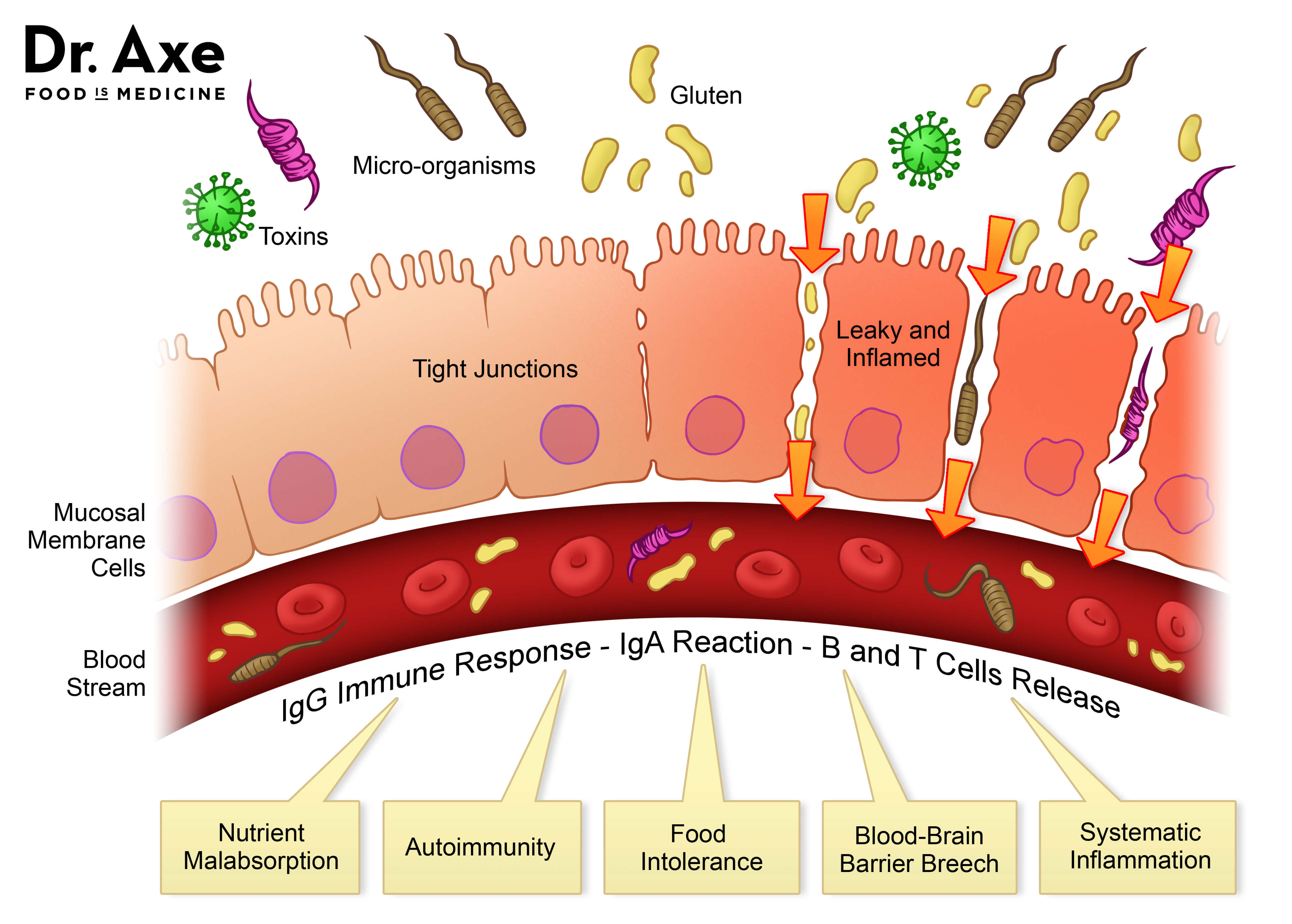
From this hypothesis has sprung tons of research that looks into the relationship of exposure to pathogens and bacteria as kids to the integrity and health of our guts. Weak gut flora has been linked to autoimmune disease as well, as shown here. If you don't have a strong coating of of microbes in your digestive tract, something called a "leaky gut" can be developed. This means that proteins and other macromolecules from food that you've ingested can make their way through the epithelium of your intestines and trigger an immune response, often causing chronic inflammation. 
Image result for leaky gut
"Leaky Gut"
The hygiene hypothesis has prompted scientists to potentially link living with man's best friend to have a positive impact on your gut, as shown in this article. The germs and dirt that a pup can expose a child to helps strengthen their immunity and teach their guts how to (or not) react to pathogens.

The research I put into our guts has piqued my interest and prompted me to keep digging into the subject. I hope that after reading this we can all see how large a part the digestive tract plays in our bodies, and how taking care of our microbiome has countless health implications.

Friday, May 12, 2017

Species Evolve, So Why Can't Our Mindset?

After hundreds of years of research, it has been made extremely clear that Darwin's theory of Evolution is viable.  However, it is still not uncommon in the United States to come across someone who considers it to be unreasonable.  The longer you argue with them, the more incapable you become of convincing them that Darwin is correct.  Their creationist ideals have been instilled in them over generations, so it is only natural that they struggle to accept another concept.  But why, exactly is this natural?  There have been countless court cases involving evolution versus creationism, and yet no matter how many times a ruling is made, another court case turns up debating the exact same issue. This is a long-discussed issue that has yet to be solved.

Perhaps the most well-known case of evolution is the Scopes Monkey Trial, more officially known as the State of Tennessee v. John Thomas Scopes.  The case took place in 1925, and quickly became a nation-wide phenomenon as people tuned into the radio to hear the event transpire.  The case essentially attempted to charge John Thomas Scopes with a misdemeanor for teaching evolution in a classroom that was intended to be strictly creationist.  The court's extremely Christian attitude found Scopes to be guilty, and he was charged with a crime (which was overturned two years later). However, the intense outcry from the other end of the evolutionary spectrum was enough to lead to the death of the prosecutor, William Jennings Bryan, just a number of days later.  In this case, both sides of the argument fought so intensely that both the defendant AND prosecutor got hurt.  Although in this situation creationism was preferred, that was not always the case.

In 1968, the case of Epperson v. Arkansas, which had a similar background to the Scopes Monkey Trial, overthrew a statute which prohibited teaching evolution.  However, although the outcome for this case was different, it still was not ruled on the basis of fact.  The court's ruling made the claim that according to the First Amendment to the Constitution, teaching cannot be catered to the needs of a specific religion, and by extension, cannot exclude things.  Although this was a step in the right direction for Darwin's theory, the ruling was not made simply because creationism is an unproven theory; it was more founded on the concept of freedom of speech.  In order to properly teach Darwin's theory it must be regarded as fact, therefore the ruling made it a flawed lesson.

Although there have been countless cases on evolution, it is best to focus on those more spread out, in order to properly examine the lack of change throughout generations of learning--similar to the studying of evolution itself.  Therefore, it is best to focus on a more modern case now (as modern as creationism can get)- the case of Kitzmiller v. Dover (2005).  In this case, the District Court Judge ruled to destroy the intelligent design policy in the Dover School District, which forced teachers to explore the "gaps in the theory of Evolution" and offer more "theories" like intelligent design, which is, for all intents and purposes, creationism.  In this case, a large number of people refused to back off on the idea of using the book Of Pandas and People in an attempt to not abandon their literal interpretations of the Bible when teaching students.  The actual teachers at the school, who knew better, fought their hardest to disallow the teaching of an unconfirmed "theory."  In this situation, although it was extremely modern, creationists still refused to change their opinion, despite the facts. This, of course, was the  case for the biology teachers, as well, but they had years of factual research to back up their extremely legitimate theory.  Even eighty years after the Scopes Monkey Trial, people still refused to change their minds.

So where does this stubborn unwillingness to adapt to the facts come from? After many studies, scientists argue the idea of cognitive dissonance, in which people struggle with the concept of balancing two opposing ideas.  It is because of this that no matter what they hear, no  matter how factual it may be, people refuse to change their mind.  Because of this natural inclination to act headstrong when learning, people intentionally block out information that they consider to be wrong. They use a tactic known as motivated reasoning, in which they actively seek out agreeable information.  It is because of selective exposure like this that people tend to stay within their own realm.  It is from this that the well-known media bias stems as well.  The willingness of the public to search out news sources that they agree with is what fuels the revenue of such companies, like the New York Times, Fox News, and others.  Over time, people find themselves far more certain in their beliefs, whether factual or not, due to the news sources they access.  It additionally comes from the people who argue with them, as they eventually choose to just block them out in an attempt to remain correct.  This is unfortunately the case with creationists; no matter how much the world changes, they will still find themselves sticking to their guns about what is true and what is not, even if there is not factual evidence to back up their beliefs.