Tuesday, May 29, 2018

Brain Medicine: MAOIs, SSRIs, and DBT

It is estimated that 5 percent of the world population suffers from depression.  And I'm part of that 5%. From Sigmund Freud's early idea of psychoanalysis to the many specific classifications and treatments we now have for depression, mental health care for the illness has come a long way. Most people with severe depression are recommended two aspects of treatment that work in conjunction - medication and therapy.

That's a lot of people! How can they all cope? 


Today, there are several major types of medications that are used to treat depression. One of the earliest treatments included monoamine oxidase inhibitors (MAOIs). This method was discovered by accident, originally being used to treat tuberculosis in the 1950s when doctors noted its mood-elevating effects and started using it on patients with depressive symptoms.

MAOIs work through preventing an enzyme called monoamine oxidase from removing neurotransmitters involved in good feelings from the brain. Hence the name, monoamine oxidase inhibitor! It makes norepinephrine, serotonin, and dopamine more available to cells and circuits affected by depression. However, this type of medication has been replaced by the much more effective selective serotonin reuptake inhibitor, or SSRI.

My depressed synapses make me want to take a syNAPse. 

SSRIs function in a similar way, but have significantly less side effects. They also target serotonin specifically. Hence the name selective serotonin reuptake inhibitor! (Scientists are good at naming stuff! All the letters have meaning!) When people refer to antidepressants, they are probably talking about an SSRI. The most popular brand names are Lexapro, Zoloft, and Prozac.

Perhaps even more so than medication, therapy is very important in the lives of people with depression. It has been shown that therapy increases metabolism in the hippocampus and dorsal cingulate and decreases it in the dorsal, ventral, and medial frontal cortex. The point is, the brain is so reactive to change that what might seem like just having simple conversations is actually changing the structure and function of your body! A recent study has shown that therapy strengthens certain connections in the brains of people with psychosis and they are associated with the reduction of symptoms on a long-term level, even eight years later. The brain is incredibly plastic (not made of plastic, but meaning it is able to change throughout life).

The brain does some impressive things! Makes you sad, makes you happy, makes you have a sense of consciousness, etc. Wow. 
Most general psychotherapy is talking about problems and trying to figure out how to manage them. In the past few decades, more specialized, highly effective forms of therapy have been developed.  I have found dialectical behavioral therapy (DBT) very helpful to deal with my depression personally! DBT consists of mindfulness, emotion regulation, distress tolerance, and interpersonal effectiveness. It is useful for people with all kinds of mental illnesses, like bipolar disorder, post-traumatic stress disorder, and borderline personality disorder, not just major depression.

For me, depression sometimes feels abstract and non-quantifiable. It feels like a concept in my life that will never go away. Although it is an extremely personal illness that affects everyone differently for different reasons, it is often helpful to think of it in a scientific way, especially when discussing how to cope with it. After all, my brain just needs some help with the serotonin!

Monday, May 28, 2018

Octopus: The 200 IQ Creature of the Sea

When thinking of intelligent life outside of the realm of human beings, what is the first animal that comes to mind? Monkeys? Dogs? Crows? Whatever you thought of, it was most likely not an octopus. Most people would rightfully assume that octopuses, like many other sea creatures are not smart and do not have complex brains, but these savvy cephalopods are far more than meets the eye.

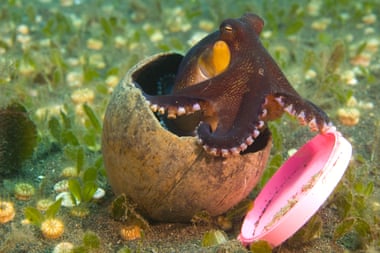
                                                                                ▲Coconut octopus doing what it does best

First appearing 296 million years ago, octopuses have had millennia to evolve and adapt to the changing environment of the Earth. Over that time they have been able to develop into advanced creatures that don't nearly get the credit they deserve. With a total of over 500 million neurons, mostly in their arms, octopuses can truly experience the world and a have been shown to be able to solve simple puzzles, use coconuts as dens, and find novel ways of escaping captivity. In addition to their big brains, these ocean dwellers have powerful visual systems which add even more to their impressive skill set. With their unique U-shaped eyes, octopus are able to see a wide spectrum colors which researchers hypothesize could help them perfect the color manipulation techniques that many species use when hunting prey or hiding from predators.

                                                                                    ▲Blue-ringed octopus in all its glory
                                                                               
Although we have discovered them to be super smart, these magnificent creatures have been difficult to conduct research on as their intelligence comes with a price: stubbornness. Many spend their time in captivity trying to get out of their enclosure and others refuse to participate in exercises and experiments.
                                                                                                ▲Blue coconut octopus

Another difficulty that comes with working with most cephalopods of higher intelligence is their short life spans. Most octopus only live for a couple of years making it hard to test their learning and memory. While annoying, this awkward scenario poses an interesting question: What is the point of having a big brain if you don't have much time to put it to use?

                                                                                                 ▲ Common octopus

Some think that it may have to do with how advanced their bodies are with their millions of neurons and suction cup covered arms but there is no conclusive answer and more research and thinking has to be done to come up with a hypothesis for why these animals evolved this way. But even though we don't have an answer to why octopus are so complex, it is fascinating and thrilling to know that their is intelligent life in the vast waters of our planet that may be as smart as the pets we keep in our own homes.

Ebola: Rushing to Find a Cure

Before I took AP Biology, I assumed I would be a neurologist when I grew up. I have spent two summers studying the brain and discovering if people lie more when they are around their friends. I was so excited to learn about the nervous system, but then Ms. Eckert taught us the immune system and my life ambitions changed.


The most interesting part of the immune system is how prevalent it is among animals on Earth. The immune system works tirelessly in our bodies to fight off harmful bacteria and viruses, and we do not even know this is happening. However, one of the viruses that the immune system had difficulties fighting off in the past was the Ebola virus. The possibility of this dangerous virus traveling from Sub-Saharan Africa to New Jersey occurred in October 2015 when nurse Kaci Hickox came back from West Africa through New Jersey after assisting health officials in treating patients with Ebola. Ms. Hickox was quarantined upon arrival in New Jersey due to a high fever, which is a symptom of Ebola. Other symptoms include muscle pain, fatigue, vomiting and abdominal pain.


Ms. Hickox was helping treat patients that were infected through the first modern outbreak of the Ebola virus, which began in October 2014 and lasted until June 2016. In response to the quarantine, Ms. Hickox sued the state of New Jersey because she felt "kidnapped" for 48 hours. My close relative works in the Governor's Office and was involved in reviewing documents related to the lawsuit filed by the ACLU on behalf of the nurse. Last summer, I went to the ACLU's Summer Institute, and hearing about this story from my relative made me think about how the ACLU fights for civil liberties.


Although the Ebola virus outbreak ended in 2016, it resurfaced and another outbreak was declared on May 8, 2018 in the Democratic Republic of the Congo (DRC). Specifically, the virus has reached Mbandaka, a major city in the DRC. This is a huge concern to health officials because the virus can spread quickly.


Fortunately, since the end of the previous outbreak of the Ebola virus in 2016, a vaccine to fight the virus was developed and 9,000 doses were recently delivered to the DRC. In trials, this new vaccine has shown a 100% success rate in preventing people from being infected by the Ebola virus. 


Vaccines, including the one fighting the Ebola virus, assist our immune systems fight viruses. Specifically, vaccines help the body develop active immunity which is long lasting immunity that is developed through immune system cells. To acquire active immunity, special immune cells known as B-cells and T-cells learn to recognize different pathogens,  which are harmful organisms or viruses, and then these cells spring into action! B-cells release antibodies, which are proteins that stick to free-floating pathogens such as viruses and bacteria, which makes them easier to catch. T-cells, on the other hand, kill diseased cells to protect other cells from infection.  


Once the immune system fights off the original encounter, the memory B-cells and T-cells remember the pathogen. If the pathogen is ever encountered again, then the immune system will activate quickly and remove the threat.  


To help our immune system gain acquired immunity, vaccines release a small amount of pathogen into the body and the B-cells and T-cells are able to attack and remember, allowing for immunity. 


Based on this information, if someone does not receive the new Ebola vaccine, then he or she has a chance of contracting the virus. Once the virus enters the body, the virus works by targeting dendritic cells, which signal killer T-cells to attack pathogens. Without the dendritic cells, the immune system cannot recognize pathogens and the virus can replicate quickly. Once the virus moves on, it causes damage to blood vessels. Without functioning blood vessels, an infected person will see a drop in blood pressure and multiple organ failure if the virus is left untreated.


If, however, a person receives the Ebola vaccine prior to being infected by the Ebola virus, when the Ebola virus enters the person's body, his or her immune system is ready for the attack. Specifically, the memory B-cells and T-cells will be activated and attack the Ebola virus, which will cause the virus to be eliminated. The hope is that the new Ebola vaccine will help save many lives. Although our immune systems may get by with a little help from vaccines, they really are our microscopic protectors that work tirelessly to help keep our bodies going throughout the day! 


Team City Bird vs. Team Country Bird

For those who have encountered the combatant pigeons of New York City, it likely comes as no surprise when I say that birds that live in the city have different behavioral patterns. The environmental conditions in the city are so drastically different than those of rural areas, that they place a selective pressure upon the birds, causing them to biologically adapt over time. In some ways, the pressures caused by city life can improve populations of birds, and in other ways, they are put at a disadvantage.


Birds in the city are forced to face several environmental differences that affect how they must behave to survive. There is a heightened amount of stimulus as well as population density in cities. At any given moment, there is noise, traffic, bright lights, and many people and different types of animals fighting for space and resources. In order to survive and reproduce, city birds tend to be forced to adopt a more aggressive demeanor and be willing to fight and assert themselves when necessary.

When observed, urban birds show off their aggressive sides in response to trouble. Much of this comes from biological evolution over time, but in addition to the foundation that evolutionary tendencies provides, the frequency of exposure to situations like these makes the birds better equipped for conflict going forward. Birds in the city also show raised aggression during mating as a result of the density of competition.


Additionally, it was found that city birds may even have a greater immune system and higher intelligence than country birds. I would hypothesize that their immune system would be better as birds are exposed to a much less clean environment, exposed to pollutants and food scraps, and therefore would naturally build antibodies to different pathogens more quickly. They could also have become genetically predisposed to have a better immune response over generations (read more about inherited immunity here).

One downside of life in the city for birds is the potential of more stress, which can shorten the length of their telomeres. Telomeres, which are like caps on chromosomes, shorten over time, and their shortening can decrease one's lifespan. With exposure to a great amount of stressors, city birds may face more wear and tear than country birds.

It is up to you whether you find that city birds or country birds are superior. Frankly, there is no true purpose in determining which type of the amazing creatures reigns supreme. City birds seem to mirror their human city-mates, having to endure great stress, but resultantly becoming more aggressive and well-equipped in the face of conflict. Country birds are not as likely to have these traits, but they also face much less external stress. The choice is up to you; Team City Bird or Team Country Bird?

The Secret to Sustaining the Planet

Figure 1: Meat-free meme
Ok, so I know everybody is going to say "Oh look it's a vegan being preachy and trying to get me to convert to their lifestyle." However, that statement would be incorrect. I am simply here to discuss how, if the entirety of the planet cut meat out from their diets, we could possibly combat global warming. No, I'm not making this up to push my agenda on you all, although it could certainly help.


Figure 2: The greenhouse effect model


If you have not heard about greenhouse gases, they are any group of compounds that can trap heat in the atmosphere. They bring earth's surface to a much higher temperature than it would be in their absence (AKA global warming). Sounds bad right? Yeah, it certainly is. 

So where does the meat come in? Well, it turns out that major factory production of meat releases more greenhouse gases than the entire transportation industry and 10 to 40 times more than the production of fruits and grains. Also, 1/3 of the worlds fresh water is used for the production of meat (which could be used to hydrate those in Flint, Michigan). Water pollution on factory farms has gotten really bad and produces as much sewage waste as a small city.  The livestock being raised as food eat nearly all of the grains produced that could instead be used to feed humans in poverty (nearly 800 million of them) not to mention a bag of rice is a lot cheaper than a rack of ribs.  

According to a Scientific American article, The Environmental Working Group says that nearly 200 million pounds of pesticides and nitrogen fertilizer are spread over 150 million acres of cropland yearly, producing nitrous oxide. Cattle also produce 20% of the United State's overall methane emission. 

Moreover, 4/5 of deforestation in the Amazon rainforest could possibly be linked to cattle ranching. Antibiotics used to keep animals healthy (up until their execution date) has lead to antibiotic-resistant bacterias that lead to 700,000 human deaths a year, and it's only the beginning. 


Figure 3: Milk meme
So, we've covered meat and you're probably thinking "Yeah great, meat is bad but why the heck would I stop eating grilled cheese sandwiches? What about my truffle omelet?" Do not fret! We're getting there. 

 19% of the global water footprint from animal agriculture (which is 25% if the worlds total global water footprint) comes from dairy cattle. It comes from feeding the animals, keeping them hydrated, and cleaning up after them. Onegreenplanet.org made this list that really puts this into perspective.
  • 1 cup of yogurt requires 35 gallons of water
  • 1 scoop of ice cream requires 42 gallons of water
  • 2 slices of cheese require 50 gallons of water
  • 1 cup of Greek yogurt requires 90 gallons of water
  • 1 stick of butter requires 109 gallons of water
They also mention how one glass of soymilk only uses 9 gallons of water, so even substituting soymilk for regular milk once a week makes an impact. 

The dairy industry also produces 4% of the worlds greenhouse gases, 27% of which is methane (which is bad!).  Out of all the food industries, cheese emits the third highest amount of greenhouse gases following right behind beef and lamb.

Figure 4: This could be me and you!
What exactly would happen if, for some reason, the entire planet went vegan? Paul Allen, a journalist for BBC wrote an article explaining the expected results. He says "If we all went vegan, the world’s food-related emissions would drop by 70% by 2050 according to a recent report on food and climate in the journal Proceedings of National Academy of Sciences (PNAS). The study’s authors from Oxford University put the economic value of these emissions savings at around £440 billion". He also notes, that while it's possible for those who follow a vegan diet to eat unhealthily, a worldwide plant-based diet would reduce coronary heart disease, strokes, type 2 diabetes and even some cancers. There would be 8.1 million fewer deaths per year and up to 1,000 billion dollars could be saved on health care. 

If you're not convinced yet, check out some of these films on Netflix:
cowspiracy
 What the Health
 Sustainable
 Live and Let Live
Also, Perhaps consider joining in on the trendy meatless Monday or dairy-free dinners! You don't need to be all or nothing, but remember where your food comes from. Vox.com put out an article about the issue. Many people ask how they can help the planet, and the sooner people learn more about the impact of their food, the better. Pick foods that you know have a smaller carbon footprint, for example choosing fish over steak. And while the vegan diet has the smallest carbon footprint of them all, the Mediterranean diet is a close second. Check that out here.
Figure 5: Me being just a little pushy

Thursday, May 24, 2018

Why Music?

Is music an integral part of your life? For most of you, the answer is yes. Whether it's playing an instrument or watching movies with an epic soundtrack, music is ingrained in our lives. It evokes a feeling whenever we listen to it. When we listen to music, dopamine is released. It's the same chemical that is released when you eat amazing food or take psychoactive drugs. So how does music affect our brain, and why do we like it so much?


Dopamine 
Your brain chemistry is altered when you listen to music.  Music, like food or sex, releases dopamine in our brain, which causes us to feel pleasure. Dopamine plays important roles in attention, memory, mood, learning, sleep, and movement. When dopamine is released, you are happier. The strongest release of dopamine is when music is at its emotional peak.

Dopamine and Seratonin Pathways

The Brain
The amygdala, which processes emotion, and the hippocampus, which is vital for memory, influences our music preferences. Music stimulates the amygdala much like how other stimuli such as scent and sound affect it. The hippocampus is responsible for our emotional responses via regulation of our brain's chemical response. Positive emotions evoked from listening to music that we enjoy decreases the amount cortisol, a stress hormone, via the hippocampus. Our brain reacts to emotional music; the hippocampus stimulates the release of brain chemicals that affect the brain's function. It has been hypothesized that the more we listen to music that evokes emotion, the more our emotional responses to music change.

Music's effect on the brain

I have always loved classical music. Both of my parents are classical musicians and classical music was the only thing I listened to as a kid. After I began middle school, I explored other genres of music and my whole perspective on music changed.  I like drastically different music that ranges from Tchaikovsky to Khalid.
Reinforcing musical patterns by playing the violin with my brother

Patterns
We typically don't like genres of music that we're not familiar with. People like the predictability of music. One's reaction to music stems from their past musical experiences. Your brain will react to music based on past musical experiences and will choose whether or not to activate your brain's pleasure center. If you have never heard classical music before, it is very likely that you will not enjoy it the first time. Our music preferences change over time, and the familiarity of certain music will allow you to enjoy it more. You just have to step out of your comfort zone!

Consonant vs Dissonant Intervals
Sounds can effect listeners in different ways. In general, consonant intervals are more pleasant to listeners whereas dissonant intervals evoke a sense of unease and tension. The disposition of dissonant and consonant intervals can be used to evoke a specific mood or feeling.

A study led by Josh McDermott, an assistant professor of neuroscience at MIT, and Ricado Godoy, a professor at Brandeis University, showed that the Amazonian tribe known as Tismane were indifferent to consonant and dissonant intervals. The same test was administered to college students in the U.S. and to residents in Bolivia, who had moderate exposure to Western music. American students overwhelmingly preferred consonant intervals to dissonant ones while the Bolivians' preferences was in between that of American students and Amazonians. It was determined that the common preference for consonant musical chords is likely due to cultural, and not biological factors. Humans are not biologically programmed to prefer any type of music; it is more nurture than nature.

Explore!
Explore genres that you usually wouldn't! Release that dopamine!

How to Shred the Waves...And Not the Environment!

Surfing has become a growing sport, and surfers have become more and more particular about their gear. There are thousands of wetsuits, boards, sunscreens, and board waxes to choose from—and the choice is based on preference. But the question has arisen: What makes these products so different? After examining the chemicals in sunscreens and board waxes, the fabrics of wetsuits, and plastics in boards, environmentalists have discovered a cause to the negative effect on sea plants and animals. These materials often leave a large carbon footprint and lead to increased deforestation, taking away habitats and ecosystems. But have no fear! These environmentalists and their teams have come together to create high quality surfing gear that does not harm the environment.

A surfer friend of mine in his natural habitat!

Wet suits made of polychloroprene, or neoprene, are widely used because the synthetic rubbers are flexible for a large range of temperatures. However, because they are synthetic, the toxins eventually become absorbed into the water or skin it contacts, polluting the ocean and potentially harming the marine life. Alternatives to the brands using “neoprene” are Henderson, Patagonia, Matus, and Swish.


 Boards now are commonly made with known carcinogens—such as toluene diisocyanate—and other harmful chemicals that may harm the environment and ourselves just as the neoprene in the wetsuits can. To get around this, companies like Wave Tribe, Waste to Waves, Pacific Island, Surfboards, Harmony Surfboards, Earth Technologies, Solo Surfboards, and Lost Surfboards began to make boards out of non-toxic, renewable, recycled, and sustainable materials. Surfers now, like myself, are beginning to prefer eco friendly gear rather than the synthetic, harmful materials!

Sunscreen is a necessity as surfers sit on their boards, sun reflecting off of the water and onto their face while it also beats down on their shoulders as they wait for a wave. Luckily, brands like Thinksport, True Natural, and Suntegrity can be used to protect your derma and keep the ocean naturally clean!

 Board waxes are used by surfers to keep their grip once the board hits the water, making it slippery. With the eco friendly boards mentioned above, many have surfaces made of cork—eliminating the need for wax. However, for those who love the sticky-board feeling, two brands to try are Surf Organic and Matunas. These companies use renewable ingredients, recycled packaging, and eco friendly products; these ingredients are much safer than the hydrogenated soy bean oil found in many common waxes.


So surfers, keep the shredding for the waves and keep our environment safe!