Wednesday, May 23, 2018

Nature: A Designer's Toolbox

In 1989, Japan's Shinkansen bullet train had a problem. It was fast, really fast. Pushing 167 miles per hour fast. Every time it entered a tunnel, it pushed waves of atmospheric pressure through the other end. Creating a micro-pressure wave, a phenomenon called "tunnel boom," the air left the tunnel with a sonic boom that could be heard from up to 400 meters away. And in residential areas, that was a problem. In response, Japan brought in an engineering team to design a quieter and more efficient train. In a moment of inspiration, lead engineer Eiji Nakatsu had an idea: to redesign the system based on the aerodynamics of birds, most notably of all, the Kingfisher.


The Kingfisher is a species of bird that dives into water to catch its prey. From its vantage point over a river or stream, the Kingfisher can descend into a controlled vertical dive right above its target, ensuring that its beak is the first thing that enters the water. And that, its dart-like bill, is what Nakatsu was interested in. The unique shape of its beak allows it to dive while barely making a splash, due to its streamlined and aerodynamic structure. 
Nakatsu took the shape to the design table, and after multiple tests found that the quietest nose design was the one most closely modeled after the Kingfisher's beak. The redesign debuted in 1997, and the Shinkansen train was 10% faster and stayed under the 70 dB noise limit in residential areas—all achieved with the beak of a Kingfisher. 

This type of design is called biomimicry, a process that looks to the natural world for inspiration to drive innovation. The thought process is simple: nature has had billions of years to test, tweak, and change the organisms around us through evolution, and in turn, has already solved many of the problems we, or the designer, face today. Humans have existed on the planet for only about 200,000 years, while the natural world has had billions of years of research and development. Its time-tested structures, patterns, and solutions are what biomimicry seeks to bring to innovation.  And that's the end goal for biometric design: to create products, systems, and even cities that are indistinguishable from nature. 

The Shinkansen bullet train is only one of thousands of examples of biometric design in the world today. Hospitals have mimicked the surface of shark skin to create bacteria-resistant plastic surfaces. Shark skin itself isn't an antimicrobial surface, but it's highly adapted to resist attachment of living organisms to its surface, something inherently useful for limiting the amount of infections patients can get in hospitals. 

Researchers studying the Stenocara beetle, living in the arid African Namib dessert, have recreated its fascinating ability to collect moisture from the air in water collectors around the world. A distinct pattern of nodes along the beetle’s back allows it to collect moisture from fog, which trickles down its legs to its mouth. Developing these biomimetic patterns in human technology can expedite water collection in areas of need. 

Wind turbines can be arranged in the same drag-reducing pattern that schools of fish swim in. By imitating schools of fish, engineers can increase wind farm output by 10 times that of traditional farms. 

Moon jellies have a highly efficient mode of propulsion, where they suck water into their bells and then contract their bodies, pushing out the water behind themselves. This kind of movement, researchers say, is extremely energy efficient. The same low energy-high efficiently thrust mechanics of the moon jelly can be applied to slow-moving ocean monitoring devices for nautical researchers and the Navy. 


One of the most famous examples of biometric design came from Swiss engineer George de Mestral. In 1941, he was removing burrs from his dog when he decided to examine them under a microscope out of curiosity. Astonishingly, he found that the small hooks on the burrs adhered exceedingly well to the looping structures of fur and fabric's, sparking an idea to recreate the mechanism artificially as a fastener. And thus, came the invention of velcro. 


For designers, the natural world can have the solutions to any problem. You just gotta know where to look. 

Tuesday, May 22, 2018

The Energy of Distance Running: How your body keeps itself moving during a race

Throughout my running career in high school, I have had a fairly limited knowledge of the biology behind running. Most of my knowledge comes from two books I have read Born to Run, and Marty Liquori's Guide for the Elite Runner. Born to Run focused more about human's natural ability for endurance running and the running man hypothesis, which suggests that humans literally ran animals to death to hunt before the development of hunting weapons. However, Liquori's book provided me with some valuable advice as a distance runner: the difference between anaerobic and aerobic running. This information suggests that going too fast in the beginning of a long distance race will put too much stress on one's anaerobic system, which can negatively affect performance. Also, it provides reasons for training both aerobic and aerobic systems, and the difference between training each.

I have definitely used this information to my advantage. I would consider myself and the rest of the boys on the cross country team to be smarter racers and trainers than our competition, as we write plans to improve performance and always make sure to run a smart race by not going out too fast in the beginning of races.

Running, like most all of our movements and actions, is powered by ATP. Adenosine triphosphate (ATP) is broken down to provide energy for reactions in the body. A reaction in the mitochondria of muscle cells removes one of the phosphate molecules, releasing a large amount of energy to power things such a muscle contraction and movement (running). This leaves Adenosine diphosphate (ADP). This seems like this works perfectly right? Your body just continues to supply your muscles with energy through, ATP granting you unlimited energy. Except there's just one problem. Your body doesn’t have an unlimited supply of ATP. In fact, the human body actually has very little ATP stored  “on deck.” The body usually only has enough ATP gathered to power about four seconds of energy. So how does one's body supply itself with a consistent amount of energy during strenuous exercise like a race from anywhere in between 100 meters and a marathon?

There are three pathways where the body produces ATP when running: the phosphagen system, the anaerobic system, and the aerobic system. These each work at different stages to provide the body with ATP when running.

Figure 1-The Three Systems Used For Running


As soon as your initial supply of ATP runs out, you begin to utilize the phosphagen system. This system, also called the ATP-Creatine Phosphate System (CP), provides energy for in between 5 and 10 seconds after ATP storage is exhausted. In this system, creatine phosphate helps quickly resynthesize ADP into ATP by donate a phosphate group. This produces only one molecule of ATP for every molecule of CP, so CP storage depletes quickly. This system is used within a short race such as the 100m. Top sprinters have been found to have a large supply of CP.

Next, your body utilizes lactic acid fermentation to provide energy through anaerobic glycolysis. This is used primarily in the next 30 seconds to 3 minutes to provide the body with energy. Glucose is broken down to form two molecules of pyruvate, which is then used to create ATP. This pathway creates 2 molecules of ATP However, this reaction also creates a waste product called lactic acid which can cause muscle soreness and fatigue during and after running. The increased muscle contraction caused by lactic acid makes it so this pathway can only be used for a maximum of around 3 minutes. This would be ideal for a race like an 800, which would last anywhere in between around 1:50 and 3:10 for high school runners. Distance runners train to increase the efficiency of their anaerobic system by doing track workouts or "speed work" which usually involves doing repeats of a short distance. Also, when a runner calls upon a final last burst of speed at the end of a long race, they are using the anaerobic system.

Finally, when all other systems have been used, the body turns to aerobic respiration, which will be the primary provided of energy until one has stopped running (hopefully from finishing the race and not from passing out!). This utilizes the Krebs cycle, the electron transport chain, and aerobic glycolysis to generate a huge amount of 38 ATP for every molecules of oxygen, making this the most efficient system. This is heavily used from basically any race from an 800 meter run (half a mile) to a ultra-marathon, and is also relied heavily upon in training. It uses carbs, fats and proteins in reserves to generate this energy. Distance runners do heavy aerobic training such as long runs to increase their aerobic capacity, or how efficient their aerobic system is. Good endurance runners have a much better base aerobic capacity than the average human, but anyone can increase their's with training.


Figure 2- Amount of ATP Each System provides your body over time


If I had to sum things up to illustrate roughly where you get your ATP from during a race, it would look a little like this:

Overall-
1 to 4 Seconds-ATP energy reserves
5 to around 15 Seconds- Phosphagen System Provides ATP
16 Seconds to Inbetween 45 seconds and 3 minutes- Anaerobic System
45 Seconds/3 Minutes to whenever- Aerobic System

100m Run
1 to 2 Seconds-ATP energy reserves
3 Seconds to Finish- Phosphagen System

800m Run
1 to 4 Seconds- ATP Reserves
5 to 10 Seconds- Phosphagen System
15 Seconds to 45 Seconds- Anaerobic System
46 Seconds to the end- Aerobic System

Music: The Language of Emotion

Music can give rise to all kinds of feelings. It can serve to exaggerate the feelings already there, like sadness or happiness, or it can give rise to emotions all on its own. It can even create a special bond between people. But why does music sound so good?

It turns out, dopamine, the same "feel good" neurotransmitter associated with food, sleep, and sex, is released when we hear music. The happiness we feel when listening to music is called an "abstract reward"- nothing quantifiable happens to warrant the response, like munching on a bag a chips after weeks of diet, but we still feel happy. Happy music activates a part of the brain associated with motivation and reward, and dopamine is released in anticipation of a particularly emotional part of the song.

Okay, so I'm happy, I'm dancing, my brain is singing. But happiness isn't the only emotion. Music is like a language, a language that universally speaks to human emotion. Although it seems that most emotional relevance of music comes directly from experience, there is research that suggests that the way music makes us feel the emotions being portrayed has something to do with the neurons in our brains. The idea is that music activates mirror neurons, which typically deal with empathy and understanding the world around us by simulating emotions. So when you hear a sad song, you're feeling the sadness, your brain is simulating empathy.


Another theory suggests that the rhythms of the music and the sound waves actually drive oscillations in your neurons. This theory suggests that auditory stimulation causes neurons to sync up and fire at different rates, rates which are associated with different moods. The rhythms and sounds act similarly on everyone, which can coordinate thinking as well as behavior. There are songs the evoke emotional responses, as well as songs that can actually cause you to relax. (Where was this during AP tests??) Your mood moves to the sound of the music.

But most emotion you feel when listening to music probably has to do with your own experience. Just broke up? Tragic. We all have that playlist. Most people learned to associate major chords with happy feelings from a lullaby, and associate sadness with other chords based on experience. Some researchers suggest that the appeal for mood-congruent music is the same as the appeal for an empathetic friend. Sharing emotion, not being alone, can be a huge breath of relief for individuals suffering from heartbreak, or whatever interpersonal circumstance that made them so sad. Researchers found that the appeal for sad music was relatively decreased when the negative stimuli was non-interpersonal, like an uncontrollable accident, as opposed to interpersonal, like a heartbreak. There is actually evidence that suggests that musical ability is correlated with emotional capacity, meaning that musically inclined individuals are better at recognizing emotions and are more empathetic in general.
Music and Empathy Go Together

So, music is clearly pretty powerful. Those connected with music have a deeper understanding of human emotion and music can actually mirror empathy in your brain. Woah. I don't know about you, but I have a deeper appreciation for my many many emotional playlists. Thanks T-Swift.

Pictures-
http://jonlieffmd.com/blog/mirror-neurons
https://www.picgifs.com/clip-art/listening-to-music/clip-art-activities-listening-to-music-690092

The Crown JUUL of Addiction

Since their invention, vaporized cigarettes, or e-cigs, as they're commonly referred to, have failed to take off as expected. E-cigs, in short, are devices that deliver nicotine or other chemicals from flavored vapors. Able to deliver nicotine without the harsh smell of cigarettes, and a conceived notion of less harmful effects than cigarettes, many expected the devices to be the future of smoking. When one views the high prices, inaccessibility, and ugly devices, as well as the decreasing popularity of smoking as a whole, however, it's easy to see why this trend hasn't quite caught on. Nonetheless, over the past year, one vaping company has been able to defy this trend. Invented in 2015 by PAX Labs, the JUUL was spun off as a separate company when it began to take off early last year. In contrast to many of the devices before it, the JUUL is sleek in design, relatively inexpensive, and supposedly provides a higher quality experience than any other device. These factors, combined with a vast array of fun flavors, and clever marketing have made JUULs a hit (haha).

Image result for juul

JUUL Starter Pack

On their website, JUUL claims to have the sole purpose of helping existing smokers quit, and claims to have converted around 500,000 previous smokers. Its effectiveness as a quitting aid will be analyzed later in this post, but there is a much more troubling population using JUULs: teenagers. Lured in by the cool design and fun flavors, teens across the country are going crazy over JUULs. At Montclair High School, even, usage became so prevalent that the Superintendent had to enact protocol and issue warnings to reduce JUULing in school. MHS bathrooms are constantly patrolled by security now, and certain bathrooms are locked at all times. Due to inexplicable FDA delays, JUUL has not had to fully disclose their ingredient list. However, it is known that JUULS contain around 0.7mL of Nicotine per pod. JUUL claims that this is roughly equal to the amount of Nicotine in a pack of cigarettes, but fail to mention that the pack of cigarettes they are comparing to possess the highest nicotine content on the market. To this point, a significant portion of the nicotine in this alleged pack of cigarettes would not be ingested, as cigarette smokers rarely smoke the entirety of a cigarette, and Nicotine emission occurs between puffs. In JUULS, however, no Nicotine is lost between inhalations, and JUUL pods are almost always finished in their entirety. As I will explain below, this is causing immense damage to the brains of teenagers across the country.

The Effect of Nicotine
In the brain, neurons transmit nerve impulses in order to signal for the body to react to any given stimuli. For example, in order to type this blog post, neurons are passing on chemical signals leading to the contraction of the muscles that cause my fingers to move. When the impulse reaches the end of each neuron, neurotransmitters are released into the synapse (the area between neurons and neurons and muscle cells), and then bind to receptors on the next neuron or muscle cell to continue the response onward. Here's where we encounter our problem with JUULs. When someone takes a hit from a JUUL, loads of nicotine enter the bloodstream and are carried to the brain. Unfortunately, nicotine is very similar in shape to acetylcholine, a common neurotransmitter. This means that nicotine can also bind to the acetylcholine receptors on other neurons. As one would expect, this leads to an excess of chemical signals in the synapses. The brain recognizes the surplus of signaling molecules, and in response, reduces both the amount of acetylcholine it releases and the number of acetylcholine receptors. Once this occurs, the brain can no longer maintain normal neuron function without the presence of nicotine, as there is now an insufficient amount of acetylcholine being released. This is why nicotine addicts experience decreased energy and focus, and is also why nicotine is so addictive. A JUUL user now craves nicotine just to maintain normal brain function. Over time, the amount of acetylcholine and receptors will gradually build back up, but only if nicotine is not used. This is why JUULing makes no sense as a smoking alternative. JUULing sends the same, if not more, nicotine into the body than cigarettes, maintaining the reduced levels of acetylcholine and keeps users hooked.

Additionally, nicotine can stimulate the release of dopamine. Dopamine is a hormone that aids in the regulation of pleasure centers in our brain. As a result, repeated JUULing can condition individuals to associate the device with feelings of pleasure and cause further addiction. As the brains of teenagers are still developing, it is easy to see how these effects can drastically impact the brain longterm.

So, unless you want some serious longterm effects to your brain, and bank account, don't JUUL. Besides, why whack a JUUL when you can just eat a Tide Pod instead!

The Harry Potter Pensieve: In Real Life??!?

Many of you non-Harry Potter fans will probably be wondering, "What in the blazes is a Pensieve?" It is in fact a magical basin used by Harry Potter and Albus Dumbledore in the fourth book of the series, The Goblet of Fire, to review and share certain memories that were important.
This is a Pensieve
Now, you may be wondering, "How does this relate have to real life?' Well, let me tell you! Scientists at UCLA have managed to transplant "memories" from one snail to another. They weren't actual memories such as you and I possess--this was rendered impossible simply because the snails used have very primitive brains.  The snails used are called Aplysia californica, also known as the California sea hare, shown below. 

The scientists were able to transfer the memories from one snail to another by removing an RNA molecule from one snail and implanting it in another. They also introduced the same RNA to a naked bundle of neurons in a petri dish. Now do you get the title?
A model for the experiment that was done
The memory stored in the RNA was a simple one as it had to be in order for the snails to respond to it because you know having a primitive brain brain makes it rather hard to respond to anything more then an electrical impulse. To test if the RNA had successfully been transferred and thus the snails' "memories" as well, the scientists used... you guessed it, an electrical impulse. The electrical impulses were intended to cause the snails to retract the little fleshy flaps hanging from their bellies. In theory, the snails that had the RNA memory implanted in them would respond to the electrical shock and retract their fleshy flaps (that word combination... EW) and snails without the memories would not. In actuality, this is what happened and thus added substantial evidence to the argument of memory transplant. The same results as the experiment were displayed in the petri dish which furthermore adding to the argument of memory transplant. So... what does this mean for humans? Although memory transplantation works on snails, it won't necessarily work on humans, but who knows, maybe in a decade or two we will have devised a way of transferring complex human memories and we might be able to cure syndromes like PTSD, which is caused by traumatizing memories. All in all, memory transplantation is kind of a mind blowing subject...get it? To read more about the snail experiment, here is the link to an interesting article from LiveScience.

When the results of this experiment were first released, it shocked the scientific community. If the experiment can be replicated and therefore have its results backed up by other experiments in animals with more complex brains, then it will completely redefine a lot of what we think we know about how memories work and open up new possibilities for treatments of mental disorders with RNA-based treatments. For another more scientific (but most definitely not more boring) article on the significance of this experiment and the effects it may have on the field of neuroscience, click here.

Oh Deer!

Montclairians have certainly noticed the rapid increase in deer population in recent years and may be asking the question: "Why are there so many deer roaming around?" The annoyance about the growth in deer population is valid, as overpopulation of these herbivores can lead to major motor accidents and damaged properties within our dear Garden State (pun intended). In northeast New Jersey, there have even been mentions of a zero density population goal due to the lack of land to be shared between humans and deer (meaning some people support wiping out the deer population in certain areas). 
White-Tailed Deer

First, a little background on white-tailed deer!
 They eat a varied diet of leaves, fruits and nuts, twigs, grass, and even fungi. These deer are typically nocturnal, grazing during dusk and dawn. Bobcats, mountain lions, gray wolves, American alligators, jaguars, and coyotes are their main natural predators. While many of these predators were present in high numbers in the past, most of these primary natural predators of white-tailed deer are locally extinct (which certainly contributes to the overpopulation issue!). White-tailed deer are also an edge species, which means that they populate and thrive in bordered areas where the forest meets fields. The entire eastern United States is an edge, so we are molding this beautiful ecological habitat to be absolutely perfect for the deer population to grow and grow and grow. Does it not seem unfair to blame the poor little deer for doin what they were meant to do? What solutions can be taken to control the deer population while still acting humanely towards the deer? This is where it gets iffy.

There are those who believe that hunting is the way to go. To kill the deer as an extracurricular activity doesn't seem just in my eyes, and this method's effective has not been shown. I suppose if they were hunting the deer for food, the situation would change slightly (but there are other options for us carnivores in the grocery store). In addition to hunting, sharpshooters in certain states are commissioned to hunt the deer (which seems a little more humane to me, as the sharpshooters are just completing their jobs rather than hunting deer for fun). This strategy has worked on a small scale to control populations of deer that are close to areas of land populated by humans. Another method involves trapping the deer in a net and administering a chemical that euthanizes the deer. This approach can cause extreme stress and anxiety for the deer as it is waiting in the trap to be euthanized. 

Contraceptive injections, sterilizations, repellants, and translocations are the non-lethal methods to control the deer population. None of these methods have shown to be truly effective. Opponents of contraceptive injections argue that humans cannot maintain control over the fertility of deer, as the populations in open field systems are too mobile. People also worry about the lack of research surrounding these contraceptives and whether it will hurt humans who eat venison of injected deer. Lastly, translocation is extremely costly and deer are under extreme stress and often die in the process. 

The takeaway? Humans are constantly changing the ecological balance on this planet in ways that we don't realize. This just one of the many examples of the incredibly complex ecological issues we  struggle to solve.

Monday, May 21, 2018

Parasitic Cuckoos and AP Bio Memes

After taking the AP Bio exam, I was perusing the #apbio twitter tag and stumbled upon this meme which made me laugh exceptionally hard.

As a huge fan of the "It's Free Real Estate" meme, I enjoyed the connection between the meme and the AP Bio exam content. However, it inspired me to read more about the relationship between the spotted cuckoo and reed warbler.

After doing some research, I realized the two species of bird have been coevolving. The cuckoo is a brood parasite, which means it lays its eggs in the nests of other birds, thus forcing the unwitting "foster parents" to hatch and raise the cuckoo's chicks. And because they have been dropping their eggs in the reed warblers' nest so often, the two species have both been trying to find new ways to outsmart one another over the generations.
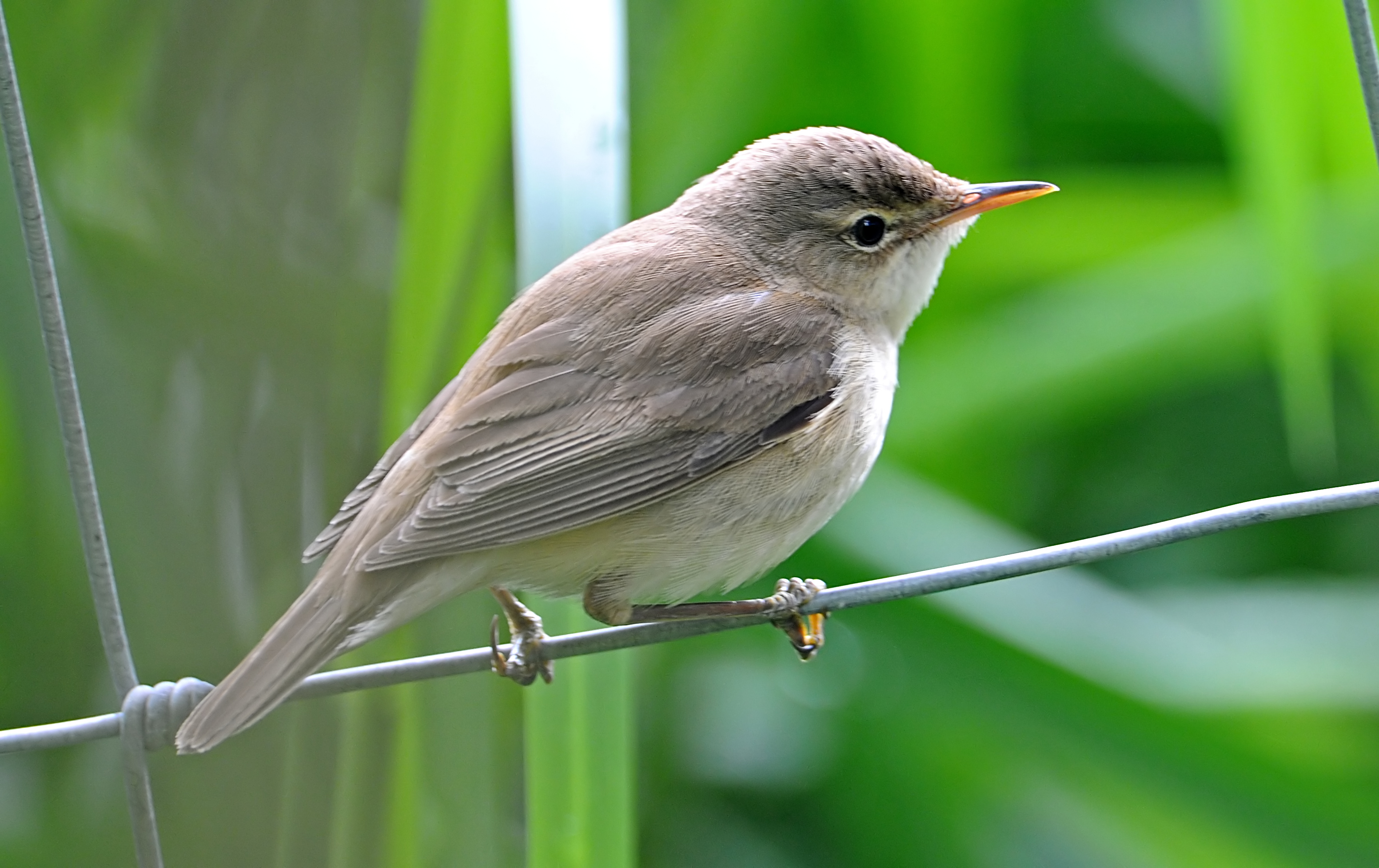
A Reed Warbler! How cute <3
These little warblers with nests in more exposed locations threaten any cuckoos that come near in an act of "mobbing" and will eject any eggs from their nests that have patterns drastically different than their own eggs.

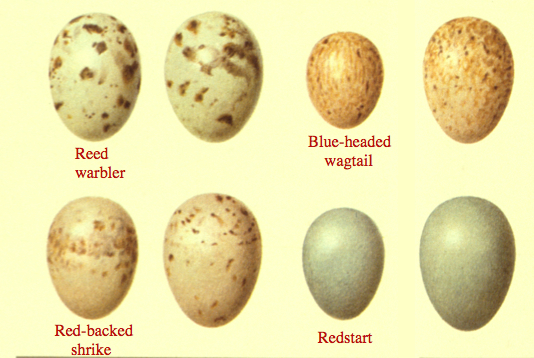
However, the cuckoo has adapted over time to lay eggs with patterns that are almost indistinguishable from the warbler's own eggs.

Cuckoo egg patterns mimic their various host's egg patterns
And warblers have evolved to nest in communities so as to have a sort of 'neighborhood watch' going on at all times. But cuckoo birds actually watch the community of warblers to find the weakest link and swoop in at the right time to swap out one of the warbler's eggs with their own. The whole switch only takes about 10 seconds, too!

Once the egg is in the nest, it's virtually indistinguishable to the warbler who then raises all of the chicks in their nest. After the cuckoo chick is hatched, however, it will take the initiative to eject all of the other eggs in the nest! It does this by pushing the eggs out with its back. Once there are no more chicks to compete for food with, the cuckoo continues to grow and demand food from the warbler until it grows to be too big for the nest and far bigger than the warbler. It reaches its adult size in just two weeks.
And after the full-grown cuckoo leaves the nest and moves on to mate, the process is repeated! 

I truly learned something new about the avian world thanks to this year's AP Bio exam and I hope you did too :D

-----------------

Also, while researching all of this, I showed some videos to my friends, told them about the parasitic relationship that cuckoo birds have with their hosts and asked what their opinions were. The general consensus was that cuckoo birds are terrible to their hosts.

I'd have to agree. They are some horrible house guests.