Showing posts with label ap bio memes. Show all posts

Thursday, June 4, 2020

RNA Molecules and Cancer Cells

Even before taking AP Bio, I have always been fascinated by diseases, particularly how cancer works. Several years ago, my aunt was diagnosed with it (she has recovered since) but it got me thinking about how this disease works and why a cure hasn't been found yet. There are treatments, chemotherapy, for example, is usually a patient's first option for treatment. Chemotherapy essentially kills millions of cells in the patient's body. The drug targets cells that exhibit cancer cell-like behavior and kills them off. However, healthy cells may exhibit these behaviors too, causing harmful side effects to the patient. Chemotherapy can kill off healthy cells that also divide quickly similar to cancer cells, such as those that allow hair growth or the ones in our intestine (causing hair loss, vomiting, among other side effects). As a result of this, chemotherapy puts an incredible strain on the patient's body. 

Scientists have been working for years to come up with alternatives to chemotherapy, and while a new treatment hasn't been made just yet, a new method of approaching one has been. I found it super fascinating when I read that microRNA and mRNA, which are involved in protein regulation, are found to make excellent targets for drugs and medicines. MicroRNAs regulate mRNAs, which code for the proteins that make up our bodies and thus, can prevent protein synthesis.

Researchers are studying a type of microRNA known as miR-34a, which can help regulate the activity of p53, a protein that regulates the cell cycle. Mutations in this protein can cause cancer since cells will uncontrollably divide. What miR-34a does is it reduces the amount the mRNA present that code for Sirt1, which is a protein that deactivates p53 and can cause cancer. Below is a diagram showing how this process works.

But how do they know this method could work? You can't really just guess at these things. Researchers have recently analyzed the structure and dynamics of miR-34a when it binds to mRNA and found a structural complex that can exist in two states. One is super active and the other isn't as active. These states can interconvert, and the frequency of each of the states can be changed by external factors (such as different drugs or treatments) which is super cool in my opinion. External factors controlling the different states can be used to control protein production (of not just Sirt1) and in the end, help fight off cancer.
As for current research and trials to test this new method, I couldn't really find any trials going on right now so I would assume they are planning to conduct some more thorough research soon. 
I did find a paper/article about the role of miR-34a in cancer, a lot of it was rather confusing to me but I think it's quite informative so here's the link to that

I find it amazing that researchers are discovering more and more about the mechanisms behind how cancer occurs in people. The research being done on the disease is remarkable in my opinion and I hope that eventually a less harmful treatment is made, or even a cure someday. When I go off to college, I hope to study molecular/cellular biology and hopefully learn more about how diseases such as cancer work as well. Diseases/viruses have always intrigued me so I hope to do research in that area of study when I am older. 


Oh and one last thing, I love making science and math memes since humor just makes everything fun, so researching this topic made me want to make some memes about this. I made two right here:


Monday, May 21, 2018

Parasitic Cuckoos and AP Bio Memes

After taking the AP Bio exam, I was perusing the #apbio twitter tag and stumbled upon this meme which made me laugh exceptionally hard.

As a huge fan of the "It's Free Real Estate" meme, I enjoyed the connection between the meme and the AP Bio exam content. However, it inspired me to read more about the relationship between the spotted cuckoo and reed warbler.

After doing some research, I realized the two species of bird have been coevolving. The cuckoo is a brood parasite, which means it lays its eggs in the nests of other birds, thus forcing the unwitting "foster parents" to hatch and raise the cuckoo's chicks. And because they have been dropping their eggs in the reed warblers' nest so often, the two species have both been trying to find new ways to outsmart one another over the generations.
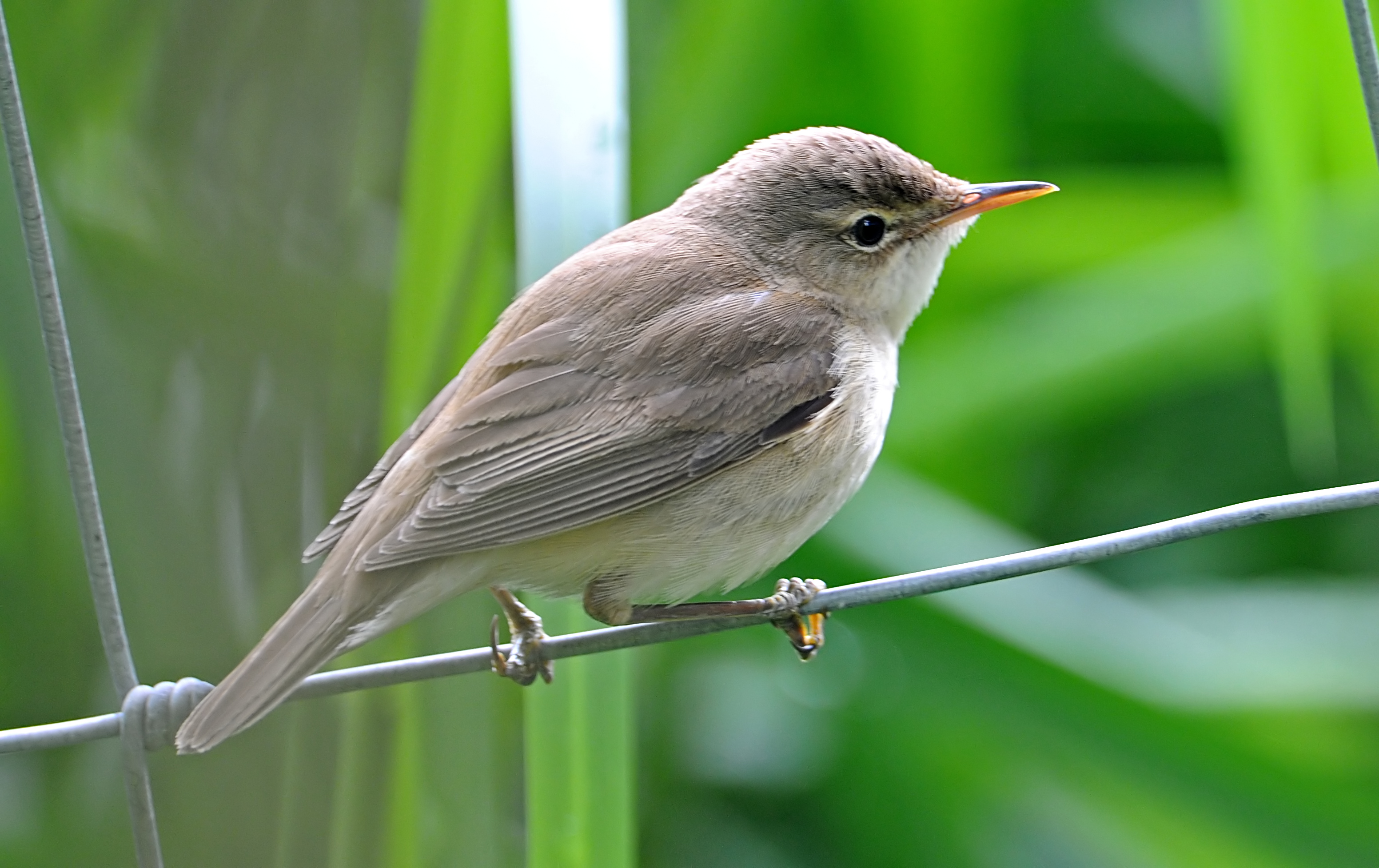
A Reed Warbler! How cute <3
These little warblers with nests in more exposed locations threaten any cuckoos that come near in an act of "mobbing" and will eject any eggs from their nests that have patterns drastically different than their own eggs.

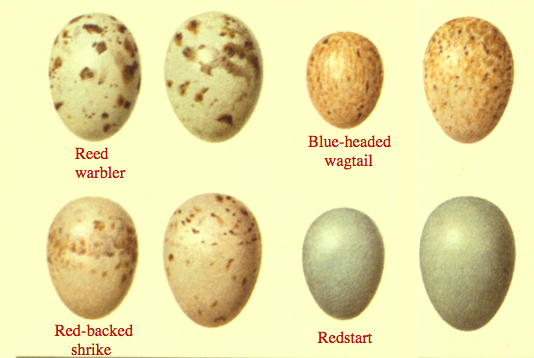
However, the cuckoo has adapted over time to lay eggs with patterns that are almost indistinguishable from the warbler's own eggs.

Cuckoo egg patterns mimic their various host's egg patterns
And warblers have evolved to nest in communities so as to have a sort of 'neighborhood watch' going on at all times. But cuckoo birds actually watch the community of warblers to find the weakest link and swoop in at the right time to swap out one of the warbler's eggs with their own. The whole switch only takes about 10 seconds, too!

Once the egg is in the nest, it's virtually indistinguishable to the warbler who then raises all of the chicks in their nest. After the cuckoo chick is hatched, however, it will take the initiative to eject all of the other eggs in the nest! It does this by pushing the eggs out with its back. Once there are no more chicks to compete for food with, the cuckoo continues to grow and demand food from the warbler until it grows to be too big for the nest and far bigger than the warbler. It reaches its adult size in just two weeks.
And after the full-grown cuckoo leaves the nest and moves on to mate, the process is repeated! 

I truly learned something new about the avian world thanks to this year's AP Bio exam and I hope you did too :D

-----------------

Also, while researching all of this, I showed some videos to my friends, told them about the parasitic relationship that cuckoo birds have with their hosts and asked what their opinions were. The general consensus was that cuckoo birds are terrible to their hosts.

I'd have to agree. They are some horrible house guests.