Showing posts with label synesthesia. Show all posts

Friday, June 12, 2020

Seeing Sounds, Hearing Colors, and Tasting Words

Synesthesia. Sounds interesting, right? Well, it really, really is. Synesthesia is a neurological condition that causes the brain to process data in the form of several senses at once. While most people haven't heard of this remarkable phenomenon, it's relatively common. Research suggests that 1 in every 2,000 people are synesthetes, and some research even suggests 1 in every 300 people have a variation. I wish I was so lucky to have it. There are many variations of synesthesia, but effects could include seeing sounds, hearing colors, and tasting words. How does synesthesia work on the brain you may ask? In simple terms, when you experience one sense, your brain involuntarily connects it to another sense. So, when a “grapheme-color synesthete” hears a number or letter, he or she automatically sees that number or letter in a specific color, a color that remains associated with that particular letter or number throughout life. For example, Billy Joel senses blue or green colors when he hears slow or soft music.
Synesthesia: How does your name taste? – The Brain Bank North West   
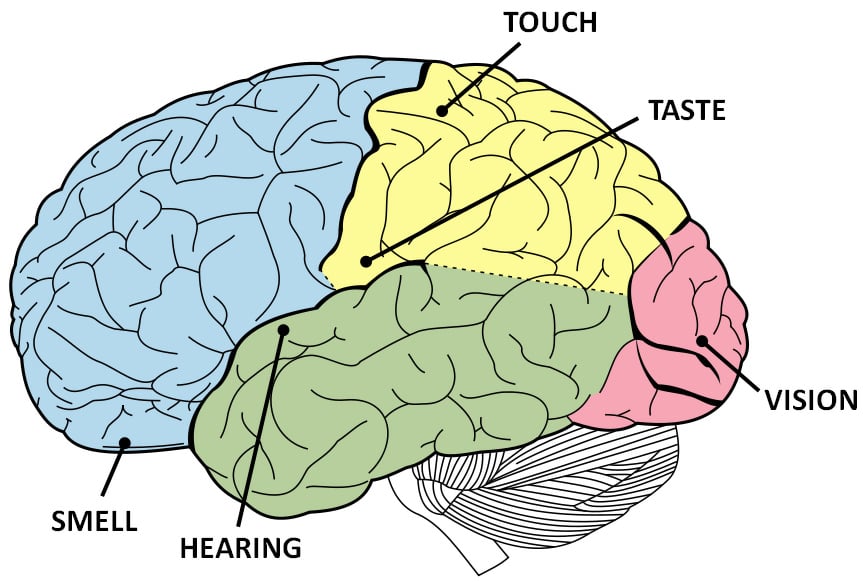
Senses in relationship to parts of the brain (Source)

Billy Joel isn't the only well-known person who has this experience. Some of the most creative people in the world owe it in part to this condition. John Mayer, Kanye West, Alessia Cara, Billie Eilish, Beyonce, and Duke Ellington were just a few of the well-known people with synesthesia. Imagine having a four-dimensional outlook on everything--it could be life-altering. As someone who loves colors and music, I think being able to have an ability similar to these people would be wonderful. But there are some things I wonder about... 

I often question if everyone can see the same colors. Let's say when I look at "grey," I see what we would consider as blue. But, when my friend looks at "grey," she actually sees what we consider green. If this happened for every color, we could never really know. Because we would all be defining our own colors. It also could partially explain people's tastes in fashion, art, and more. While this isn't synesthesia, we know for a fact that synesthetes have a similar experience. When I look at grey and see grey, a synesthete could see grey while hearing jazz music. Everything is more enhanced. I wish there were some kind of glasses or machine that could allow us to experience synesthesia. Look later in this post where I find out there actually IS a way (and it's not drug-related).
Amazon.com: A Mango-Shaped Space (8601417156988): Mass, Wendy: Books  
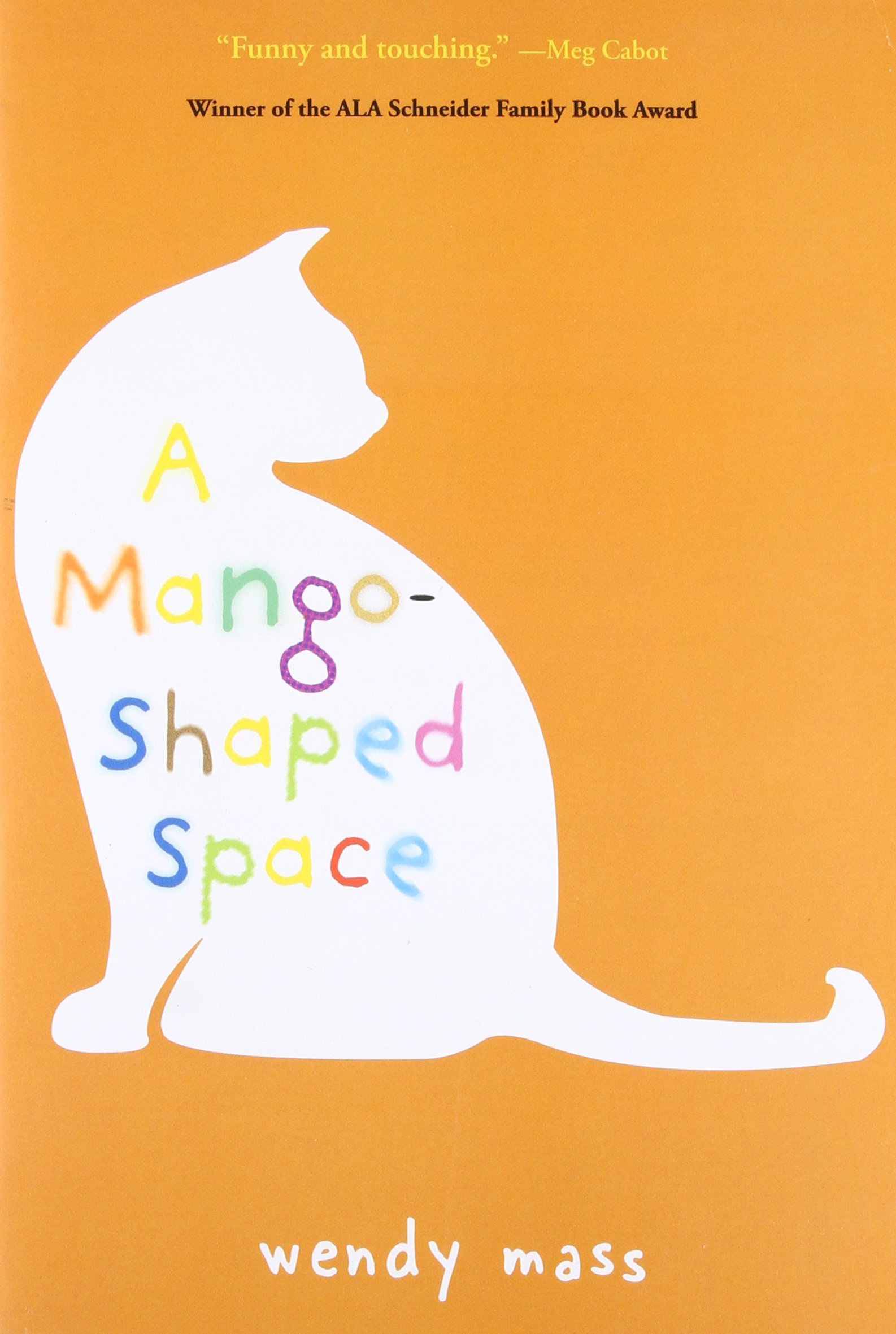
                                        "A Mango-Shaped Space" book cover (Source)
I first learned about synesthesia in middle school when I read a book called A Mango Shaped Space by Wendy Mass. It's about a young girl, Mia, who has a severe version of synesthesia, and how she comes to understand and appreciate her differences. While that synopsis sounds cheesy, it was incredibly interesting. One of my favorite parts is when she recounts the first time she realized that not everyone was like her. Mia's synesthesia meant that she could see a color with a number. It kept her from completing more complex math problems. Additionally, Spanish words had different colors than their English translations, making school incredibly difficult. I loved reading this book because it gave me my first insight into the synesthete experience.
Synæsthesia, synaesthesia                    
How a synesthete could see numbers and letters (Source)
 So, do you have synesthesia? I'm pretty sure I don't. But, maybe you do! You can find out by taking one of the tests in this link. But synesthesia can often be very subtle. So, there's a chance you have it and may never realize, even if you do take that quiz.

Not only that, but there are over 80 official types of synesthesia. One new form I read about is "Mirror-touch" synesthesia: when you see someone touched, you feel the sensation of being touched yourself. There's also "mirror-pain" synesthesia: when you can feel other people's pain. I feel like that would be very difficult to live with and gives a whole new layer to being empathetic.
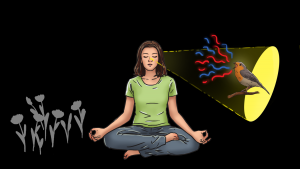
Synesthesia meditation (Source)
                                                   
If you really want to experience synesthesia, like I do, there is one possibility: meditation. Studies show that the best way to cultivate synesthesia isn't through something like LSD, but actually through meditation. I think I know what I'm going to do this summer!
Monday, May 27, 2019

Seeing Sound and Tasting Words

What is synesthesia? 
Period 1 of A.P. Bio would be largely silent if not for the piercing conversation coming from table 2. Myself, Eliza Cant, Jake Shapiro, and Laura Kazdoba (plus Ciunga for the start of the year) always seem to find something new to argue about at a convenient 7:30 in the morning. One of my favorite debates happened in mid-January. Having color-coordinated my folders for the year, all my science supplies are an earnest shade of green. Laura found great issue with this as to her, science is blue and nothing else. Jake and Eliza, however, agreed with me that science is clearly a green subject, and that Laura did not have enough coffee that morning to make a genuine argument. I thought the debate would have ended there, but no - other classmates began chiming in with what color they believed science to be. Purple, brown, blue, and even chartreuse popped up from different corners of the room. The situation only diffused when Ms. Eckert interrupted our squabbling with signal transduction pathways and a much-dreaded do-now.

So why am I telling you this story? Well, this incident involved a phenomenon known as synesthesia, wherein one sense is perceived along with another. In other words, something you may see or understand, such as a science, causes a specific color to pop up in your brain. Or, for instance, a particular object is associated with a certain taste for you, one it may not necessarily produce. The fact is that this joint perception is completely unconscious and combines multiple sensory cognitive pathways.
An example of what someone with 
grapheme-color synesthesia may visualize. 

What causes synesthesia?
The good news is, we've all got some form of synesthesia! Just like my classmates associating different subjects with different colors, you, dear reader, most likely visualize one concept along with another, separate sense. The bad news is, scientists aren't exactly sure what causes synesthesia.

Simon Baron-Cohen, a prominent psychologist at the University of Cambridge, has proposed that synesthesia stems from an overabundance of neural connections. In the brain of a non-synesthete (person without synesthesia), each sense is designated to a specific module of the brain. However, a person with synesthesia lacks this separation, leading to increased cross-communication along modules in response to stimuli.

A similar hypothesis is that of cross-activation, suggested by neuroscience professors at the University of San Diego. This theory insinuates that synesthesia is the result of certain synaptic connections not being degraded throughout a person's development, causing increased connectivity between two areas of the brain. Some cite grapheme-color synesthesia as evidence of this theory, a form of synesthesia where specific numbers or letters register as having a certain color. Scientists have observed heightened interactions between the grapheme recognition area of the brain and visual cortex when synesthetes visualize and identify a letter's color, indicating cross-activation.
Cross-Activation: Grapheme and V4 Area

The Bigger Picture
Synesthesia can be an incredibly wonderful thing to have. It allows people to perceive the world in an entirely different way than those around them, and experience unique sensations on a daily basis. Having chromesthesia, an offshoot of synesthesia that causes people to see colors when hearing sound, has had an undoubtedly positive impact on my life as a musician. Some have been able to translate their synesthesia into literal works of art as a means of communicating their experiences to others. For instance, artist Melissa McCracken creates paintings of the colors listening to her favorite songs conjure. Not to mention, many figures in pop culture have synesthesia, ranging from the likes of Billy Joel to Marilyn Monroe. So the next time you hear a certain piece of music or look at a particular string of numbers, be on the look out for whatever colors or scents pop into your head. Who knows? Perhaps you're a synestheste too.

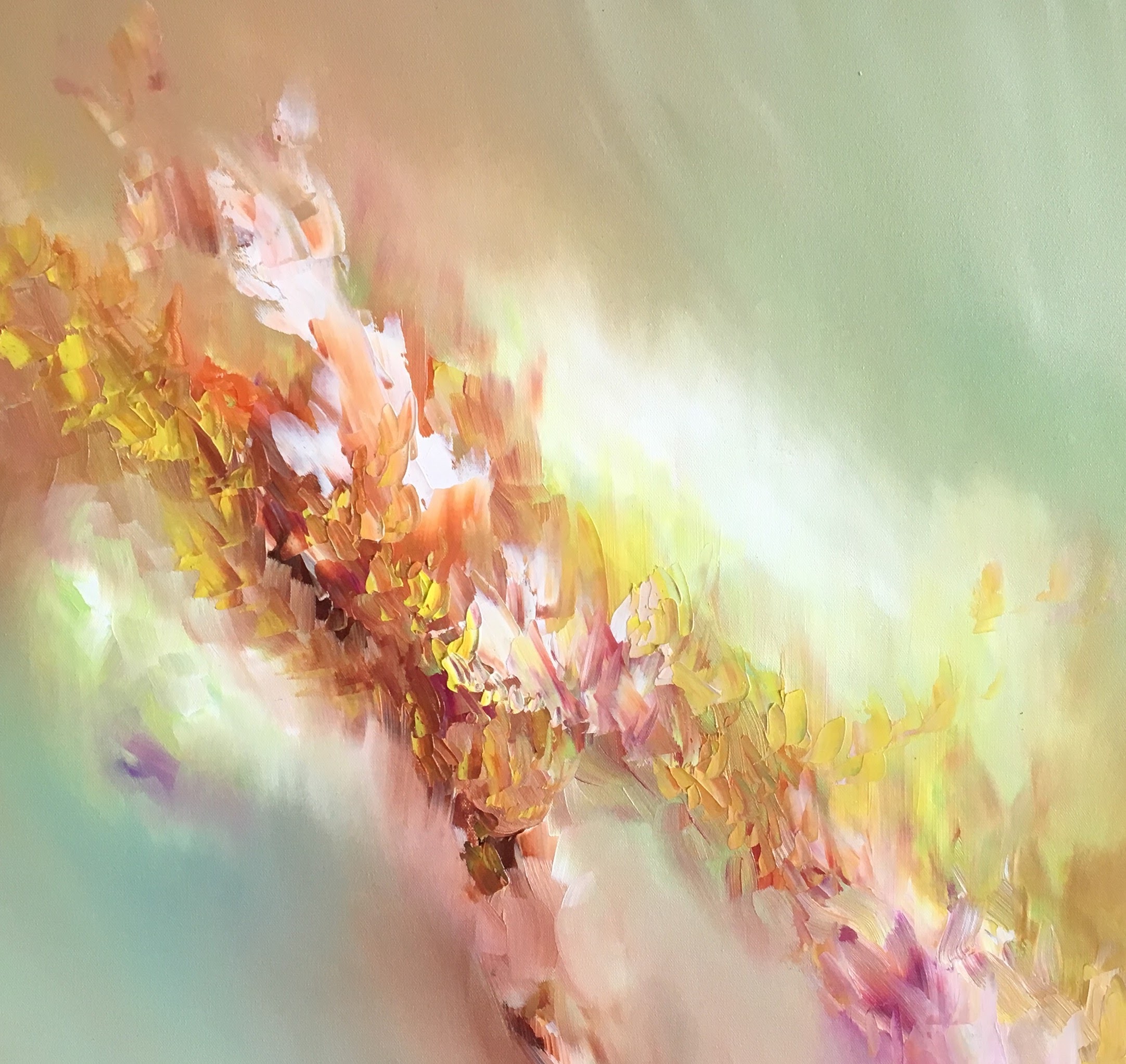
 "Julia" by Melissa McCracken
What the artist visualizes when listening to "Julia" by John Lennon