Showing posts with label food science. Show all posts

Thursday, June 9, 2022

Don't Talk To Me, I Haven't Had My Morning Coffee

The famous line used by so many adults in my life - and I am sure yours as well. Personally, I do not drink coffee after noticing how many people are so dependent on it and cannot live without their morning cup but over 1 billion people in the world drink coffee daily! There are so many myths about coffee and false information spreading around, so how does drinking coffee every morning really affect you?

The Morning Cup in Question

First off, what does coffee even do to you? Caffeine is a stimulant, which means that it causes an increase in your brain activity and nervous system. Considered a drug, caffeine acts by blocking binding of adenosine to the adenosine A1 receptor, which enhances release of the neurotransmitter acetylcholine. As we know, many people drink coffee in the morning because they need caffeine to wake them up. There are 95mg of caffeine in a single cup of coffee - which is not a horrible amount. Healthy adults should not surpass 400mg of caffeine a day, yet teens should stick to less than 100mg a day. Caffeine is well absorbed by your body and the short-term side effects (usually appear 5-30 minutes after consumption) of caffeine help you feel refreshed, boost your energy, as well as improve your physical and mental performance. 

Good news or bad news? Why am I even asking this question? The bad news is, drinking coffee will increase your serotonin and dopamine levels which is a good temporary fix however once you stop drinking it, you can go into withdrawal. This is why many people are reliant on caffeine and "addicted" to coffee. Since your brain was so used to the high levels of serotonin and dopamine, your brain will act like there is a deficiency once you stop drinking coffee. It can take almost two weeks of a caffeine-free diet for your brain to go back to its normal state! Drinking coffee can also increase blood pressure, and even mildly increase cholesterol levels. 

Dramatized Image Made of Coffee Beans

Well onto the good news! Luckily, most of these negative effects are temporary and NOT life-threatening (contrary to what the image above depicts). Even better news - there may even be some benefits to drinking a cup of coffee every morning! Moderate coffee intake has actually been linked to a lower likelihood of type 2 diabetes, heart disease, liver and endometrial cancers, Parkinson's disease, and even depression!
You Once You Realize Coffee Isn't as Bad as You Think

Now why are there so many negative rumors about coffee? Well, early research linked coffee to diseases ranging from heart attacks to asthma, however, many of the people in these studies also smoked cigarettes which have led people to believe that the negative effects from smoking came from coffee.

Overall, it looks like one cup of coffee a day won't kill you - contradictory to what my mom told me. 

Wednesday, June 8, 2022

The Science of The Bacon, Egg, and Cheese Sandwich

A New York style bacon, egg, and cheese sandwich on a bagel (with salt, pepper, and ketchup, of course) 

    First, let’s understand what a bacon, egg, and cheese is. A bacon, egg, and cheese is a breakfast sandwich that contains- you guessed it- bacon, egg, and cheese. Bacon, egg, and cheeses take many forms, but often the ingredients are sandwiched in between two pieces of bread (usually a roll or bagel) and topped with salt, pepper, and tomato ketchup. The bacon, egg, and cheese has become a staple breakfast item, the best known to be sold from New York bodegas. You may be asking yourself, "what does a breakfast sandwich have to do with science?" Like many dishes, the seemingly simple ingredients the bacon, egg, and cheese is composed of come from not so simple origins. In this post, we will explore the science that goes into the creation of each of the bacon, egg, and cheese’s main ingredients.

Bacon

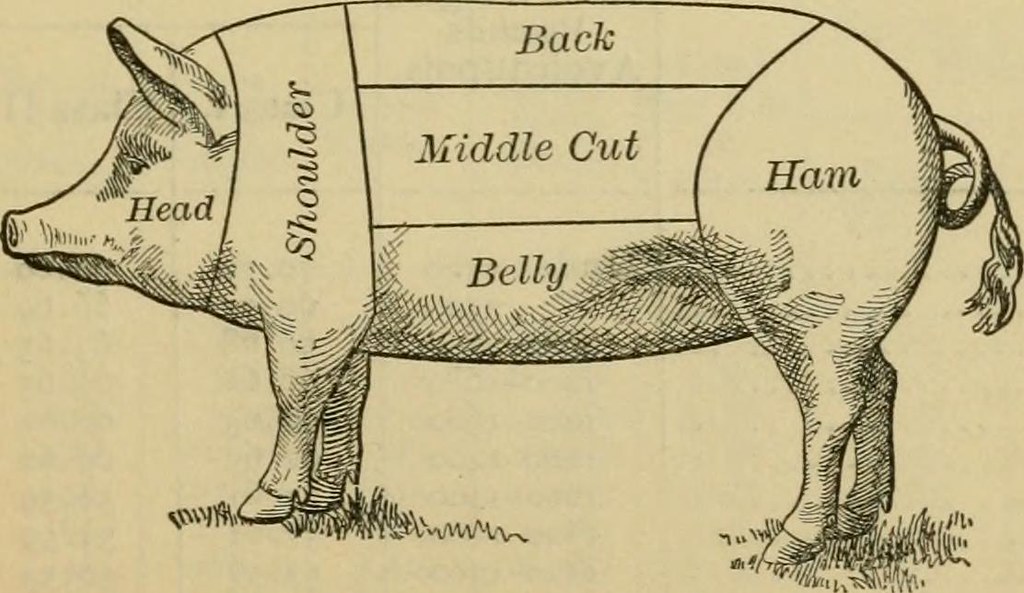
    Early forms of bacon can be traced back to China thousands of years ago in the form of salted pork belly. Pork curing methods later made their way to the Roman Empire and Europe where the term “bacoun” was used to refer to pork in general. In America, bacon refers to the belly meat of the pig, differing from the back-derived version common in Europe. Before refrigeration, curing and smoking food items was a common preservation method used to make food last longer. Over decades, bacon has become a quintessential food item for Americans. Bacon can be enjoyed on everything from burgers to donuts and very few complete American breakfasts lack the salty treat. One of the things that draws Americans to bacon is its variance in textures. Some enjoy it crispy - some enjoy it floppy - and some (including me) enjoy it somewhere in between. The variance in texture is possible due to the unique mixture of fat and connective tissue found in belly bacon.

Bacon comes from the belly section as shown above

Fat Content and Texture

    The pork (pig) belly is known for its characteristic high fat content and toughness. Uncooked, the belly of a pig has a very tough texture which serves as the only barrier between the animal's organs and the outside environment. Pork belly maintains its tough structure by being made of a high amount of connective tissue and collagen. The collagen fibers form parallel bundles that run along the meat, sheathing the muscle and making contractions more efficient. The other layer of protection pork belly has is the high amount of intermuscular fat and adipose tissue. Adipose tissue is a specialized connective tissue consisting of lipid-rich cells called adipocytes that cover the outer surface of muscles. The main function of adipose tissue is to store energy in the form of lipids (fat). Besides energy storage, fat tissue has several other significant functions which include thermal isolation, cushioning the organs and muscle, an endocrine role, and the production of numerous bioactive factors. Fat molecules are made up of hydroxyl groups on a glycerol backbone that reacts with carboxyl groups of fatty acids in a dehydration synthesis reaction. This yields a fat molecule with three fatty acid tails bound to the glycerol backbone via ester linkages, called triglycerides. The linkages binding the fatty acids to the glycerol backbone contain an oxygen atom next to a carbonyl, or C=O, group. Triglycerides can contain three identical fatty acid tails or three different fatty acid tails. The high amounts of fat and connective tissue serve the pig well while it is alive, but after it is harvested, these attributes make cooking the meat more difficult. The curing, smoking, and frying process the pork goes through turns this difficult cut of meat into something delicious.

Comparison between triglyceride (top) and monoglyceride (bottom). In the example shown above, the three fatty acids attached to the glycerol backbone are all of different lengths.

Curing and Smoking

    One of the most important steps in the bacon-making process is curing and smoking. When the pork belly is removed from the whole hog, the meat must undergo a series of steps in order to ensure its stability. The first step is curing. The point of curing is to draw excess moisture out of a food item in order to limit the possibility of mold and bacterial growth. This is done by creating a solute gradient between the inside and outside of whatever is being cured. 

    Curing can be done in two different ways depending on the desired texture. The first way that bacon can be cured is by placing pork belly in a dry mixture of salt and sugar. The meat is left in the mixture for anywhere from hours to a couple of days depending on the thickness. Moisture is drawn out of the meat, giving it a more firm texture. The second way is by submerging or spraying the meat with a liquid salt and sugar brine and allowing the meat to dry in a cool, dry environment. This method removes less moisture than the dry brining process resulting in a softer texture. This is often the method that is used in commercial factories. It is important to note that in addition to sodium chloride (NaCl), sodium nitrate (NaNO3), also known as pink curing salt, is used to preserve wet-cured cooked meats like ham and bacon. This is to prevent Clostridium botulinum, a bacterium that is present in soil and water, from growing on the meat. The spores of the bacteria can become airborne and land on food where, under the right conditions, they can reproduce. When it reproduces, it creates the toxins that cause botulism, a foodborne illness that is rare but extremely severe. Pink curing salt helps stop the bacteria, preventing reproduction and the growth of the toxin.

    In both the dry and wet brining process, spices and herbs are mixed in to impart certain flavors onto the pork; these can include pepper, garlic, onions, bay leaves, and clove. The principle behind curing is one that governs much of natural life - osmosis. Osmosis is a process by which molecules of a solvent (usually water) tend to pass through a semipermeable membrane from a less concentrated solution into a more concentrated one until an equal concentration on each side of the membrane is reached. In this case, The salt and sugar on the surface of the meat create a situation where there is more solute present on the outside of the pork belly. The water from inside the cells of the meat flows along its concentration gradient out of the meat, resulting in a dried product. From there, the bacon is cold smoked (meaning the smoke is not hot enough to cook the meat) in order to impart a smoky flavor and further dry out the meat. Similar to the curing process, flavor can be imparted onto the meat by using various types of wood such as oak, maple, hickory, and apple. After the smoking and drying process is completed, the processed bacon is sliced, sealed, and shipped off to grocery stores across the country.

 Slabs of smoked bacon 
This is an example of a wet cure. the bacon is sprayed with a brining solution and hung on hooks to dry

Browning and Maillard reaction

    Once the bacon makes it to your house, it can be prepared in many different ways, but for the bacon, egg, and cheese sandwich, it is usually pan-fried. Pan-frying the bacon not only fully cooks the bacon, but also allows the desired texture to be reached through browning. The actual term for this is called the Maillard reaction. While the reaction itself is extremely complex, the basics are that many small, simultaneous chemical reactions occur when proteins and sugars in and on your food are transformed by heat; these reactions produce new flavors, aromas, textures, and colors. The Maillard reaction is responsible for the tastes present in caramel, steak, coffee, and foods cooked in butter. These preservation and cooking processes result in the creation of a beautiful thing - BACON!


Fully cooked bacon

Egg

The next part of the infamous bacon, egg, and cheese sandwich is…EGGS! As off-putting as it may be, laid eggs are the embryonic stages of oviparous animals. They are composed of multiple sections that, if fertilized and incubated, will grow into juvenile versions of their species. Because they serve as mini-homes for embryos they are stocked full of protein, vitamins, and minerals that are passed along to whatever may eat them. For most people, chicken eggs are the only type of egg they eat, but it should be known that various poultry and reptile eggs are eaten within various global cultures. The bacon, egg, and cheese sandwich are most commonly made with chicken eggs. Chicken eggs have a somewhat mild flavor when compared to other poultry which has made them a favorite across the world. While eggs are most synonymous with breakfast, they are prepared in many different ways, from soups, baked goods, stir-fries, and even raw. Though, before the egg can be fried, scrambled, or poached for one of those preparations, a lot must happen in the chicken for the egg to get to this step. But, before we can understand how an egg is made, we must understand the parts of one.


Parts of an egg diagram

Yolk. This is the yellow part near the center, where almost all the egg's nutrients and fat are found

Albumen. This is the clear part we call the egg white. It’s called this because it turns white when cooked. There are two layers of albumen: thick (near the yolk) and thin.

Chalaza. Located in the thick albumen, chalaza is simply albumen that is twisted tightly. It keeps the yolk in the middle of the egg and prevents it from sticking to the inside of the shell.

Shell membranes. The egg contents are surrounded by two thin membranes called the inner and outer shell membranes.

Shell. This is the outer covering of the egg holding everything together. The shell consists of 94% calcium carbonate.


Egg Formation

    The egg is formed in the reproductive tract of a female chicken. The reproductive tract is divided into two major parts: the ovary and the oviduct. The ovary is where the yolk is added. When the yolk reaches the right size, it is released during ovulation. Ovulation is caused by the release of hormones. The released yolk is then picked up by the infundibulum, a funnel-shaped segment adjacent to the ovary. It is up to 9 centimeters long in the laying hen and has the function of searching for and engulfing the yolk that has just been released from the follicle into the adjacent ovarian pocket or body cavity. It is here that fertilization must take place. The yolk then passes to the magnum and isthmus, where the albumen shell membranes are added. Finally, the egg makes its way to the shell gland, where the shell and any shell pigments are added, before being pushed out. The eggs that most people consume are not fertilized, meaning that it has not fused with sperm from a male chicken. This also means that the egg has no chance of growing into a chick or chicken. Similar to humans, female chickens release eggs regardless of whether they are fertilized, the only difference being that chickens release eggs on a daily cycle rather than monthly.  

    Now that we have formed an egg, the next step is to cook it. For the bacon, egg, and cheese sandwich, the egg is usually pan-fried until the whites and yolk are fully set.

Hard fried egg (white and yolk are set) 


Cheese

    Cheese is a dairy product made from the curdled milk of land mammals, almost always grazers. Cheese-making is referred to in ancient Greek mythology and evidence of cheese and cheese-making has been found on Egyptian tomb murals dating back over 4,000 years. It is theorized that cheese may have been discovered accidentally by the practice of storing milk in containers made from the stomachs of animals. Most cheese is made from the milk of dairy cows specifically bred for dairy production. Cheese is aged and curdled in a variety of methods to produce many types of cheese.

Cow lactation

    Like all mammals, cows only produce milk after giving birth. Dairy cows must give birth to one calf a year to continue producing milk. After pregnancy, the levels of the hormones estrogen and progesterone fall initiating the hormones oxytocin and prolactin to increase and initiate lactation. Although various hormones take effect in milk production, prolactin is the key chemical. To increase milk production and ensure lactation year around, dairy cows are often given additional hormones. The milk produced contains the vitamins, calories, proteins, and hormones necessary to support a growing calf. It is due to its nutrient density that milk has become a staple beverage worldwide.

Curdling 

    In order to turn milk into cheese, it must go through many enzymatic processes. The first step is pasteurization, or rapid heating of the milk to kill any bacteria present. After the milk has been cooled, enzymes called rennet are added to the milk to begin coagulation. Rennet is the general name given to enzymes that act on the proteins in milk. It is derived from the stomach of adolescent ruminants (baby hoofed herbivores like calf and lambs) while their diets are still limited to milk; in their stomachs these enzymes aid in digestion. The milk is allowed to set until it reaches a pudding-like consistency. The curdled milk is then cut into very small pieces and mixed, causing the milk to separate into cheese curds and whey. Curds are the solid protein-bound pieces of curdled milk that will later turn into cheese and whey is the liquid that separates out. After the milk is separated, the liquid whey is drained off and the cheese curds are kneaded to form more protein within the solids. Salt is added and the cheese curds are then formed into blocks. From here, the cheese can be taken down numerous different paths.

Workers are kneading and packing cheese curds into blocks 

Aging

    What separates cheese from cheese curds is aging. Depending on the flavor and texture of the desired cheese, the curds will be aged for months up to years. During this aging process, moisture leaves, lactic acid fermentation occurs, and certain molds are allowed to grow. Longer-aged cheeses often have a harder, more grainy texture, and don't melt very well. Examples of this are cheeses like parmesan, aged cheddar, and Pecorino Romano. These cheeses often gain characteristic flavors like nutty and coffee notes. Longer-aged cheeses also tend to have a distinctly funky smell from the fermentation process. As delicious as those long-aged cheeses are, most cheese eaten on sandwiches like the bacon, egg, and cheese are not aged for as long. These cheeses include American, swiss, provolone, and young cheddar. These cheeses tend to have more moisture, a milder flavor, and a lower melting point. These characteristics make them great for sandwiches!

Cheese is allowed to age in a temperature and humidity controlled room, often on wooden shelves like those pictured above.


Assembly

Now that we have all of our ingredients the assembly of the perfect breakfast sandwich can finally begin. Our crispy bacon, fried egg, and American cheese can be stacked on a roll or bagel, topped with ketchup, and devoured. In my opinion, knowing the science behind arguably the best breakfast sandwich just adds to the joy of my first bite!

A fully assembled bacon, egg, and cheese sandwich

Monday, June 15, 2020

Chia seeds: the "runner's food"

The Tarahumara are a group of indigenous peoples who live in northwestern Mexico and are renowned for their long distance running ability.  These people have a tradition of running close to 200 miles over the course of a few days to reach different settlements they had.  How were they able to accomplish this?  The answer is their diet!  Specifically the chia seed, which is a staple in every Tarahumara meal.   Chia seeds come from the Salvia hispanica and Salvia columbariae plants. The Salvia columbariae is the plant that is native to the region of the Tarahumara people.

Salvia columbariae plant (source)

Now, I bet you’re wondering: What could possibly make these tiny seeds so special?  Well, these seeds are chock full of NUTRIENTS!  That's right, chia seeds are an excellent source of omega-3 fatty acids, antioxidants, fiber, and protein.
Examples of omega-3 fatty acids (source)

Omega-3 fatty acids are extremely beneficial for the average runner as they help to relieve stress off your joints during and after a run. By relieving pressure off your joints, chia seeds reduce your likeliness of getting an injury. Omega-3 fatty acids also boost HDL cholesterol levels which protect against heart disease and stroke. Chia seeds are full of antioxidants that help keep the fats in the seed from going bad. However, antioxidants are also beneficial to the human body by reducing the production of free radicals which can damage cells. Chia seeds also contain soluble fiber. Fiber is a type of carbohydrate that we eat, but that the body cannot completely break down. Soluble fiber is important to the body as it helps to stabilize blood sugar levels. It does this by slowing down the digestion rate of other nutrients to prevent spikes in blood sugar levels and reduce the likeliness of heart diseases. Soluble fiber helps feed the "good" bacteria in your stomach that breaks down food. The high levels of soluble fiber also allows chia seeds to absorb 10 to 12 times its weight in water. This is why chia seeds can be used as an egg substitute in vegan baking. Protein composes approximately 14% of chia seeds by weight. This is pretty high in comparison to other plants. Protein is important as it reduces appetite and is helpful for weight loss. The high protein levels of chia seeds is what gave the Tarahumara people sustenance on their lengthy journeys.

Chia seeds also have an interesting reaction when placed in water.  When mixed in a glass of water, chia seeds will develop a gel-like substance surrounding the 1mm in diameter seed that is approximately 12x the original size of the seed.  This happens because chia seeds have a high amount of mucilage (a soluble fiber), a hydrophilic shell, and the ability to absorb over 10x their weight in water.  This gel-like substance is formed for a variety of reasons.  First of all, it is used to cover wounds that the seed has endured to block the entrance of pathogens and other bacteria into the seed.  Mucilage also works to spread seeds through the roots of the Salvia columbariae plant.  Finally, mucilage works to incubate the seed while it germinate.  When the seed comes into contact with water, mucilage absorbs some of the water to surround the seed with moisture while it germinates.  Mucilage also has some pharmaceutical applications.  Chia seeds can be used as an organic ACE inhibitor because of it's mucilage content.  An ACE inhibitory enzyme is activated when chia seeds are soaked in water.  ACE inhibitors are produced synthetically to treat high blood pressure and other heart diseases.  What ACE inhibitors do is that they inhibit the production of angiotensin II which is a substance that narrows your blood vessels.

Chia fresca drink

This gel-like substance that surrounds chia seeds is also the basis of a popular drink of the Tarahumara people called chia fresca.  I recreated this drink by mixing 1 Tbsp. of chia seeds into 10 oz. of water and letting it sit for 5-10 minutes (the longer it sits, the more gel-like it will become).  Honey or citrus can be added for flavoring as well.

Although it is refreshing, I found the texture of the gel to not be very appetizing and instead opted for sprinkling some chia into a morning smoothie.

Chia seeds are an extremely versatile, nutrient-rich seed with origins in ancient warrior fuel that can improve not only your running capabilities, but your overall health as well.

Visit here for more information
For even more click here

Thursday, May 16, 2019

The Meat Industry and its Impact on Climate Change

With global warming rates on a continual rise, scientists and environmentalists alike are perilously searching for a solution to decrease our warming rate and save many species from extinction.

Countless large strides have been taken to reduce our carbon footprint, especially in the United States, through the implementation of legislature such as The Clean Air Act and The Montreal Protocol. The government has been largely focused on reducing emissions in the automotive industry as well as in greenhouse gas emitting factories. Although doing this has led to some decrease in the rapid depletion of our ozone layer and in the exponential warming of the polar regions, there is a much larger source of air pollution the government chooses to ignore--the meat industry.

Consumption of meat by humans is something that has been occurring for many years. Its origins date back to over 2.6 million years ago. Although meat consumption has been a part of human life for nearly the entire existence of our species, many things surrounding how we access that meat has changed.

For early humans, it was common to consume large quantities of fruits, vegetables, nuts, insects, and smaller quantities of meat. Fast forward over 2 million years and humans now have a very meat-rich diet of every animal imaginable. Although diet expansion is typically a good thing for an expanding species, it definitely comes at a cost.

The meat industry today is largely dominated by factory farms and massive meat processing plants to accommodate the endlessly growing demand. The increased demand has led to farmers diverting from traditional methods of raising livestock to ones that are not only inhumane but detrimental to our environment.

Increase in number of factory farms in the United States
According to the Pace Law School Library, animals in factory farms produce over one million tons of manure every day, often containing undigested antibiotics and growth hormones which are given to the animals to make them more profitable. This waste is pumped out of the warehouses and slaughterhouses into lagoons outside. These lagoons are deep pits designed to be filled with manure until they can be emptied.

The waste in these pits will often seep through the bottom of the pit and contaminate groundwater. In many cases, this dirty water can leak into clean water aquifers and wells which further limits the amount of available drinking water to a nearby community.

Manure Lagoons outside a factory farm in Iowa
Methane is a greenhouse gas and is a simple hydrocarbon consisting of one carbon atom and four hydrogen atoms. Methane is naturally released in animal flatus and is typically not an issue surrounding climate change as it is in such small amounts. However, when farmers create large livestock farms, they cram thousands of animals into small spaces and alter their diets to make it easier and cheaper to feed them. These diets, often consisting of corn meal, increase the animal’s flatulence which in turn releases more methane into the atmosphere.

Beyond methane production, the meat industry has many other pollutants which can be traced back to industrial farming. With our supply of fresh water decreasing at alarming rates, the government decided to take initiatives to encourage citizens to conserve, telling them to turn off the water while brushing teeth or use more efficient dishwashers and washing machines. Though, in reality those are miniscule compared to the amount of water used in industrial farming. Not only is the meat industry using absurd amounts of water, but they are severely contaminating it to the point where it cannot be used for human consumption anymore.

Studies at Colombia’s International Centre for Tropical Agriculture have concluded that one quarter to one third of all greenhouse gas emission worldwide can be traced back to the food industry, yet the topic of how meat consumption effects climate change remains undiscussed.

Marco Springmann, a scientist at the Oxford Martin School Food Programme has said that if everyone were to go vegetarian by the year 2050 we would see a 60% decrease in greenhouse gas emissions and the depletion of the ozone layer, 70% if everyone went vegan.

Impossible Foods is an alternative foods company, specializing in creating plant-based meat. This meat is said to have more protein, less fat, and fewer calories than a traditional burger! Their most popular product, The Impossible Burger is a meat free burger which is cooked exactly like a normal burger and is nearly identical in taste. With thousands of locations in North America serving the Impossible Burger, they are easy to access. With over 10 locations within 5 miles of Montclair, there's no reason to not give one a try! Bareburger Montclair, located on Bloomfield Ave, is the nearest location to Montclair and serves a delicious Impossible Burger, definitely recommended!

Having been a vegetarian and firm supporter of animal rights since birth, I feel as though I've proven that meat is not a necessary component to ones growth and well being (I'm 6'5" and 195lbs). As more meat alternatives have emerged in the last 10-20 years, vegetarianism is on the rise and with the Impossible products entering the market, it is expected to continue to rise.

The facts against the meat industry in regards to global warming are obvious and continue to be a huge problem which is largely overlooked by the government and forgotten by consumers who chose to be ignorant of both the ethical and environmental impact their meat-eating has. The entire world going vegetarian by 2050 is very unlikely but there are things that the government should be doing to try and reduce the amount of greenhouse gases that are emitted through the food industry. At the rate we are going, the current generation could be the firsts to see devastating results of this climate change and how it will affect generations to come. If action is not taken soon by both the government and its citizens, we could see permanent and irreversible damage to our climate and to the earth.

Monday, May 28, 2018

The Secret to Sustaining the Planet

Figure 1: Meat-free meme
Ok, so I know everybody is going to say "Oh look it's a vegan being preachy and trying to get me to convert to their lifestyle." However, that statement would be incorrect. I am simply here to discuss how, if the entirety of the planet cut meat out from their diets, we could possibly combat global warming. No, I'm not making this up to push my agenda on you all, although it could certainly help.


Figure 2: The greenhouse effect model


If you have not heard about greenhouse gases, they are any group of compounds that can trap heat in the atmosphere. They bring earth's surface to a much higher temperature than it would be in their absence (AKA global warming). Sounds bad right? Yeah, it certainly is. 

So where does the meat come in? Well, it turns out that major factory production of meat releases more greenhouse gases than the entire transportation industry and 10 to 40 times more than the production of fruits and grains. Also, 1/3 of the worlds fresh water is used for the production of meat (which could be used to hydrate those in Flint, Michigan). Water pollution on factory farms has gotten really bad and produces as much sewage waste as a small city.  The livestock being raised as food eat nearly all of the grains produced that could instead be used to feed humans in poverty (nearly 800 million of them) not to mention a bag of rice is a lot cheaper than a rack of ribs.  

According to a Scientific American article, The Environmental Working Group says that nearly 200 million pounds of pesticides and nitrogen fertilizer are spread over 150 million acres of cropland yearly, producing nitrous oxide. Cattle also produce 20% of the United State's overall methane emission. 

Moreover, 4/5 of deforestation in the Amazon rainforest could possibly be linked to cattle ranching. Antibiotics used to keep animals healthy (up until their execution date) has lead to antibiotic-resistant bacterias that lead to 700,000 human deaths a year, and it's only the beginning. 


Figure 3: Milk meme
So, we've covered meat and you're probably thinking "Yeah great, meat is bad but why the heck would I stop eating grilled cheese sandwiches? What about my truffle omelet?" Do not fret! We're getting there. 

 19% of the global water footprint from animal agriculture (which is 25% if the worlds total global water footprint) comes from dairy cattle. It comes from feeding the animals, keeping them hydrated, and cleaning up after them. Onegreenplanet.org made this list that really puts this into perspective.
  • 1 cup of yogurt requires 35 gallons of water
  • 1 scoop of ice cream requires 42 gallons of water
  • 2 slices of cheese require 50 gallons of water
  • 1 cup of Greek yogurt requires 90 gallons of water
  • 1 stick of butter requires 109 gallons of water
They also mention how one glass of soymilk only uses 9 gallons of water, so even substituting soymilk for regular milk once a week makes an impact. 

The dairy industry also produces 4% of the worlds greenhouse gases, 27% of which is methane (which is bad!).  Out of all the food industries, cheese emits the third highest amount of greenhouse gases following right behind beef and lamb.

Figure 4: This could be me and you!
What exactly would happen if, for some reason, the entire planet went vegan? Paul Allen, a journalist for BBC wrote an article explaining the expected results. He says "If we all went vegan, the world’s food-related emissions would drop by 70% by 2050 according to a recent report on food and climate in the journal Proceedings of National Academy of Sciences (PNAS). The study’s authors from Oxford University put the economic value of these emissions savings at around £440 billion". He also notes, that while it's possible for those who follow a vegan diet to eat unhealthily, a worldwide plant-based diet would reduce coronary heart disease, strokes, type 2 diabetes and even some cancers. There would be 8.1 million fewer deaths per year and up to 1,000 billion dollars could be saved on health care. 

If you're not convinced yet, check out some of these films on Netflix:
cowspiracy
 What the Health
 Sustainable
 Live and Let Live
Also, Perhaps consider joining in on the trendy meatless Monday or dairy-free dinners! You don't need to be all or nothing, but remember where your food comes from. Vox.com put out an article about the issue. Many people ask how they can help the planet, and the sooner people learn more about the impact of their food, the better. Pick foods that you know have a smaller carbon footprint, for example choosing fish over steak. And while the vegan diet has the smallest carbon footprint of them all, the Mediterranean diet is a close second. Check that out here.
Figure 5: Me being just a little pushy

Wednesday, May 16, 2018

Breakfast For The Champions?

Arguably, everyone, from the time when we were able to make our own decisions and feed ourselves, has been repeatedly told by their mothers that “Breakfast is the most important meal
of the day!”. But is this true? Sometimes we don’t have enough time, we’re too tired to bother,
we want a little extra shut-eye or we just don’t have anything to eat! Does that mean that our
days will be less productive? That our day will be worse? That we will die? Okay, so you won’t
die, but it is true that breakfast is vitally important to your well-being day-to-day!


Eating breakfast, as so plainly described in the name, means that you are breaking the
overnight fasting period from being asleep. When you sleep, your body’s energy source,
glucose, that has been stored in the muscle tissue is slowly released into the bloodstream
to keep blood sugar levels stable. Once all of this stored energy is used up, your body’s backup
is to break down fatty acids to produce energy, which when used up reduces energy levels
in the body. This is all to say that your body needs to be replenished with glucose, or glycogen,
in order to restore its energy for the day, and this can only be accomplished by consuming food.
Breakfast ladies and gentleman! It’s how you have to start your day!


To be a bit more expansive, all parts of our body need the energy to work!
This energy comes from food! When our bodies digest food, it is broken down in the stomach
by acid and enzymes into a type of sugar called glucose. Your stomach and small intestines
absorb this glucose and released into the bloodstream to be used immediately for energy.
Simply, consumption of food = energy = a functioning body = staying alive.

Furthermore, it’s extremely important to keep your blood sugar high! This is accomplished
by breaking down carbohydrates in foods into sugars, to be released into your blood.
When it’s low you may experience sweating, fatigue, lightheadedness, shakiness, nausea,
dryness, anxiety, headache, blurred vision, sleepiness, unsteadiness… and I could go on
and on. Now does that sound like how you want to start your day?


In case you don’t believe my word, here’s some evidence! Extensive research in Australia
and overseas has discovered that many children who skip breakfast are heavier than those
who eat breakfast, that skipping breakfast can diminish mental performance and their ability
to pay attention, that they have reduced fatigue and that skipping breakfast is associated with
quickly advancing age.

So eat your breakfast cereals, fruits, toast, muffins, yogurts and drink some low-fat milk,
whatever you’re into, and start your day right! It’s backed by science, it’s backed by your
mother, what more insurance of truth can you ask for?

Wednesday, May 24, 2017

Not as Sweet as You May Think

Many think of sugar as their best friend, something sweet, yummy, and always there for you. I know I do. But this edible happiness is proving to be an enemy. Sugar consumption in the United States continues to increase due to various reasons, some of which include the easy, available processed foods that dominant the food markets. Sugar has been an extremely hot topic in the news lately because sugar lobbyists are trying to protect big sugar companies by attempting to limit the amount of knowledge given to the public, such as a healthy daily amount of sugar. On many processed food items, the daily percentage value for sugar is never listed because for many products, the number would be extremely large, due to the immense amount of added sugar. Now how can something be so bad, when it tastes just so darn good? Sugary beverages and foods, many times, do not contain a great amount of fiber. Fiber takes a longer time to be digested and makes you feel full for longer. When a person drinks a soda, however, with large amounts of sugar in it, this will cause their blood-sugar levels to rise. This then stimulates the pancreas to produce insulin which allows the sugar to be taken from the blood into the liver. When this occurs, the sugar is processed and converted into glycogen, glucose storage for later use, and fat. More fibrous foods allow for the necessary glucose to be absorbed and the rest excreted, while sugary foods lead to more production of fat by the liver.

The fats that are created by the liver, as a result of sugar consumption, are called triglycerides. When too much sugar is eaten and there is a great increase in triglyceride production, this can cause the amount of good cholesterol or HDL cholesterol to diminish in body. These higher levels of triglycerides in the blood and reduced levels of HDL cholesterol can have negative effects on a person's health and is a major contributor to heart disease.
How insulin is produced and used in the body
 
Vs.
Snack comparison (fibrous vs. sugary)
In recent years there has been a greater push toward fat-free foods because of the ideas that foods containing lower fat content would help to decrease weight gain. Seems logical enough, however, after foods started to transition to more fat-free or reduced-fat products, there was actually a rise in obesity and weight gain among many. Fat adds flavor, and when this flavor was taken out it left the food ideas bland and boring. To make up for this, food companies decided to add sugar in many cases to bring back the flavor into their items. These increased sugar levels therefore lead to greater amounts of weight gain.
This documentary goes more in depth.

Sugar can greatly affect health aspects of a persons' life. Too much sugar can lead to obesity, heart disease, diabetes, and much more. While too little sugar than blood glucose levels may be too low and affect brain activity. Glucose is needed to help promote brain activity. Sugar is even thought by many researches to be addictive or have addictive affects. It is not known for sure, however, when a person eats sugar dopamine, a neurotransmitter in the brain, is released, similar to alcohol or other drugs. This is different because in the case of sugar, the release of dopamine is not as severe. When sugar is continuously eaten dopamine levels that are produced are not lowered or decreased after many consecutive consumption, like more foods are. This is why people may crave sugar or not get tired of eating sugary foods because it makes you feel so good.

Sugar craving
After reading this you may be thinking that sugar is a scary thing. In moderation, sugar can be good and acceptable, as long as you know to keep it in control. It is important to know that while sugar may not be so good for you, the alternative, fake sugars are not a better option and in many cases may be worse. Artificial sweeteners may deter many from real sugar options, and it is always better to consume the real deal, rather than something unknown. Diet kind may not actually be helping anyone.

Examples of common artificial sweeteners used
We can all admit that sugar is a wonderful thing. It is used to make so many wonderful things, dessert, candy, chocolate (yummm), but we have to keep in mind some of it s negative effects. Natural sugar is always a better option as well. You may being thinking, how is sugar from fruit any better compared to other kinds of sugar? The truth is that your body cannot tell the difference between the different kinds of sugar (sucrose, fructose) sugar is sugar, but fruit is different because it also contains many good components along with the sugar.  Fruit has fiber, making it a healthier option, so if you are ever in need of something sweet, try an apple :)
Decisions, Decisions...

Thursday, May 18, 2017

Chocolate: The Feel Good Food Agent or the Fake Friend?

Chocolate Bars with Cacao Beans and Cacao Powder

What is chocolate?

Chocolate is dark, rich, milky, creamy, gooey, flavorful and delicious. It is an immensely popular item, whose global business reaps an annual profit of around $74 billion. It is also many individuals' favorite sweet.

There are rumors and debates about chocolate. Many individuals question whether chocolate is just another sugar that adds to the daily calorie count or whether it has beneficial health effects. Chocolate is also a common substance upset individuals turn to for comfort.


Cacao Beans

Where does chocolate come from?

Chocolate comes from the tree, Theobroma cacao. The genus, Theobroma, is Greek for "food of the gods" and cacao is the root word retained by the Spanish from the Mayans, used to describe the tree and its products. The tree provides cacao beans whose seeds are extracted and fermented under banana leaves. After those 2-7 days, the seeds are dried and are shipped to a chocolate factory. The beans are roasted, cracked to leave the remains, nibs, and then the nibs are ground down into a thick paste. It can then be molded into cocoa powder or hard chocolate for consumption.

The chocolate will leave the factory and the products will enter stores all over the world since chocolate is very high in demand. Even in the past, cacao was so popular it was used as a valuable trading piece in the Aztec society. For example, one turkey hen was equal to about 100 cacao beans. Chocolate was like literal money on trees; it was popular, in demand and it brought pleasure to many.


Dark Chocolate in the Shape of a Heart

What does chocolate do to the body?

There has been documented evidence where chocolate was considered a treatment that, in the 16th and 17th centuries, was prescribed to Europeans in the humoral medical system of the day. A 2007 study by Cornell University states that although chocolate does contain small amounts of psychoactive substances that can act as mood elevators and stimulants, there is no scientific proof that is is an addictive or an aphrodisiac ( a substance that stimulates sex drive).

Due to chemicals such as anandamide, potentially psychoactive chemicals that stimulate the brain, being in chocolate, after one eats chocolate, they grow to crave it. Only pure cacao would satisfy the craving which is why they say dark chocolate is good for you and that it curbs hunger. This is due to the fact that since there are low concentrations of the chemicals, they act like a drug, forcing individuals to crave chocolate and sweets in absence of the chocolate and sweets. 

To all my fellow chocolate lovers out there, feel free to indulge yourselves in some dark chocolate! What is your favorite? How about some Ghiradelli? Godiva? Dove? Nestle?


Dark Chocolate Bar with Crumbled Pieces


Does chocolate really affect the emotions?

Chocolate does not drastically affect the body but it can be a powerful mood enhancer. A study at the Winona State University stated that eating chocolate induces both negative and positive emotional changes in individuals. These changes include reduced tiredness (caffeine-like substance), elevated mood, elicited joy and increased activation. Mood elevation is common after consuming food but in comparison to an apple, the mood elevation was apparently higher after chocolate consumption.

According to the Winona State University experiment, the higher the calorie count, the more intense negative mood changes were. That is why eating real cacao dark chocolate is suggested instead of, for example, hot chocolate.

A 2009 declaration by the ACS stated that a new clinical trial supports the idea that moderate dark chocolate consumption reduces stress hormone levels in bodies of individuals who feel increased levels of stress. It was also declared that more and more scientific evidence is being discovered that dark chocolate contains certain antioxidants and other beneficial substances that may reduce the risk factors for various dangerous physical conditions including heart disease.

Meme for Chocolate Lovers


Hear that? Chocolate is okay to have, especially if it's dark chocolate, made from real cacao, and of course if it is in moderation.


Clip from the movie "Matilda" of a Fellow Chocolate Lover


Too much chocolate? Impossible! Want to know more? Check out some of the links below: